1. Introduction: The Critical Role of Bridge Cranes in Modern Industry
In today’s industrial manufacturing systems, material handling and equipment installation represent indispensable components of operational efficiency. Bridge cranes, as highly efficient and reliable lifting equipment, have become standard fixtures in factories, warehouses, ports, and construction sites worldwide. These mechanical systems, through their unique structural design and exceptional performance capabilities, play pivotal roles across numerous sectors including heavy machinery manufacturing, steel metallurgy, shipbuilding, and hydroelectric construction.
The widespread adoption of bridge cranes has not only enhanced production efficiency but also significantly improved operational safety standards. With the advent of Industry 4.0, the trend toward intelligent automation has driven continuous technological innovation in these lifting systems, providing modern industrial production with increasingly precise and efficient solutions.
The economic impact of bridge cranes extends beyond immediate operational benefits. These systems reduce labor costs, minimize workplace injuries, and enable the handling of materials that would otherwise be impossible to move safely. Their versatility and reliability have made them cornerstone equipment in the global supply chain, facilitating everything from raw material processing to finished product distribution.
2. Fundamental Working Principles of Bridge Cranes
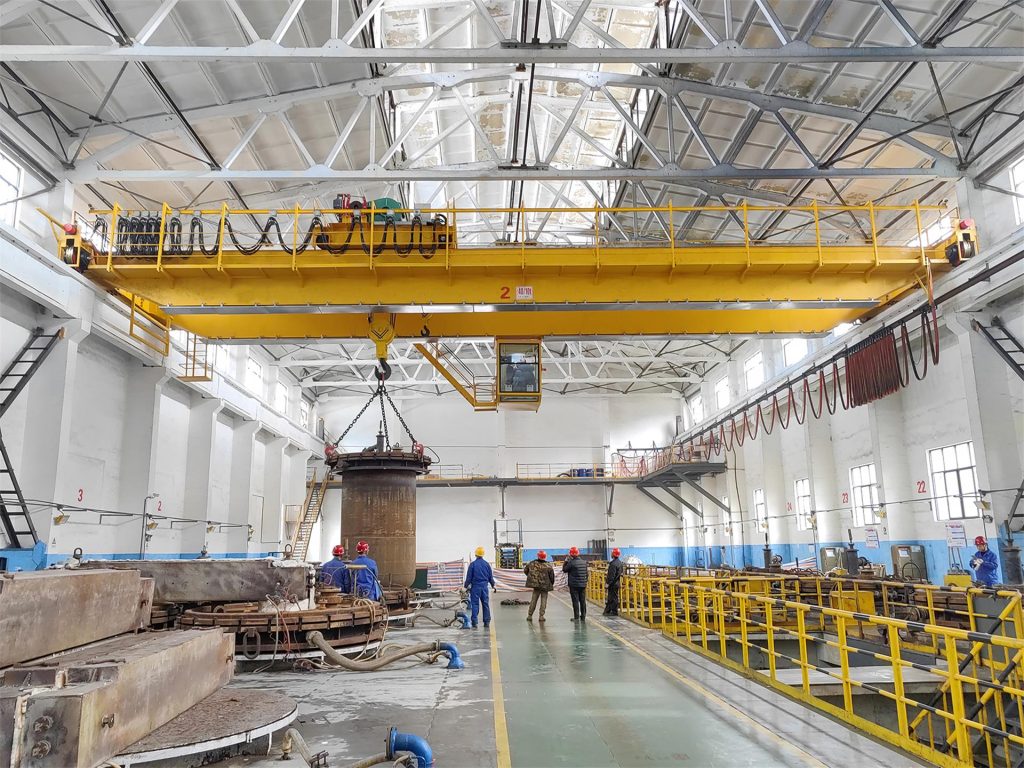
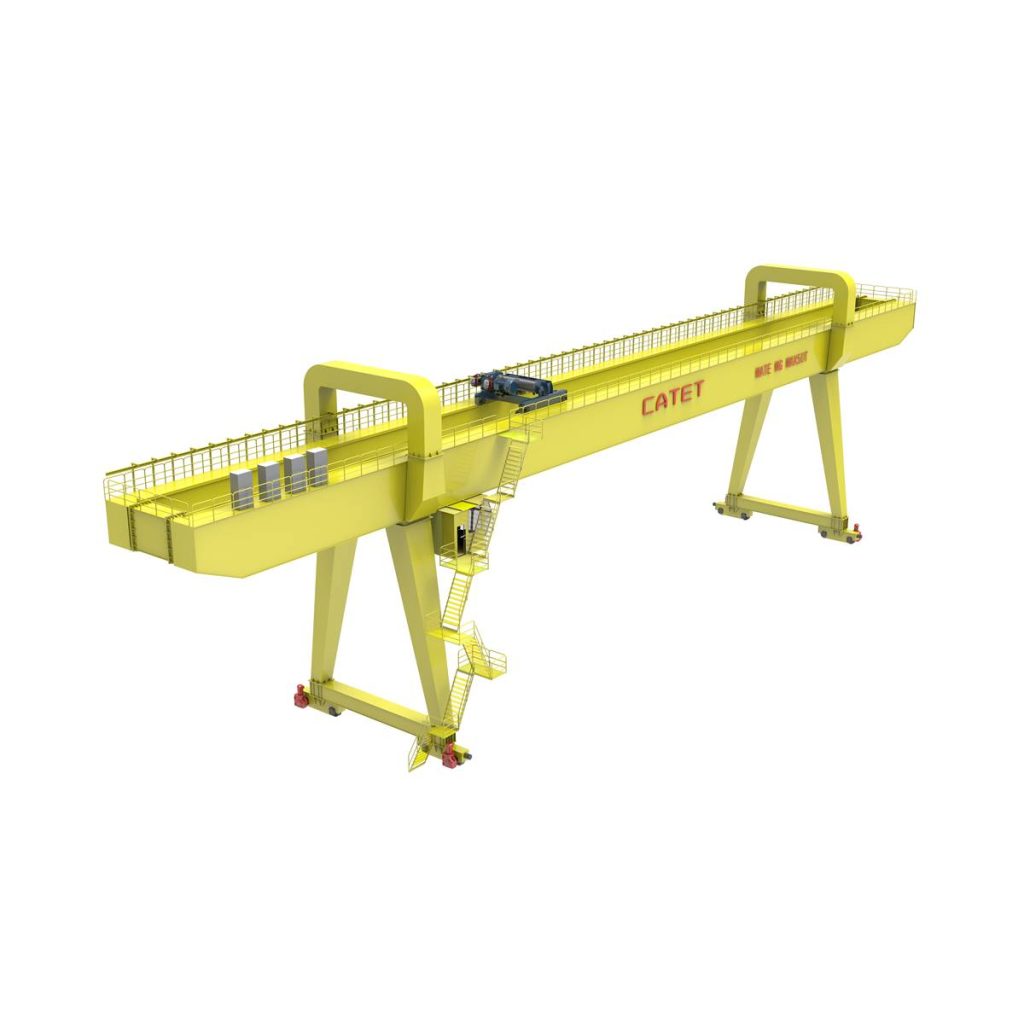
Bridge cranes operate based on fundamental mechanical principles, primarily leveraging systems and pulley mechanisms. The core working mechanism involves the coordinated interaction of main girders, end trucks, trolleys, hoisting mechanisms, traveling mechanisms, and electrical control systems.
The main girder serves as the primary load-bearing framework, supporting all vertical and horizontal loads throughout the crane’s operational envelope. When lifting operations are required, the trolley moves horizontally along the main girder while the hoisting mechanism, driven by electric motors through reduction gears, utilizes drum and wire rope systems to achieve precise vertical lifting and lowering of loads.
Simultaneously, the entire bridge structure can move longitudinally along rails installed on both sides of the facility, enabling three-dimensional positioning within the workspace. This design allows bridge cranes to achieve maximum operational coverage within confined spaces while ensuring structural stability and safety through rational load distribution.
The electrical control system coordinates all mechanism movements, providing precise speed control and position accuracy. Modern bridge cranes incorporate sophisticated feedback systems that monitor load conditions, position data, and operational parameters in real-time, ensuring optimal performance and safety compliance.
Advanced bridge cranes also feature variable frequency drives (VFDs) that provide smooth acceleration and deceleration, reducing mechanical stress and improving load handling precision. These systems can be programmed for specific lifting sequences and automated operations, further enhancing operational efficiency.
3. Core Structural Components Analysis
3.1 Main Girder and End Truck Structures
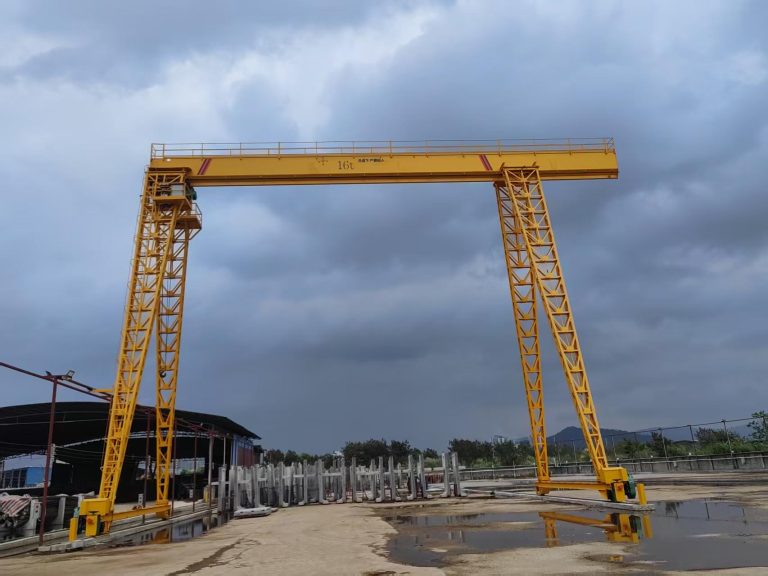
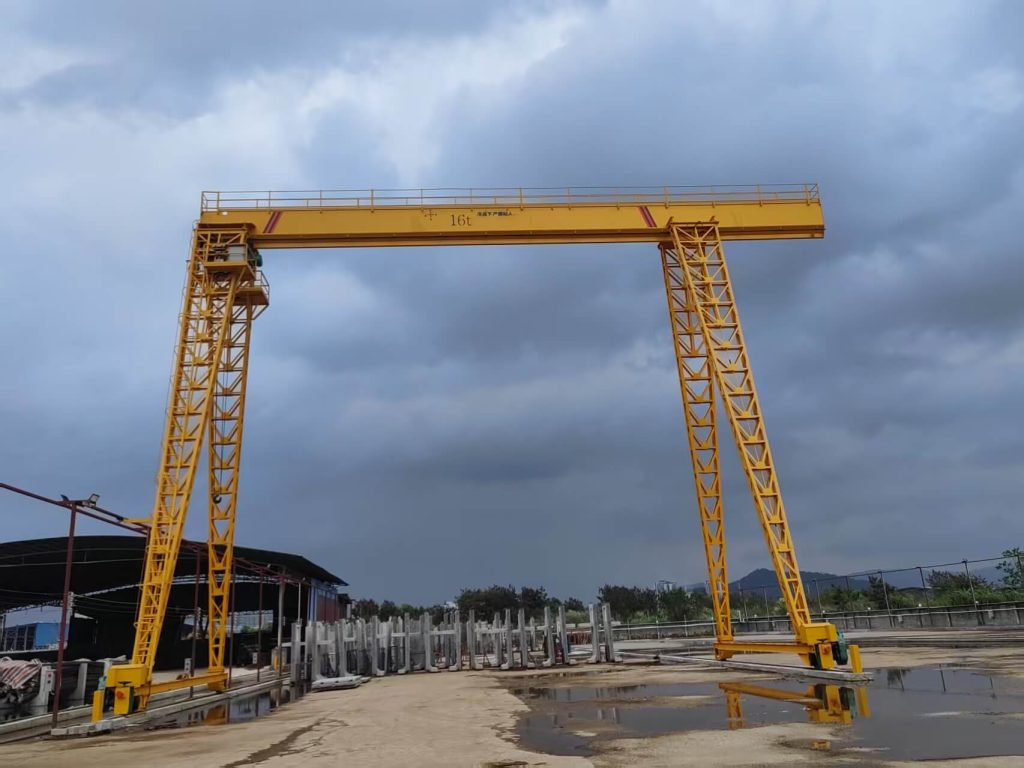
The main girder represents the most critical load-bearing component of any bridge crane, typically employing box-type or truss-type structural designs. Box-type main girders offer superior bending rigidity and overall stability, making them ideal for small to medium-capacity cranes. Truss-type main girders excel in long-span, heavy-duty applications, achieving lightweight yet high-rigidity designs through optimal member arrangement.
End trucks connect the main girder extremities and house the traveling mechanism’s drive and guidance systems. End truck design directly influences overall machine running smoothness and positioning accuracy. Modern end truck designs incorporate advanced bearing systems, precision machined components, and sophisticated alignment mechanisms to ensure optimal performance over extended operational periods.
The selection between box and truss girder designs depends on specific application requirements, including span length, lifting capacity, duty cycle, and environmental conditions. Engineers must consider factors such as deflection limits, dynamic loading, fatigue resistance, and maintenance accessibility when specifying girder configurations.
3.2 Trolley Systems
The trolley system represents the core component for load lifting and positioning, encompassing hoisting mechanisms, trolley traveling mechanisms, and operator cabins where applicable. The hoisting mechanism consists of electric motors, reducers, brakes, drums, and wire ropes, achieving smooth lifting and lowering operations through precise transmission ratios.
Trolley traveling mechanisms enable movement along the main girder direction, typically employing wheel-type running gear with independent drive and braking systems. Modern trolley designs incorporate precision guidance systems, anti-sway technology, and sophisticated load monitoring capabilities.
Contemporary bridge cranes often feature dual-speed or variable-speed hoisting systems, allowing operators to select appropriate lifting speeds based on load characteristics and precision requirements. Load blocks and hook assemblies are designed for specific capacity ranges and incorporate safety features such as load testing provisions and overload protection.
3.3 Electrical Control Systems
Modern bridge crane electrical control systems utilize advanced variable frequency drive technology and programmable logic controller (PLC) systems, enabling independent and coordinated control of hoisting, trolley travel, and bridge travel motions. Safety protection systems include overload protection, limit switches, emergency stops, and multiple additional safety measures.
These control systems increasingly incorporate human-machine interface (HMI) panels, remote operation capabilities, and diagnostic systems that provide real-time equipment status monitoring. Integration with enterprise resource planning (ERP) systems enables production scheduling optimization and predictive maintenance planning.
4. Historical Development Timeline of Bridge Cranes
The development history of bridge cranes traces back to the mid-19th century Industrial Revolution period. Early lifting equipment primarily relied on human power and simple mechanical transmission systems, offering limited lifting capacity with complex operation and poor safety characteristics.
The early 20th century witnessed revolutionary changes in the crane industry through electric motor technology maturation. The emergence of the first electric bridge crane marked the beginning of modern lifting technology. Equipment from this era began adopting electric drive systems, significantly improving lifting capacity and operational efficiency.
Following World War II, rapid development in steel industry and heavy machinery manufacturing created urgent demand for high-capacity, high-reliability lifting equipment. Bridge cranes achieved significant advances in structural design, material selection, and manufacturing processes during this period.
Since the 1980s, computer technology and automation control system development has driven intelligent transformation in the crane industry. Modern bridge cranes have not only continuously breakthrough in load capacity but also achieved qualitative improvements in operational convenience, safety reliability, and energy consumption control.
The digital revolution of the 21st century has introduced smart sensors, IoT connectivity, and artificial intelligence to crane operations. These technologies enable predictive maintenance, automated operations, and integration with broader manufacturing execution systems, representing the current frontier of crane technology development.
5. Modern Technology Trends and Innovations
5.1 Intelligent Control Technology
Current bridge crane technology development demonstrates clear intelligent trends. Advanced sensor technology, artificial intelligence algorithms, and Internet of Things (IoT) integration enable modern lifting equipment with autonomous diagnosis, predictive maintenance, and remote monitoring capabilities.
Laser positioning technology and vision recognition system applications achieve automatic load identification and precise positioning. Anti-sway control algorithm optimization significantly improves lifting operation accuracy and efficiency. Machine learning algorithms analyze operational patterns to optimize performance parameters automatically.
Advanced bridge cranes now incorporate collision avoidance systems, automated path planning, and coordinated multi-crane operations in complex industrial environments. These intelligent features reduce operator workload while improving safety and productivity.
5.2 Energy-Efficient Environmental Technology
Driven by green manufacturing concepts, energy-efficient bridge cranes represent important industry development directions. Variable frequency drive technology widespread application not only improves control precision but also significantly reduces energy consumption. Regenerative braking technology converts kinetic energy during braking processes into electrical energy returned to the grid, further enhancing energy utilization efficiency.
Lightweight design through structural optimization and high-strength material adoption reduces equipment weight while maintaining safety performance, decreasing infrastructure investment and operational costs. LED lighting systems, energy-efficient motors, and optimized power management systems contribute to overall sustainability objectives.
Hybrid power systems and battery backup capabilities enable continued operation during power interruptions while reducing peak power demand charges. These innovations align with corporate sustainability goals and regulatory requirements for energy efficiency.
5.3 Safety Technology Innovation
Safety remains the primary consideration in bridge crane design and operation. Modern equipment features comprehensive safety monitoring systems including real-time load monitoring, structural health monitoring, and environmental condition monitoring across multiple safety assurance dimensions.
Fault warning systems utilizing big data analysis and machine learning algorithms provide advance warning before potential failures occur, significantly reducing safety risks and maintenance costs. Redundant safety systems ensure continued protection even during component failures.
Advanced safety features include voice warning systems, proximity detection, operator fatigue monitoring, and emergency response automation. These technologies create multiple layers of protection for personnel and equipment while maintaining operational efficiency.
6. Application Fields and Current Market Status
Bridge cranes find extensive application across numerous industrial sectors, with steel and metallurgical industries representing the largest application market. Throughout steel production processes, from raw material handling to finished product storage and shipping, every stage requires lifting equipment support. Major steel enterprises typically deploy various specification lifting equipment to meet different process stage operational requirements.
Mechanical manufacturing represents another significant application field. Heavy machinery component processing, assembly, and handling require high-capacity, high-precision lifting equipment. Automotive manufacturing, aerospace, and shipbuilding industries impose increasingly stringent technical requirements on lifting equipment.
Rapid development in port terminals and logistics warehousing industries has created new growth opportunities for the crane market. Container handling, bulk cargo loading and unloading operations demand enhanced efficiency and reliability from lifting equipment. Automated container terminals rely heavily on sophisticated crane systems for competitive operations.
The construction industry requires professional lifting solutions for large component installation and heavy equipment handling. Continued infrastructure development maintains stable growth in construction crane markets. Nuclear power plant construction, wind turbine installation, and other specialized applications create niche markets for highly specialized crane systems.
Mining and material processing industries represent growing markets for specialized bridge cranes designed to handle harsh environmental conditions and demanding duty cycles. These applications often require explosion-proof designs, corrosion resistance, and extreme temperature capabilities.
7. Technical Challenges and Solutions
7.1 Large-Scale Development Challenges
Increasing project scales create growing demand for ultra-high-capacity bridge cranes. However, equipment scaling introduces structural design complexity, manufacturing difficulty increases, and transportation installation challenges.
Solutions include modular design concepts, decomposing large equipment into standardized modules for convenient manufacturing and transportation. Structural design optimization using finite element analysis and computer simulation technology ensures structural safety. New material technology development improves material strength-to-weight ratios.
Advanced manufacturing techniques such as automated welding, precision machining, and quality control systems ensure consistent production quality for large-scale equipment. Specialized transportation and installation procedures manage the logistical challenges of deploying massive crane systems.
7.2 Precision Control Challenges
High-precision positioning represents basic requirements from modern manufacturing for lifting equipment. Traditional open-loop control systems cannot meet precision operation demands, requiring introduction of more advanced control technologies.
Closed-loop control system applications, combined with high-precision position sensors and advanced control algorithms, achieve millimeter-level positioning accuracy. Multi-axis coordinated control technology enables precise control of complex trajectories.
Real-time load monitoring and dynamic compensation systems account for load variations and environmental factors affecting positioning accuracy. Advanced servo systems and direct drive technologies eliminate backlash and improve response characteristics.
7.3 Intelligent Transformation Difficulties
Traditional manufacturing enterprises face high technical barriers, large investment costs, and talent shortages during intelligent transformation processes. Legacy equipment integration and workforce training represent significant challenges.
Industry alliance and technical cooperation models provide new pathways for enterprise intelligent transformation. Through collaboration with universities and research institutions, enterprises better master core technologies while reducing transformation risks.
Phased implementation strategies allow gradual technology adoption while maintaining operational continuity. Training programs and technical support services help organizations develop internal capabilities for managing advanced crane systems.
8. Future Development Prospects and Outlook
Bridge cranes, as fundamental industrial equipment, maintain development prospects closely tied to overall manufacturing industry development. With intelligent manufacturing and green manufacturing concept advancement, the lifting equipment industry will encounter new development opportunities.
Digital transformation represents the primary future development direction. Through establishing complete equipment lifecycle digital archives, comprehensive digital management from design and manufacturing through operation and maintenance becomes achievable. Digital twin technology applications will provide powerful support for equipment optimization design and intelligent operation maintenance.
Artificial intelligence technology deep integration will enable bridge cranes with stronger autonomous learning and adaptive capabilities. Machine learning algorithms can optimize control parameters based on historical operational data, improving operational efficiency and safety performance.
Sustainable development concept promotion will drive green lifting technology development. New energy technology applications, circular economy model establishment, and lifecycle assessment system improvement will provide new momentum for industry sustainable development.
The continued implementation of Belt and Road initiatives and ongoing global infrastructure development present Chinese bridge crane enterprises with broader international market opportunities. Through technological innovation, quality improvement, and service optimization, Chinese manufacturing can occupy more important positions in global lifting equipment markets.
Emerging technologies such as 5G connectivity, edge computing, and blockchain integration will enable new capabilities in crane operations, maintenance, and fleet management. These technologies will support more sophisticated automation, improved data analytics, and enhanced operational transparency.
The integration of renewable energy sources, including solar panels and wind generation systems, will reduce the environmental impact of crane operations while providing energy independence for remote installations. Battery technology advances will enable more efficient energy storage and power management systems.
In conclusion, the bridge crane industry stands at a critical juncture of technological innovation. Only by keeping pace with development trends and continuously advancing technological innovation can companies maintain competitive advantages in fierce market competition, providing more reliable, efficient, and intelligent lifting solutions for modern industrial development. The future promises exciting developments that will transform how materials are handled across global industries, driving productivity improvements and safety enhancements that benefit society as a whole.