Last quarter, I received an urgent call from a logistics manager at a coastal shipping terminal. His team had just purchased three electric trackless transporters for indoor warehouse operations, but a sudden expansion into outdoor yard storage created an unexpected dilemma: “Can we safely use these units outside?” His concern was legitimate—salt air, temperature fluctuations, and exposure to rain had already damaged other electrical equipment at their facility, costing them over $45,000 in premature replacements.
This question—can electric trackless transporters operate outdoors—arises more frequently than many manufacturers acknowledge. After two decades specifying material handling equipment for diverse environments, I’ve learned that the answer isn’t simply yes or no. Instead, it requires understanding specific design features, environmental conditions, and operational limitations that determine outdoor viability.
Today, I want to provide comprehensive guidance on outdoor electric trackless transporter operation, drawing from real-world deployments, engineering specifications, and lessons learned from both successful implementations and costly failures.
Understanding Electric Trackless Transporter Fundamentals
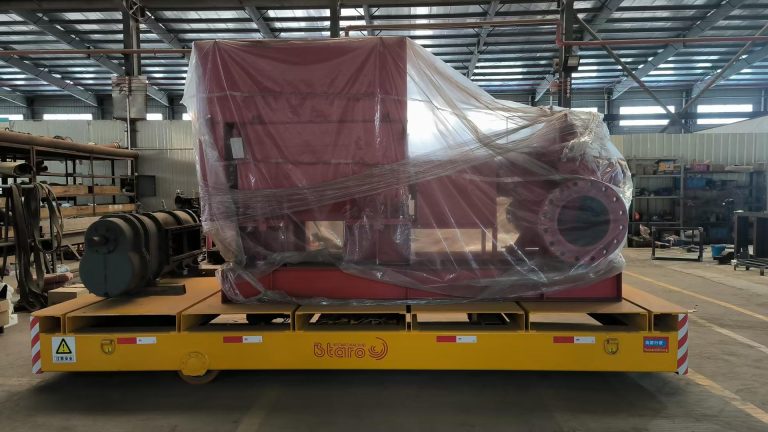
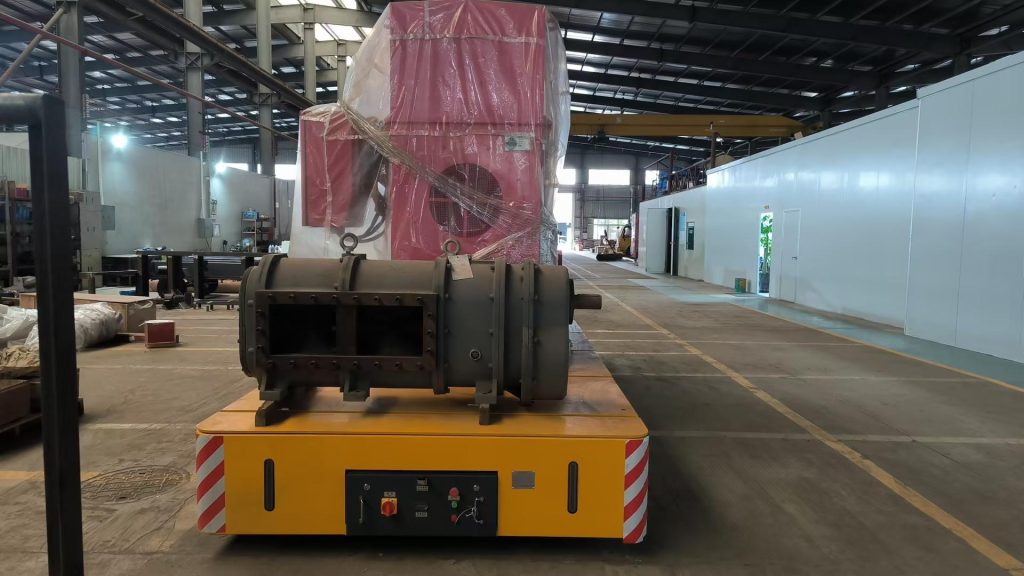
An electric trackless transporter represents a battery-powered material handling vehicle that operates on flat surfaces without requiring fixed rail infrastructure. These systems typically feature steel or aluminum frame construction, polyurethane or rubber wheels, electric drive motors, and onboard battery power systems enabling load capacities from 1 to 500 tons.
The “trackless” designation distinguishes these systems from rail-guided alternatives, providing 360-degree maneuverability and operational flexibility impossible with fixed-path systems. Battery power eliminates combustion emissions while enabling quiet operation—characteristics that make indoor use particularly attractive. However, these same features that optimize indoor performance raise legitimate questions about outdoor durability and reliability.
The global trackless transfer cart market demonstrates sustained growth, with electric models accounting for approximately 75% of new installations. This market expansion reflects recognition that these systems deliver compelling operational advantages. Yet outdoor deployment presents distinct challenges that indoor-focused designs may not adequately address.
The Technical Reality: Yes, But With Caveats
The direct answer to whether electric trackless transporters can operate outdoors is: yes, most modern systems can function outdoors, but successful outdoor operation requires specific design features, environmental considerations, and operational protocols that standard indoor-configured units may lack.
Properly specified electric trackless transporters routinely operate in outdoor environments including shipping yards, steel mill storage areas, construction sites, and outdoor manufacturing facilities. However, “properly specified” represents the critical qualifier. Standard indoor-configured units exposed to outdoor conditions without appropriate protection often experience premature failures, safety issues, and dramatically shortened service lives.
A documented case illustrates this distinction. A steel processing facility deployed six indoor-configured electric trackless transporters in their outdoor coil storage yard without environmental protection modifications. Within eight months, four units experienced battery failures due to moisture ingress, two suffered control system malfunctions from temperature extremes, and all six exhibited accelerated frame corrosion. Total unplanned maintenance costs exceeded $78,000—nearly 40% of initial equipment investment.
Conversely, the same facility subsequently deployed four properly specified outdoor-rated electric trackless transporters with IP54 environmental protection, sealed battery compartments, and anti-corrosion treatments. After 30 months of outdoor operation, these units maintained over 98% availability with maintenance costs tracking 15% below indoor-equivalent models. The difference wasn’t the equipment type—it was appropriate specification for environmental conditions.
Critical Design Features for Outdoor Operation
Electric trackless transporters intended for outdoor use require specific engineering modifications and protective features that indoor-only units typically omit. Understanding these requirements enables proper specification and prevents costly deployment errors.
Environmental Protection Ratings
Ingress Protection (IP) ratings quantify equipment resistance to solid particles and liquid ingress. These standardized ratings indicate outdoor suitability far more reliably than vague “weatherproof” or “outdoor-capable” marketing claims.
IP ratings use two digits: the first indicates solid particle protection (0-6 scale), the second indicates liquid protection (0-8 scale). For electric trackless transporter outdoor applications, minimum IP54 rating proves essential. The “5” indicates dust protection—dust may enter but not in amounts affecting operation. The “4” indicates protection against water splashing from any direction.
Truly robust outdoor electric trackless transporters typically feature IP65 or higher protection for critical components. IP65 provides complete dust protection and protection against low-pressure water jets from any direction—adequate for most outdoor industrial environments. Some manufacturers offer IP67-rated components for particularly harsh conditions, providing temporary immersion protection.
These ratings apply to specific components rather than entire systems. An electric trackless transporter might feature IP65-rated control enclosures, IP54-rated motor housings, and IP67-rated battery compartments. When evaluating outdoor suitability, verify protection ratings for all critical electrical components, not just overall system claims.
A leading manufacturer’s technical specifications illustrate this approach: their outdoor-rated electric trackless transporters feature IP67-protected control systems, IP65-rated drive motors, sealed wiring harnesses with IP67 connectors, and battery compartments with gasket-sealed access panels achieving IP54 minimum protection. This layered protection approach ensures reliable outdoor operation across varying weather conditions.
Battery System Considerations
Battery technology significantly influences outdoor electric trackless transporter viability. Temperature extremes, moisture exposure, and charging logistics present challenges that indoor installations rarely encounter.
Modern electric trackless transporters predominantly utilize lithium-ion battery systems, offering substantial advantages over traditional lead-acid alternatives. Lithium-ion batteries demonstrate superior temperature tolerance, faster charging capabilities, and longer cycle life. However, even lithium-ion batteries require environmental protection for reliable outdoor operation.
Temperature represents the most critical battery performance variable. Lithium-ion batteries operate optimally between 0°C and 45°C (32°F to 113°F). Performance degradation occurs outside this range, with capacity reductions of 20-40% at temperatures below -10°C (14°F) or above 50°C (122°F). Extreme temperatures also accelerate degradation, shortening battery service life.
Outdoor-rated electric trackless transporters address temperature challenges through several approaches. Battery compartment insulation maintains more stable internal temperatures despite external variations. Some systems incorporate thermal management featuring heating elements for cold environments or cooling systems for hot climates. Advanced designs include battery management systems that monitor cell temperatures and adjust charging profiles accordingly.
Moisture protection proves equally critical. While battery cells themselves typically reside in sealed enclosures, electrical connections, charging ports, and ventilation systems create potential moisture ingress points. Outdoor-rated battery compartments feature gasket-sealed access panels, weatherproof charging connectors, and moisture-resistant ventilation systems that prevent water accumulation while enabling necessary air circulation.
A coastal port facility operating electric trackless transporters in a salt-air environment illustrates proper battery protection. Their units feature battery compartments with silicone-sealed access panels, IP67-rated charging connectors with protective covers, and desiccant packets that absorb moisture accumulation. After four years of outdoor operation, battery-related failures remain below 2% annually—comparable to indoor installation performance.
Structural Protection and Corrosion Resistance
Frame corrosion represents a pervasive outdoor operation challenge. Moisture, temperature cycling, and environmental contaminants accelerate metal degradation, potentially compromising structural integrity and dramatically shortening equipment lifespan.
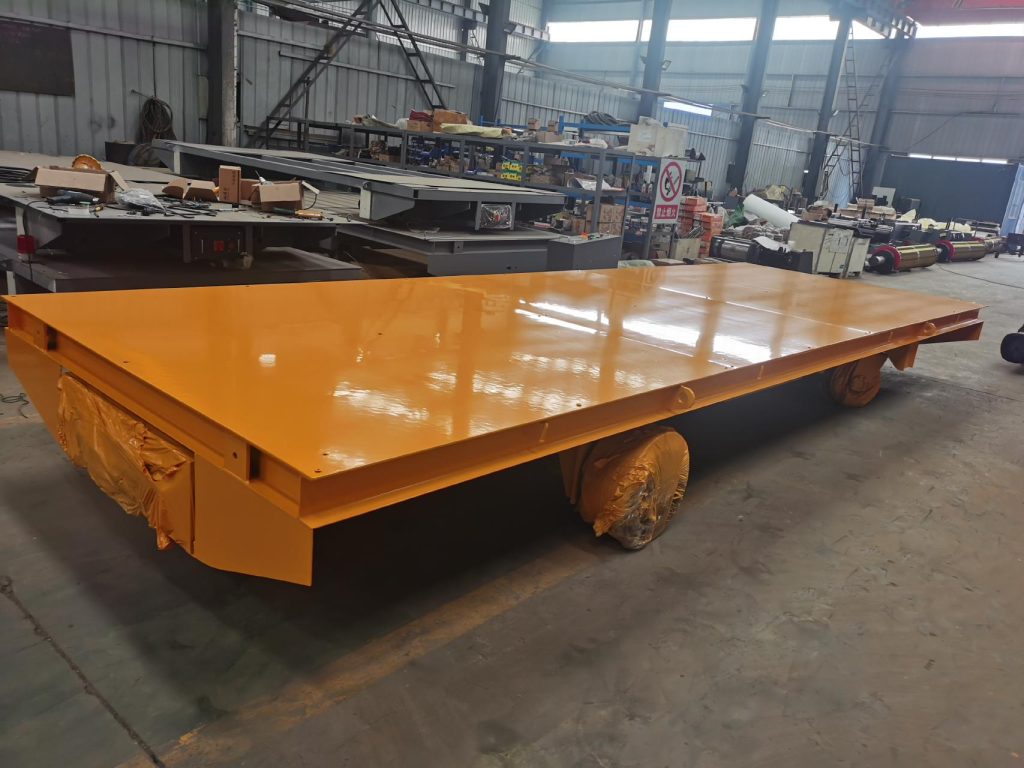
Standard indoor electric trackless transporters typically feature basic powder-coated steel frames adequate for climate-controlled environments. However, outdoor exposure quickly degrades these finishes, particularly in coastal areas with salt air or industrial environments with chemical exposure.
Outdoor-rated electric trackless transporters employ enhanced corrosion protection through multiple approaches. Hot-dip galvanization provides superior protection compared to standard powder coating, with zinc layers providing both barrier protection and sacrificial corrosion resistance. Some manufacturers combine galvanization with powder coating, delivering layered protection against diverse environmental challenges.
Stainless steel construction represents the premium corrosion protection option, though substantially increasing equipment costs. Stainless steel electric trackless transporters prove economically justifiable in extremely corrosive environments—chemical processing facilities, coastal installations, or applications involving frequent washdowns.
Component selection also influences corrosion resistance. Outdoor-rated systems specify stainless steel or zinc-plated fasteners rather than standard carbon steel hardware. Sealed bearings protect against moisture ingress that causes premature bearing failures. Electrical connectors feature gold or tin plating resisting oxidation that degrades conductivity.
A steel mill operating electric trackless transporters in their outdoor scrap yard implemented comprehensive corrosion protection. Frame structures received hot-dip galvanization followed by epoxy powder coating. All fasteners specified 316 stainless steel. Electrical connections utilized gold-plated contacts in IP67-rated connectors. After six years of continuous outdoor exposure—including rain, snow, and temperature ranges from -25°C to 40°C—frame corrosion remained negligible, with no structural repairs required.
Control Systems and Electronics
Electrical control systems represent the most weather-vulnerable electric trackless transporter components. Moisture ingress into control enclosures causes short circuits, corrosion, and electronic component failures. Temperature extremes affect component reliability and performance.
Outdoor-rated control systems require weatherproof enclosures with appropriate IP ratings. NEMA-rated enclosures provide alternative protection standards common in North American markets. NEMA 4X enclosures—equivalent to approximately IP66—deliver adequate protection for most outdoor industrial applications.
Beyond enclosure protection, component selection influences outdoor reliability. Commercial-grade electronic components typically specify operating temperature ranges of 0°C to 70°C—adequate for many outdoor applications. Industrial-grade components extend ranges to -40°C to 85°C, accommodating extreme environments. Military-grade components—occasionally specified for harsh applications—operate across -55°C to 125°C ranges.
Thermal management within control enclosures prevents heat buildup that degrades component reliability. Sealed enclosures lacking ventilation accumulate heat from component operation and solar exposure, creating internal temperatures substantially exceeding ambient conditions. Outdoor-rated electric trackless transporters address this through various approaches: oversized enclosures reducing heat density, heat sinks improving passive cooling, or thermostatically controlled fans providing active cooling while maintaining weather protection.
Condensation represents a particular concern in outdoor control enclosures. Temperature cycling—particularly when warm equipment cools rapidly during evening hours—causes moisture condensation within sealed enclosures. This moisture promotes corrosion and electrical failures. Desiccant breathers allow pressure equalization while absorbing moisture, preventing condensation accumulation.
Environmental Factors Affecting Outdoor Operation
Successful outdoor electric trackless transporter deployment requires understanding environmental conditions and their operational impacts. Different environments present distinct challenges requiring tailored protection approaches.
Temperature Extremes
Temperature represents the most universal outdoor operational variable. Both high and low temperature extremes affect equipment performance, reliability, and longevity.
Cold weather operation presents multiple challenges. Battery capacity decreases substantially at low temperatures—lithium-ion batteries may deliver only 60-70% of rated capacity at -10°C (14°F). Electric motors generate less starting torque in cold conditions. Lubricants thicken, increasing mechanical resistance. Control system response may slow as electronic components approach minimum operating temperatures.
Outdoor-rated electric trackless transporters address cold weather through several strategies. Battery heating systems—either resistive heaters or heat recovery from motor operation—maintain battery temperatures above critical thresholds. Motor controllers may boost starting current compensating for reduced cold-weather torque. Low-temperature lubricants maintain proper viscosity across extended temperature ranges.
Operational protocols also mitigate cold weather impacts. Parking units in heated enclosures during extreme cold periods maintains component temperatures. Pre-heating systems warm batteries and drive components before operation. Reduced-capacity operation during extreme cold prevents over-stressing batteries and motors.
A documented case from a Minnesota manufacturing facility illustrates cold weather operation. Their outdoor electric trackless transporters operate in temperatures reaching -30°C (-22°F). Units feature insulated battery compartments with 500W heaters maintaining minimum 0°C battery temperature. Motors specify synthetic lubricants rated to -40°C. Controllers feature industrial-grade components rated to -40°C operation. Despite harsh conditions, these units maintain 95%+ availability with battery life comparable to moderate-climate installations.
Hot weather presents different but equally significant challenges. High temperatures accelerate battery degradation—every 10°C above optimal operating temperature typically halves battery cycle life. Electronics suffer increased failure rates at elevated temperatures. Solar heating of steel surfaces can create localized temperatures substantially exceeding ambient air temperature.
Effective hot weather strategies include reflective coatings reducing solar heat absorption, ventilated or actively cooled battery compartments, oversized control enclosures reducing heat density, and operational protocols limiting use during peak temperature periods when feasible.
Precipitation and Moisture
Rain, snow, and ambient humidity affect outdoor electric trackless transporter operation through multiple mechanisms. Direct precipitation exposure tests weatherproofing effectiveness. Humidity promotes corrosion and condensation. Standing water creates hazards and operational challenges.
Properly rated IP protection prevents direct precipitation ingress into critical components. However, protection ratings address direct water exposure—they don’t account for water accumulation in spaces where drainage proves inadequate. Outdoor-rated designs incorporate drainage provisions preventing water pooling in battery compartments, control enclosures, or frame cavities where trapped moisture promotes corrosion.
Snow and ice present operational challenges beyond simple moisture exposure. Accumulated snow adds weight potentially exceeding rated capacity when combined with normal loads. Ice formation can jam moving components including wheels, steering mechanisms, and safety sensors. Melting snow creates flooding conditions in poorly drained areas.
Facilities operating electric trackless transporters in snowy climates implement snow management protocols. Units park under cover during heavy snowfall when practical. Operators clear snow accumulation before operation. Heated garages or warming areas prevent ice formation on critical components.
Wind and Outdoor Stability
Wind loading affects outdoor electric trackless transporter stability, particularly for taller loads or units with high centers of gravity. While indoor operations eliminate wind concerns entirely, outdoor deployments must account for wind effects on both loaded and unloaded equipment.
Loaded stability calculations must include wind forces. A 5-ton load elevated 2 meters presents substantial sail area potentially generating significant overturning moments in high winds. Most manufacturers provide stability calculations accounting for static loads only—outdoor operation requires additional analysis incorporating wind loading.
Operational protocols mitigate wind-related stability risks. Maximum wind speed limits for safe operation—typically 15-20 m/s (34-45 mph) for standard configurations—prevent operation during dangerous conditions. Parking protocols secure units during high wind periods. Some facilities deploy wind monitoring systems providing real-time alerts when conditions exceed safe operating limits.
A documented incident illustrates wind stability concerns. A shipping facility operated electric trackless transporters moving shipping containers in their outdoor yard. During a severe windstorm, a unit carrying an empty container (high sail area, low weight) experienced a wind-induced tipping incident. Subsequently, the facility implemented wind speed monitoring with automatic operational restrictions above 12 m/s, eliminating further incidents.
Surface Conditions and Drainage
Outdoor floor surfaces present challenges indoor operations never encounter. Water pooling, mud, ice, and debris affect traction, maneuverability, and equipment longevity.
Standing water presents both operational and safety concerns. Water depths exceeding wheel diameter can submerge electrical components despite IP ratings. Water reduces traction, potentially preventing fully loaded units from climbing even modest grades. Accumulated debris in water creates collision hazards for low-clearance components.
Proper outdoor installations require adequate surface drainage. Graded surfaces directing water away from operational areas, drainage systems managing heavy precipitation, and elevated pathways in flood-prone areas all prove essential for reliable electric trackless transporter operation.
Ice and snow dramatically affect traction and maneuverability. Polyurethane or rubber wheels—optimized for indoor smooth concrete surfaces—provide inadequate traction on ice. Some outdoor applications specify alternative wheel materials or tire-style wheels with treaded surfaces improving winter traction.
A steel mill operating electric trackless transporters in their outdoor storage yard implemented comprehensive surface management. Asphalt surfaces feature 2% grade toward drainage swales preventing water accumulation. High-traffic areas receive priority snow clearing maintaining operational access during winter. Spring maintenance repairs winter damage preventing surface deterioration. These measures enabled reliable year-round outdoor operation in a northern climate experiencing harsh winters.
Operational Limitations and Best Practices
Understanding outdoor electric trackless transporter capabilities requires recognizing inherent limitations and implementing operational protocols maximizing reliability and longevity.
Weather-Related Operational Restrictions
Most outdoor electric trackless transporter deployments implement weather-based operational restrictions balancing productivity against equipment protection and safety.
Temperature limits represent common restrictions. Manufacturers typically specify maximum and minimum operating temperatures—often -20°C to 45°C (-4°F to 113°F) for standard outdoor-rated units. Operation outside these ranges risks equipment damage and safety hazards. Extended-range specifications—sometimes -40°C to 50°C—accommodate extreme-climate applications but command substantial cost premiums.
Precipitation restrictions vary by equipment specification and operational criticality. Units with IP54 protection may restrict operation during heavy rain, while IP65-rated systems typically operate unrestricted except during severe storms. Snow accumulation limits—often 10-15cm depth—prevent operations when ground conditions impair mobility.
Wind restrictions protect both equipment and personnel. Typical limits range from 12-20 m/s (27-45 mph) depending on load characteristics and equipment stability. Facilities in wind-prone areas often install anemometers providing real-time wind speed monitoring and automated alerts when conditions exceed safe limits.
A documented best practice from a container terminal illustrates comprehensive weather protocols. Their outdoor electric trackless transporter operations implement tiered restrictions: Condition Green (normal operation) when temperature between -10°C and 40°C, precipitation less than 5mm/hour, wind below 12 m/s. Condition Yellow (restricted operation) extends to -15°C to 45°C, precipitation to 15mm/hour, wind to 18 m/s, with operational limitations including reduced speeds and restricted load types. Condition Red (suspended operation) occurs beyond these thresholds until conditions improve.
Maintenance Considerations for Outdoor Units
Outdoor operation accelerates wear and increases maintenance requirements compared to indoor-equivalent applications. Dust, moisture, temperature cycling, and contamination all contribute to higher maintenance demands.
Inspection frequency increases for outdoor units. Indoor systems may require detailed inspections quarterly or semi-annually. Outdoor equivalents often warrant monthly inspections examining weatherproofing integrity, corrosion development, moisture accumulation in sealed compartments, and electrical connection condition.
Cleaning represents a more significant maintenance element for outdoor operations. Dirt, dust, and debris accumulation impairs cooling systems, jams moving components, and traps moisture promoting corrosion. Regular cleaning—potentially weekly in dusty outdoor environments—maintains equipment condition and reveals developing issues before failures occur.
Lubrication requirements differ for outdoor operation. Indoor environments maintain relatively stable temperatures and low contamination levels, allowing extended lubrication intervals. Outdoor temperature cycling and contamination exposure degrades lubricants more rapidly, necessitating more frequent greasing and oil changes.
Battery maintenance assumes greater importance outdoors. Monthly battery inspections checking connection tightness, corrosion, and cell voltages catch developing issues early. Periodic deep cleaning of battery compartments removes moisture and contaminants. Battery management systems monitoring individual cell health enable predictive replacement before failures occur.
A manufacturing facility operating mixed indoor and outdoor electric trackless transporter fleets documented maintenance cost differences. Outdoor units required approximately 35% more annual maintenance hours and 28% higher parts costs compared to indoor equivalents. However, these incremental costs proved far less expensive than premature failures—properly maintained outdoor units achieved 90% of indoor unit longevity.
Case Studies: Successful Outdoor Deployments
Real-world examples illustrate how proper specification, environmental protection, and operational protocols enable reliable outdoor electric trackless transporter operation across diverse conditions.
Coastal Shipping Terminal Implementation
A major Gulf Coast container terminal deployed 12 electric trackless transporters in their outdoor container storage yard. The environment presented extreme challenges: salt air, temperature ranges from -5°C to 42°C, frequent rain, and occasional hurricanes.
Equipment specification emphasized environmental protection: IP67-rated control systems, hot-dip galvanized frames with marine-grade powder coating, sealed battery compartments with desiccant breathers, and stainless steel fasteners throughout. Total equipment investment exceeded standard indoor-equivalent units by approximately 25%.
Operational protocols included monthly detailed inspections, bi-weekly washing removing salt accumulation, parking in sheltered areas during severe weather, and temperature-based operational restrictions. After 42 months of operation, fleet availability maintained 96.5%—comparable to indoor installations. Unplanned maintenance costs tracked 18% below budgeted projections based on indoor-equivalent maintenance histories.
The facility manager attributed success to three factors: proper initial specification including environmental protection features, comprehensive operator training emphasizing weather-aware operation, and disciplined preventive maintenance addressing outdoor-specific concerns. While initial equipment costs exceeded standard units, avoided downtime and extended equipment life delivered positive return on investment within 28 months.
Northern Climate Steel Mill Deployment
A Minnesota steel mill operated electric trackless transporters in their outdoor scrap yard experiencing winter temperatures to -30°C and summer peaks exceeding 35°C—a 65°C annual temperature range.
Extreme cold dominated design requirements. Battery compartments featured 15cm insulation and 800W heating systems maintaining minimum 5°C internal temperature. Motors specified synthetic lubricants rated to -50°C. Control systems featured industrial-grade components rated to -40°C operation. Cold weather operational protocols included overnight parking in heated buildings when temperatures dropped below -25°C and pre-heating procedures warming batteries 30 minutes before use during extreme cold.
After five years of operation, these units maintained 94% availability despite harsh conditions. Battery systems achieved 2,800 cycles before capacity degradation required replacement—within 10% of manufacturer specifications for moderate-climate operation. The facility documented approximately 40% higher annual maintenance costs compared to their indoor transfer carts, but cited outdoor operation enablement of yard layout redesign that improved overall facility productivity by 15%.
Conclusion: Outdoor Operation Requires Informed Decisions
Returning to the original question—can electric trackless transporters be used outdoors—the answer encompasses more complexity than simple yes or no. The technology absolutely supports outdoor operation when properly specified, configured, and maintained. However, successful outdoor deployment demands understanding environmental challenges, specifying appropriate protective features, and implementing operational protocols that indoor applications never require.
The shipping terminal manager whose concern opened this article ultimately deployed outdoor-rated units with IP65 protection, enhanced corrosion resistance, and comprehensive weather protocols. After two years of coastal operation, his fleet maintains 97% availability—actually exceeding his previous indoor-only fleet performance. Total cost of ownership tracks 12% higher than indoor equivalents, but the operational flexibility gained from outdoor yard storage enabled facility expansion that would have cost millions through alternative approaches.
For organizations evaluating outdoor electric trackless transporter deployment, success requires honest assessment of environmental conditions, proper equipment specification including necessary protection features, realistic budget expectations accounting for incremental outdoor-related costs, and operational discipline implementing weather-aware protocols and enhanced maintenance.
The question isn’t whether outdoor operation proves possible—clearly it does. The relevant question becomes: does your specific application justify the incremental investment and operational complexity outdoor deployment requires? For many operations, that answer is decisively yes. For others, alternative approaches may prove more practical. Making that determination requires understanding the technical realities this article addresses, not marketing promises or wishful thinking.
Contact us for professional technical support and product quotes.