The Critical Importance and Cost-Benefit Analysis of Electric Hoist Maintenance
Electric hoist systems serve as essential components in industrial lifting operations, with their operational status directly impacting production efficiency and safety standards. According to the Crane Manufacturers Association of America (CMAA) 2024 industry report, improper equipment maintenance results in downtime representing 12-15% of total production time, while regular preventive maintenance reduces unexpected failure rates by 68%.
Many enterprises adopt reactive maintenance strategies, addressing equipment failures only after they occur. This approach generates substantial emergency repair costs and creates serious safety hazards. An effective electric hoist maintenance program significantly extends equipment lifespan and reduces overall operational expenses.
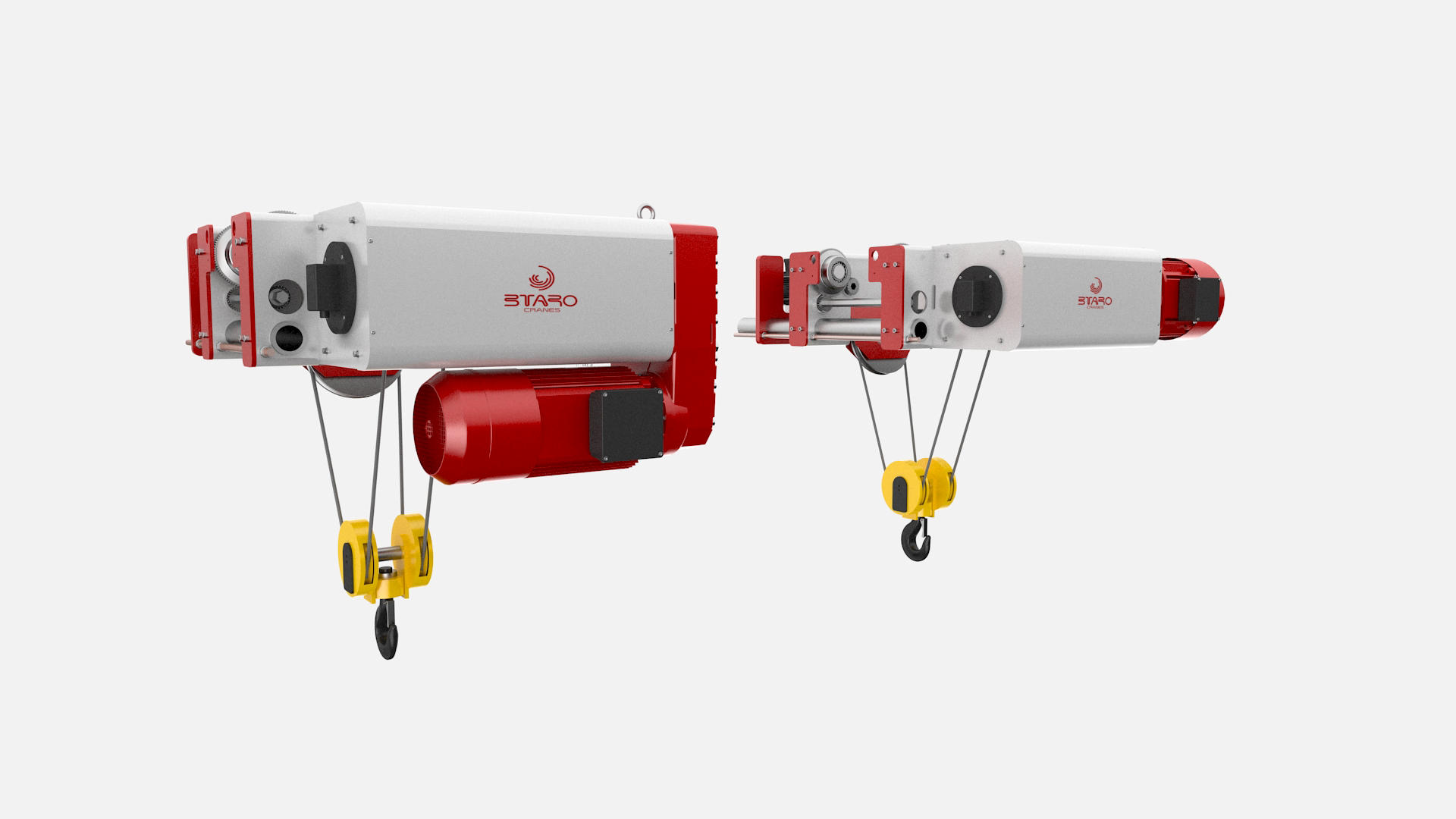
Primary Components and Targeted Maintenance Strategies
Professional Motor and Drive System Maintenance
Motor preservation represents the cornerstone of maintenance operations. Electric hoists typically employ three-phase asynchronous AC motors with protection ratings of IP55 or IP65. Critical maintenance parameters include:
- Winding insulation resistance: Measure with a megohmmeter; values should exceed 0.5MΩ
- Bearing lubrication status: Replenish bearing grease every 3-6 months using NLGI Grade 2 lithium-based lubricant
- Power voltage stability: Three-phase voltage imbalance should remain within ±3%
Thyssen Krupp’s industrial logistics research indicates that motor bearing failures account for 42% of electric hoist equipment failures. Timely lubrication system maintenance reduces bearing wear rates and extends service life by 3-5 times.
Gearbox and Transmission Chain Maintenance Techniques
The gearbox functions as a critical power transmission component, with internal gears and bearings requiring consistent lubrication. Standard maintenance procedures include:
- Oil analysis: Monthly inspection of gearbox oil viscosity and cleanliness levels
- Oil level verification: Maintain oil at the midpoint of the sight glass indicator
- Change intervals: Replace oil after initial 500 hours of operation; subsequently every 2,000 hours
For chain drive systems, regular inspection of chain tension (vertical sag at midspan should measure 10-20mm), wear progression, and lubrication condition is essential. Shanghai Zhenhua Heavy Industry’s maintenance data demonstrates that regular chain lubrication reduces transmission efficiency losses from 8% to 2%.
Brake System and Safety Device Inspection Standards
Brake maintenance directly determines equipment safety performance. Hydraulic brake systems require inspection per these standards:
- Verify brake torque compliance with design specifications (braking force should be ≥125% of rated load)
- Replace brake fluid annually or after 1,000 operating hours
- Brake disc friction surface wear should not exceed 30% of original thickness
Safety limit switches and overload protection devices require functional testing quarterly to ensure sensitivity and reliability. Hitachi Construction Machinery’s case studies indicate that regular safety device inspection reduces incident rates by 84%.
Common Issues and Diagnostic Solutions in Electric Hoist Maintenance
Abnormal Noise Diagnosis and Resolution Methods
Operational noise anomalies typically indicate internal mechanical problems. Common causes include:
Gear wear: When noise presents as a “humming” sound that intensifies with increased load, possible gear mesh misalignment or deterioration exists. Inspect gear clearance and replace gears if necessary.
Bearing failure: Sharp “squeaking” sounds often indicate insufficient bearing lubrication. Immediately halt operation, replenish bearing grease, and replace bearings if the condition persists.
Chain slack: “Rattling” sounds suggest excessive chain tension slack. Adjusting chain tension to standard parameters (10-20mm sag) resolves the issue.
Troubleshooting Slow Lifting or Complete Lifting Failure
These failures typically involve multiple systems, requiring diagnostic procedures following this sequence:
- Power supply verification: Confirm three-phase voltage within ±5% range
- Control system testing: Inspect contactor and button switch operation
- Brake mechanism inspection: Verify complete brake release and solenoid coil energization
- Mechanical system assessment: Check gearbox oil viscosity, chain tension, and bearing resistance
Beijing Lifting and Transportation Machinery Factory’s technical support data reveals that approximately 60% of lifting insufficiency issues stem from elevated lubricating oil viscosity causing increased resistance, resolved simply by changing to appropriate viscosity-grade oil.
Customized Maintenance Strategies for Different Operating Environments
Specialized Maintenance Requirements for High-Temperature Environments
In metallurgical and foundry applications, electric hoists encounter extreme operating conditions. Maintenance priorities should emphasize:
- Cooling system management: Ensure motor heat sink cleanliness; install forced cooling devices if necessary
- Lubricant selection: Utilize high-temperature oxidation-resistant oils (ISO VG 46 high-temperature grades) to reduce oil oxidation rates
- Inspection frequency enhancement: Conduct comprehensive inspections monthly rather than quarterly
Hyundai Heavy Industries’ case study demonstrates that high-temperature adapted maintenance protocols extend equipment lifespan from 8 years to 12 years in steel mill environments.
Protective Measures for Corrosive, Moisture-Rich Environments
In ports and shipbuilding facilities with high salt content and humidity, corrosion protection becomes critical:
- Anti-corrosion coating: Conduct annual protective layer inspection and reapplication
- Waterproof sealing: Ensure motor junction boxes and controllers maintain ≥IP65 protection rating
- Moisture removal: Periodically eliminate salt accumulation and moisture; employ desiccant protection
Stress Management in Frequent-Start Applications
In port cargo handling and warehouse sorting scenarios with frequent activation, mechanical impact stress increases significantly:
- Brake component lifespan assessment: Frequent starts accelerate brake disc wear; increase inspection frequency to monthly intervals
- Motor thermal protection: Monitor motor temperature rise; frequent cycling increases thermal load
- Gear inspection cycles: Adjust from 2,000-hour to 1,500-hour inspection intervals
Establishing and Implementing Preventive Maintenance Plans
Maintenance Documentation System Development
Electric hoist maintenance records should encompass:
- Equipment specifications (model, serial number, acquisition date, rated load capacity)
- Periodic inspection logs (inspection date, checklist items, findings, corrective actions)
- Repair history (failure description, root cause analysis, repair methodology, replaced components)
- Lubrication change records (replacement date, lubricant type, quantity changed)
International Standard ISO 11161 recommends establishing digital maintenance management systems enabling data traceability and trend analysis.
Maintenance Schedule Standards and Intervals
Per GB/T 13752-2008 “Electric Hoist Safety Specifications,” recommended maintenance intervals are:
| Maintenance Task | Interval | Specific Requirements |
|---|---|---|
| Daily inspection | Per shift | Assess noise, vibration, heat generation |
| Oil analysis | Monthly | Verify viscosity, cleanliness, water content |
| Component inspection | Quarterly | Assess wear, clearances, fastening security |
| Brake system testing | Semi-annually | Verify brake torque and disc wear |
| Comprehensive maintenance | Annually | Oil replacement, comprehensive component inspection |
| Major overhaul assessment | Every 3-5 years | Comprehensive equipment condition evaluation |
Professional Competency Requirements for Maintenance Personnel
Effective maintenance execution requires specialized technical expertise. Maintenance technicians should possess:
- Electrical fundamentals: Comprehend three-phase asynchronous motor principles and control circuits
- Mechanical repair proficiency: Disassemble, inspect, and lubricate mechanical transmission systems
- Diagnostic capabilities: Identify equipment conditions through sound, temperature, and vibration analysis
- Safety awareness: Strictly adhere to lifting equipment safety operation standards
Numerous organizations establish electric hoist maintenance certification programs requiring personnel to obtain industry-recognized credentials.
Comparative Cost Analysis: Preventive Maintenance versus Emergency Repairs
Society for Maintenance & Reliability Professionals (SMRP) research demonstrates significant cost differential between preventive maintenance and reactive repair approaches:
- Preventive maintenance cost: 2-3% of equipment purchase price annually
- Reactive repair cost: 5-8% of equipment purchase price annually
- Average failure-induced downtime cost: $400-$1,100 USD per hour (varies by industry)
A 50-million-yuan ($7 million USD) electric hoist system implementing preventive maintenance protocols achieves annual savings of approximately $2,000-$3,500 USD while preventing production losses from unexpected failures.
Emerging Technologies in Electric Hoist Maintenance Applications
Condition Monitoring and Predictive Maintenance Systems
With advancing IoT technology, real-time condition monitoring has become the industry standard for equipment maintenance. Modern electric hoists can incorporate:
- Temperature sensors: Real-time monitoring of motor and gearbox temperatures with alarm thresholds
- Vibration sensors: Detect anomalous vibration patterns and diagnose mechanical failures
- Oil condition monitoring modules: Analyze lubricant viscosity, cleanliness, and water content variations
Sensor data transmits via industrial IoT platforms for analysis, enabling transition from scheduled maintenance to condition-based maintenance.
Big Data and AI Applications in Failure Prediction
Domestic enterprises such as ZOOMLION have integrated machine learning algorithms into lifting equipment maintenance prediction systems. Historical operational data analysis enables:
- Prediction of bearing failure windows (85%+ accuracy)
- Gearbox wear progression assessment with 2-4 week advance replacement notification
- Anomalous operation pattern identification indicating improper usage or overloading conditions
Key Recommendations and Conclusion
Electric hoist maintenance transcends technical equipment preservation, representing a strategic operational decision affecting safety and economic performance. Effective maintenance management encompasses:
- Systematic maintenance planning: Develop differentiated maintenance strategies based on equipment specifications and operational environments
- Professional team development: Invest in personnel training and enhance diagnostic capabilities
- Modern monitoring technology adoption: Progressively integrate sensors and analytical tools
- Comprehensive documentation: Optimize maintenance strategies through operational data feedback
Preventive maintenance investment typically generates 3-4x return on investment throughout the equipment lifecycle. In today’s manufacturing efficiency-focused environment, prioritizing equipment maintenance has become essential for competitive advantage.