How to Choose the Right Electric Transfer Cart: Complete Buyer’s Guide 2026
Choosing the right electric transfer cart requires careful evaluation of load capacity, power supply options, operational environment, and budget constraints to ensure optimal material handling performance and long-term reliability. According to industry data from 2024, approximately 65% of manufacturers who systematically assess their electric transfer cart requirements before purchasing achieve 40% higher equipment utilization rates compared to those making hasty decisions. This comprehensive electric transfer cart selection guide provides step-by-step criteria covering capacity calculations, power system comparisons, track versus trackless configurations, safety features, and customization options, enabling facility managers and engineers to select equipment that maximizes productivity while minimizing total cost of ownership over typical 10-15 year service lives.
Understanding Electric Transfer Cart Basics
What is an Electric Transfer Cart
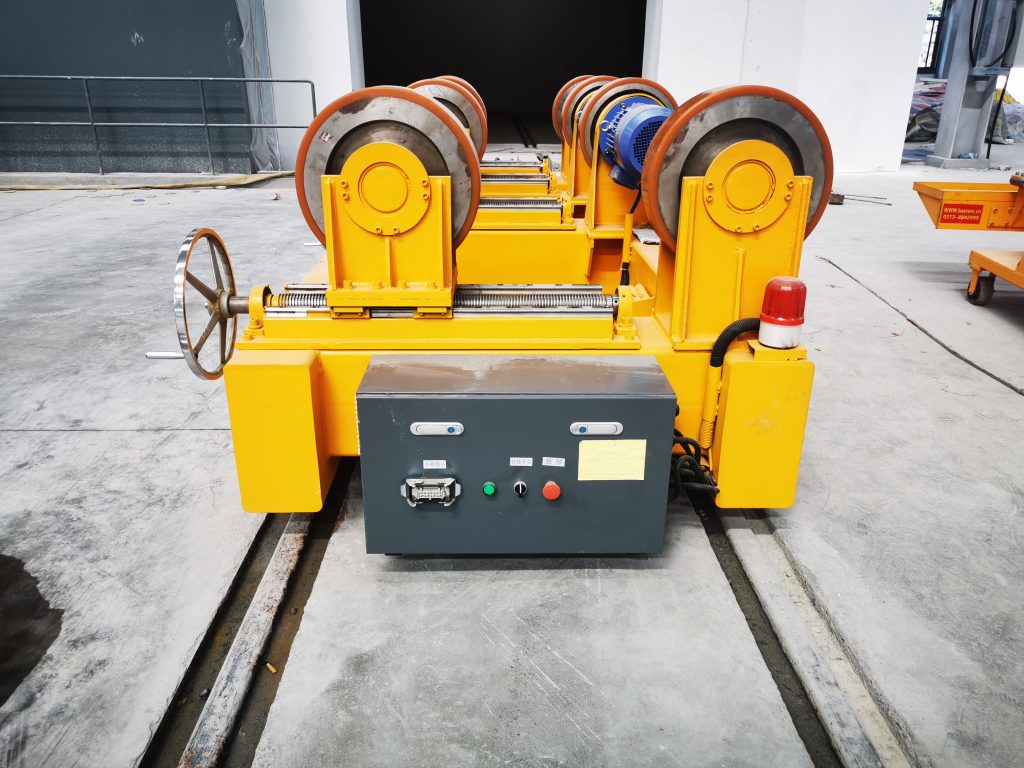
An electric transfer cart represents a specialized industrial vehicle designed for transporting heavy materials and equipment within manufacturing facilities, warehouses, and production areas. Unlike forklifts requiring manual operation and limited load capacity, electric transfer cart systems move loads ranging from 1 ton to 400 tons across factory floors efficiently.
The fundamental design consists of a steel platform mounted on wheels, powered by electric motors drawing energy from batteries, cables, or electrified rails. This electric transfer cart configuration enables movement of oversized loads impossible with conventional material handling equipment. Therefore, facilities handling heavy machinery, steel coils, molds, or bulk materials increasingly adopt this technology.
Modern designs incorporate advanced control systems offering precise speed regulation and positioning accuracy. Furthermore, customization options accommodate specific load geometries, environmental conditions, and operational requirements. Industry surveys indicate 72% of manufacturers using these systems report significant productivity improvements within the first year of implementation.
Key Components and Features
The platform or table forms the load-bearing surface supporting transported materials. Construction typically utilizes heavy-duty steel providing structural rigidity under extreme loads. Table dimensions range from compact 2×3 meter configurations to massive 8×15 meter platforms accommodating complete production lines.
Drive systems consist of electric motors, gearboxes, and wheels delivering required tractive effort. Motor power varies from 1.5 kW for light-duty units to 45 kW for heavy industrial applications. Moreover, variable frequency drives enable smooth acceleration preventing load shifting during starts and stops.
Control systems range from simple pendant controllers to sophisticated wireless remote controls and fully automated guidance systems. Advanced units incorporate proximity sensors, emergency stop mechanisms, and automated positioning capabilities. Additionally, load monitoring systems provide real-time weight data enhancing operational safety.
Power delivery mechanisms fundamentally determine operational characteristics and costs. Battery systems offer maximum flexibility without infrastructure requirements. Cable reel systems suit medium-distance applications with frequent repositioning. Rail-powered configurations provide unlimited range for fixed-path operations.
Assessing Your Load Requirements
Calculating Capacity Needs
Load capacity represents the most critical electric transfer cart specification requiring accurate determination before equipment selection. Begin by identifying the heaviest load requiring transport including all fixtures, tooling, and securing devices. Subsequently, add appropriate safety margins accounting for dynamic forces during acceleration, braking, and turning.
Engineers typically apply 1.3 to 1.5 safety factors to calculated loads. For example, transporting a 15-ton machine with 2-ton fixturing totals 17 tons. Applying 1.3 safety factor yields 22.1 tons, suggesting a 25-ton rated electric transfer cart unit. Consequently, adequate capacity prevents structural failures and premature component wear.
Consider future requirements when sizing equipment. Facilities experiencing growth often find initially adequate capacity insufficient within 3-5 years. Therefore, selecting the next higher capacity rating accommodates evolving needs without premature replacement. However, excessive over-sizing increases initial costs unnecessarily.
Load Characteristics Analysis
Beyond weight, load geometry significantly influences equipment selection. Measure maximum length, width, and height of transported items determining required table dimensions. Additionally, account for securing devices, protective packaging, and handling clearances around the load.
Center of gravity location affects stability and capacity. High center of gravity loads require wider wheelbases and lower speeds maintaining stability. Therefore, document center of gravity height and lateral position for engineering analysis. Furthermore, unbalanced loads necessitate reinforced table structures preventing deflection.
Load type determines specialized features. Steel coils require V-shaped cradles preventing rolling. Molds need precision positioning systems. Hot materials demand heat-resistant deck surfaces and elevated clearances. Consequently, thoroughly document load characteristics enabling appropriate equipment specification.
Frequency and Distance Analysis
Operating frequency significantly impacts power system selection and component specifications. Calculate daily cycles including loading time, transport duration, and unloading procedures. Additionally, measure typical transport distances and identify maximum travel requirements.
High-frequency operations exceeding 20 cycles daily require robust drive components and efficient power systems. Battery-powered units need sufficient capacity or rapid charging capability. Moreover, continuous duty applications necessitate enhanced cooling systems preventing overheating.
Transportation distance affects power delivery selection. Short distances under 50 meters suit battery systems. Medium distances 50-150 meters accommodate cable reel configurations. Long distances exceeding 150 meters favor rail-powered or busbar systems. Therefore, distance analysis guides optimal power system selection.
Power System Selection Criteria
Battery Powered Systems
Battery powered electric transfer cart units offer maximum operational flexibility without fixed infrastructure requirements. These systems operate anywhere within facilities, change paths easily, and accommodate evolving layouts. Lithium-ion batteries provide 4-8 hour runtime with 2-3 hour recharge cycles depending on capacity and usage intensity.
Initial costs for battery powered electric transfer cart systems typically run 15-25% higher than rail-powered equivalents. However, elimination of track installation expenses often results in lower total project costs for applications under 100 meters. Furthermore, portability enables equipment redeployment as facility needs change.
Battery technology selection impacts performance and costs significantly. Lead-acid batteries offer lower initial investment but require frequent maintenance and shorter service life. Lithium-ion batteries command premium pricing yet deliver 3-5 times longer service life with minimal maintenance. Moreover, lithium technology provides consistent voltage throughout discharge cycles maintaining performance.
Operating environments affect battery selection. Cold storage facilities require specialized low-temperature batteries. Hot environments need enhanced thermal management. Additionally, explosion-proof enclosures add costs in hazardous locations. Therefore, environmental assessment guides appropriate battery specification.
Rail Powered Systems
Rail powered configurations draw electricity directly from tracks, providing unlimited operating range without batteries or cables. This system suits high-frequency applications with fixed transport paths between production stations. Furthermore, elimination of battery charging downtime maximizes equipment availability.
Low voltage rail systems (typically 36V AC) offer enhanced safety compared to standard industrial voltages. Transformers reduce facility power to safe levels delivered through insulated rails. Subsequently, onboard transformers boost voltage to levels required by motors and controls. Consequently, operator contact hazards minimize significantly.
Installation requirements include rail laying, electrical trenches, and transformer stations. Initial infrastructure costs range $150-300 per meter depending on complexity and load capacity. However, operational costs remain minimal with no battery replacement expenses. Therefore, rail systems prove economically advantageous for permanent installations exceeding 100 meters.
Track maintenance proves simpler than battery systems. Periodic inspection ensures rail alignment and electrical continuity. Moreover, rail replacement occurs only after years of service. Additionally, system expansion requires only extending tracks to new areas.
Cable Reel Systems
Cable reel powered units suit medium-distance applications combining flexibility with unlimited runtime. A spring-loaded or motor-driven reel automatically winds cable as the cart moves. This configuration eliminates battery charging while providing path flexibility within cable length limits.
Typical cable lengths range 30-100 meters accommodating most intra-facility transport requirements. Longer cables become unwieldy and prone to tangling. Moreover, cable drag increases motor loads reducing efficiency. Therefore, cable systems optimally serve defined work areas rather than facility-wide applications.
Initial costs fall between battery and rail systems. Cable reels add $2,000-8,000 depending on length and capacity. However, no infrastructure installation occurs beyond electrical connection points. Consequently, total project costs remain moderate for appropriate applications.
Cable maintenance focuses on preventing damage from pinching, abrasion, or excessive bending. Regular inspection identifies worn insulation requiring replacement. Additionally, periodic reel mechanism lubrication ensures smooth operation. Furthermore, cable replacement every 3-5 years prevents failures during critical operations.
Busbar Systems
Busbar powered systems collect electricity from overhead or ground-level conductor bars, combining unlimited range with infrastructure simplicity. Collector shoes sliding along conductors deliver continuous power without cables or batteries. This configuration proves ideal for production lines requiring frequent cart movement.
Overhead busbar installations keep conductors elevated preventing floor obstructions. However, ceiling-mounted systems require adequate structural support and clearance. Ground-level busbar systems simplify installation but need protective covers in high-traffic areas. Therefore, facility layout influences busbar placement decisions.
Maintenance requirements include periodic collector shoe replacement and conductor cleaning. Dust accumulation impedes electrical contact reducing performance. Moreover, misalignment between conductors and collectors causes arcing and component damage. Consequently, precise installation and regular inspection ensure reliability.
Cost considerations favor busbar systems for multiple cart applications. Initial infrastructure investment spreads across several units reducing per-cart costs. Additionally, busbar systems accommodate easy capacity expansion by adding carts without power system modifications. Therefore, facilities planning growth benefit from this scalability.
| Power System | Initial Cost | Operating Range | Best Applications | Maintenance Level |
|---|---|---|---|---|
| Battery (Lead-Acid) | $8,000-$25,000 | 4-8 hours | Flexible routing, <50m | High |
| Battery (Lithium) | $15,000-$45,000 | 6-10 hours | Flexible routing, variable paths | Low |
| Cable Reel | $10,000-$30,000 | 30-100m | Fixed work zones | Medium |
| Rail Powered | $12,000-$35,000 + track | Unlimited | Repetitive fixed paths | Low |
| Busbar | $15,000-$40,000 + bars | Unlimited | Production lines, multiple carts | Medium |
Track Configuration Options
Rail Transfer Cart Systems
Rail transfer carts operate on fixed tracks providing guided movement between designated points. I-beam, flat bar, or square tube rails installed flush with floor surfaces guide wheels maintaining precise paths. This configuration suits repetitive electric transfer cart transport tasks in production environments.
Advantages include superior load capacity reaching 400+ tons on properly engineered tracks. Rails distribute concentrated loads preventing floor damage. Moreover, guided operation eliminates steering mechanisms simplifying controls and reducing costs. Additionally, tracks enable electric transfer cart operation on S-curves and inclines impossible with trackless designs.
Track installation requires professional engineering ensuring proper alignment and structural support. Specifications typically allow ±3mm deviation across entire lengths. Consequently, precise installation prevents binding and excessive wheel wear. Furthermore, floor preparation includes leveling and reinforcement accommodating concentrated loads.
Operating environments affect track design. Outdoor installations need weather-resistant rails and drainage provisions. Facilities with floor cleaning requirements prefer flush-mounted tracks preventing water accumulation. Moreover, expansion joints accommodate temperature variations preventing track buckling. Therefore, environmental assessment guides appropriate rail specification.
Trackless Transfer Cart Systems
Trackless electric transfer cart configurations operate freely on any flat surface offering maximum flexibility for changing facility layouts. Steering systems enable turning radii as tight as the vehicle length. This maneuverability proves valuable in congested production areas requiring frequent path changes.
Four-wheel steering systems provide enhanced electric transfer cart maneuverability enabling 360-degree rotation within the vehicle footprint. Standard front-wheel steering offers simpler design at lower costs. Additionally, some designs incorporate differential steering using independent motor control for each wheel. Consequently, steering selection balances maneuverability requirements against complexity and costs.
Floor requirements prove less stringent than rail systems. Smooth concrete surfaces with minimal slope changes suffice for most applications. However, uneven floors cause stability issues requiring pre-installation leveling. Moreover, heavy units may damage weak floors necessitating reinforcement. Therefore, floor assessment precedes equipment selection.
Capacity limitations constrain trackless applications typically under 100 tons. Wheel loading concentrates forces on small contact patches potentially damaging floors. Furthermore, turning forces during steering create lateral loads affecting stability. Consequently, ultra-heavy loads generally require rail systems distributing forces more effectively.
Hybrid Systems
Some applications benefit from hybrid designs combining rail and trackless capabilities. Turntable intersections enable path changes without complex track switching. Carts transition from fixed rails onto turntables rotating to desired directions before continuing on different track sections.
Transfer bridges connect track systems across aisles or production areas. Carts traverse these moveable sections accessing multiple parallel tracks. This configuration maximizes flexibility while maintaining rail system benefits. Moreover, transfer bridges accommodate facility modifications without permanent track alterations.
Retractable rail systems suit facilities requiring occasional heavy transport. Tracks install temporarily for major equipment moves then remove for normal operations. However, frequent installation and removal increases labor costs. Therefore, this approach suits infrequent heavy transport requirements.
Essential Safety Features
Operator Controls and Protection
Control system selection significantly impacts operational safety and efficiency. Pendant controls with umbilical cables suit slow-speed applications where operators walk alongside carts. This arrangement provides direct load visibility during movement. However, cables limit operating range and may create tripping hazards.
Wireless remote controls enhance operator safety by enabling control from safe distances. Operators position themselves optimally for load visibility while maintaining separation from moving equipment. Moreover, wireless systems eliminate cable entanglement risks in congested areas. Additionally, emergency stop functions remain accessible during all operations.
Cabin-mounted controls suit long-distance transport or high-speed applications. Enclosed operator stations provide protection from weather and moving loads. Climate control enhances comfort during extended operations. Furthermore, ergonomic control placement reduces operator fatigue improving safety and productivity.
Automated systems remove operators from direct control implementing pre-programmed movement patterns. Sensors detect obstacles halting movement before collisions. Moreover, automated guidance ensures consistent positioning accuracy. However, automation requires substantial initial investment and ongoing technical support. Therefore, automation suits high-volume repetitive operations justifying added complexity.
Emergency Stop Systems
Emergency stop mechanisms prove essential for all powered equipment. Multiple emergency stop buttons positioned around the cart perimeter enable quick access from any location. Additionally, wireless remotes include prominent emergency stop controls. Subsequently, any activation immediately cuts power to drive motors preventing further movement.
Emergency stop circuits require fail-safe design maintaining stopped condition until deliberate reset occurs. Simple loss of electrical power must trigger emergency stop preventing unintended movement during power fluctuations. Moreover, emergency stop activation should illuminate warning indicators alerting nearby personnel. Therefore, robust emergency stop systems form the foundation of operational safety.
Testing protocols verify emergency stop functionality before each operational period. Operators confirm all emergency stop buttons function properly. Subsequently, any malfunctioning emergency stop devices require immediate repair before equipment operation resumes. Additionally, periodic comprehensive testing by qualified technicians ensures continued system reliability.
Collision Avoidance Systems
Proximity sensors detect obstacles in the cart’s path triggering automatic speed reduction or stopping. Ultrasonic, infrared, or laser sensors provide detection ranges from 0.5-5 meters depending on application requirements. Consequently, approaching obstacles trigger warnings alerting operators before collisions occur.
Anti-collision systems prove particularly valuable in facilities with multiple carts or heavy personnel traffic. Sensor arrays surrounding cart perimeters provide 360-degree detection. Moreover, adjustable sensitivity accommodates varying operational speeds and stopping distances. Additionally, visual and audible warnings alert nearby personnel of approaching equipment.
Bumper systems provide last-line collision protection. Spring-loaded or pneumatic bumpers compress on contact triggering immediate emergency stops. Furthermore, robust bumper construction protects cart and facility structures from damage during accidental contact. Therefore, multi-layered protection strategies minimize collision risks.
Warning Systems
Audio warning devices alert personnel of cart operation and movement direction. Backup alarms sound during reverse motion matching specifications for mobile equipment. Moreover, travel alarms provide continuous notification during forward movement in high-traffic areas. Additionally, distinctive alarm tones enable personnel to identify equipment types without visual confirmation.
Visual warning indicators enhance safety in noisy environments where audio alarms prove ineffective. Rotating beacons or strobe lights provide visible indication of cart operation. Furthermore, directional indicators show intended movement direction enabling personnel to anticipate cart paths. Therefore, combined audio-visual systems maximize warning effectiveness across various environments.
Warning system maintenance ensures continued functionality. Regular testing verifies alarm audibility and light visibility. Moreover, immediate replacement of failed warning devices prevents safety system degradation. Additionally, periodic sound level measurements confirm alarm audibility over facility background noise. Consequently, systematic maintenance sustains warning system effectiveness.
Customization and Special Features
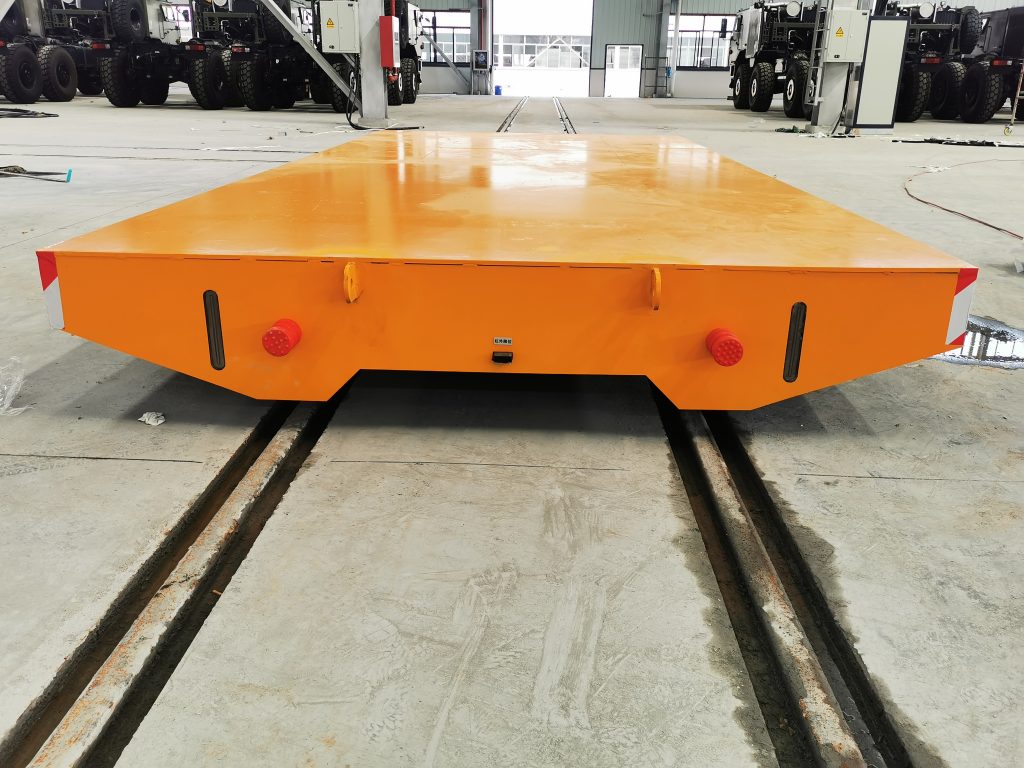
Table Surface Modifications
Standard flat steel tables suit many general applications. However, specialized loads often require customized table surfaces. Roller conveyors integrated into table surfaces enable easy loading and unloading of palletized materials. Motors drive roller sections facilitating automated transfer between carts and adjacent equipment.
V-shaped cradles prevent cylindrical loads from rolling during transport. Steel coils, pipes, and cable reels require secure positioning preventing dangerous shifting. Adjustable cradle widths accommodate varying load diameters. Moreover, padded cradle surfaces protect finished materials from scratches and dents.
Tilting or rotating table mechanisms enable load orientation changes during transport. Hydraulic cylinders provide controlled tilting for pouring, dumping, or positioning operations. Additionally, rotating turntables facilitate load access from any direction without repositioning entire carts. Therefore, these features eliminate secondary handling operations improving efficiency.
Heat-resistant table surfaces accommodate hot materials from furnaces or casting operations. Refractory brick or ceramic insulation protects structural steel from extreme temperatures. Moreover, elevated table heights provide clearance for heat dissipation. Additionally, thermal barriers prevent heat transfer to wheelsand drive components.
Lifting Mechanisms
Hydraulic lifting platforms integrated into cart tables enable height adjustment for loading, unloading, or process access. Scissor lift mechanisms provide vertical travel ranging 300-1500mm depending on capacity requirements. Consequently, operators access loads at ergonomic heights reducing strain injuries.
Lift capacity typically matches cart capacity though some applications require only partial load lifting. Control systems integrate lifting functions with cart motion preventing simultaneous operation ensuring stability. Moreover, mechanical locks secure lifted positions during extended holding periods. Additionally, overload protection prevents unsafe lifting attempts exceeding capacity limits.
Tilting platforms facilitate material discharge for bulk handling applications. Hydraulic cylinders gradually elevate one table end creating controlled gravity flow. Tilt angles typically range 0-45 degrees depending on material characteristics. Furthermore, variable speed tilting prevents sudden material release improving safety and control.
Load Monitoring Systems
Electronic load cells integrated into cart structures provide real-time weight measurement. Digital displays show current load preventing accidental overloading. Moreover, data logging capabilities record load history supporting quality documentation. Additionally, wireless data transmission enables remote monitoring and fleet management.
Overload prevention systems halt cart operation when loads exceed rated capacity. Visual and audible warnings alert operators before reaching maximum capacity. Furthermore, progressive warnings at 80%, 90%, and 100% capacity enable controlled loading. Therefore, overload protection prevents structural damage and safety hazards.
Load distribution monitoring detects unbalanced loading affecting stability. Multiple load cells positioned across table surfaces measure weight distribution. Consequently, excessive imbalance triggers warnings prompting load repositioning. This capability proves particularly valuable for large platforms carrying multiple items simultaneously.
Environmental Protection
Explosion-proof designs suit hazardous locations with flammable vapors or combustible dust. Sealed electrical enclosures prevent ignition sources contacting explosive atmospheres. Moreover, non-sparking materials eliminate friction spark risks. Additionally, intrinsically safe control circuits limit energy levels preventing ignition. Therefore, certified explosion-proof construction enables safe operation in chemical plants, refineries, and grain handling facilities.
Weather protection for outdoor applications includes sealed electrical enclosures, corrosion-resistant coatings, and drainage provisions. Stainless steel construction or specialized coatings prevent rust degradation. Furthermore, sealed bearing systems exclude moisture and contaminants. Additionally, heaters maintain component temperatures in freezing conditions. Consequently, weatherized units operate reliably across extreme temperature ranges.
Clean room compatible designs prevent particulate generation in sensitive manufacturing environments. Stainless steel construction eliminates oxidation and shedding. Moreover, sealed bearings and drives prevent lubricant contamination. Additionally, smooth surfaces facilitate cleaning and decontamination. Therefore, clean room specifications enable electronics and pharmaceutical applications.
Budget and Cost Considerations
Initial Purchase Price Factors
Capacity represents the primary cost driver for these vehicles. Light-duty units under 10 tons start around $8,000-15,000 for basic configurations. Mid-range systems 10-50 tons typically cost $15,000-$45,000 depending on features. Heavy-duty equipment exceeding 50 tons commands $45,000-$150,000+ for specialized applications.
Power system selection significantly affects pricing. Battery powered units cost 15-25% more than cable or rail systems initially. However, rail installations require additional infrastructure investment $150-300 per meter. Therefore, total project costs depend on application-specific requirements rather than equipment prices alone.
Customization adds incremental costs based on complexity. Simple table modifications like drilling mounting holes add minimal expense. Hydraulic lifting systems increase costs $3,000-$15,000 depending on capacity and travel. Sophisticated automation and control systems may double base equipment costs. Consequently, balancing standard features against custom requirements optimizes value.
Installation and Infrastructure Costs
Rail system installation represents significant project expense beyond equipment costs. Professional track installation services charge $150-300 per meter including materials and labor. Moreover, floor preparation adds $50-150 per square meter for leveling and reinforcement. Additionally, electrical infrastructure for rail power systems requires transformer stations and distribution equipment.
Battery systems eliminate infrastructure requirements reducing total project costs for short-distance applications. However, charging stations necessitate electrical connections and floor space. Multi-bay charging facilities serving several units require substantial electrical service upgrades. Therefore, infrastructure assessment guides accurate total cost estimation.
Commissioning and training services ensure proper operation and safety. Professional commissioning verifies correct installation and operational performance. Subsequently, operator training familiarizes personnel with controls, safety systems, and maintenance requirements. Budget $2,000-$8,000 for comprehensive commissioning and training services. Consequently, proper commissioning prevents operational issues and premature equipment damage.
Operating Cost Analysis
Energy consumption varies significantly by power system and usage intensity. Battery powered units consume approximately 10-25 kWh per 8-hour shift depending on capacity and duty cycle. At $0.12/kWh average industrial electricity rates, daily energy costs reach $1.20-$3.00. Rail powered systems show similar consumption patterns. Therefore, energy costs prove relatively modest compared to labor savings.
Battery replacement represents the largest operating expense for battery powered systems. Lead-acid batteries require replacement every 2-4 years costing $2,000-$8,000. Lithium-ion batteries last 5-10 years but cost $8,000-$25,000 for replacement. Consequently, battery technology selection significantly impacts lifecycle costs despite higher initial investment for lithium systems.
Maintenance requirements affect ongoing costs through labor and component replacement. Routine maintenance including lubrication, inspection, and adjustment totals $500-$2,000 annually. Component replacement for wheels, bearings, and drive elements averages $1,000-$5,000 annually depending on usage intensity. Therefore, well-maintained equipment delivers lower total operating costs over 10-15 year service lives.
Return on Investment Calculation
Labor savings typically drive equipment justification. Calculate current manual handling labor hours for equivalent material movements. Subsequently, multiply labor hours by fully-burdened hourly rates including wages, benefits, and overhead. Compare against equipment costs including purchase, installation, and annual operating expenses.
Example calculation: Manufacturing facility moves twenty 5-ton loads daily requiring 45 minutes each with three workers using forklifts and rigging equipment. Daily labor totals 45 hours. At $35/hour fully-burdened rate, annual labor costs reach $409,500 (250 working days). An electric transfer cart costing $35,000 with $5,000 annual operating costs shows payback under 3 months.
Productivity improvements generate additional returns beyond direct labor savings. Faster cycle times increase production throughput. Consequently, revenue increases without proportional cost growth. Moreover, reduced equipment damage from gentle handling decreases replacement expenses. Additionally, improved workplace safety reduces insurance premiums and incident costs. Therefore, comprehensive financial analysis captures total value proposition.
Vendor Selection and Procurement
Manufacturer Evaluation Criteria
Manufacturing experience and specialization indicate technical capability. Established manufacturers with 10+ years producing these systems demonstrate sustained market acceptance. Moreover, specialization in heavy industrial equipment suggests deeper engineering expertise than diversified manufacturers. Additionally, customer references from similar applications provide verification of claimed capabilities.
Engineering support services distinguish capable suppliers from equipment resellers. In-house engineering teams provide application analysis, custom design, and technical documentation. Furthermore, experienced engineers identify potential issues during specification preventing costly mistakes. Therefore, evaluate engineering capabilities alongside product offerings.
After-sales support availability affects long-term equipment reliability. Local service networks enable rapid response for breakdowns minimizing downtime. Moreover, parts availability determines repair timelines. Additionally, technical support hotlines provide troubleshooting assistance resolving issues quickly. Consequently, comprehensive support infrastructure proves as important as equipment quality.
Technical Documentation Requirements
Complete specifications documenting all equipment characteristics enable proper evaluation and comparison. Request detailed drawings showing overall dimensions, component locations, and clearance requirements. Moreover, electrical schematics facilitate integration planning and troubleshooting. Additionally, parts lists with component specifications support long-term maintenance planning.
Performance specifications should include capacity ratings, speed ranges, and electrical requirements. Furthermore, environmental specifications document temperature ranges, protection ratings, and special approvals. Additionally, compliance certifications verify adherence to applicable safety and quality standards. Therefore, comprehensive documentation enables informed decisions.
Operation and maintenance manuals provide essential information for personnel training and equipment care. Detailed operating instructions cover all control functions and safety systems. Moreover, maintenance schedules specify required service intervals and procedures. Additionally, troubleshooting guides assist with problem diagnosis. Consequently, quality documentation reduces training time and maintenance costs.
Warranty and Service Agreements
Standard warranties typically cover manufacturing defects for 12-24 months from commissioning. Extended warranties for 36-60 months provide additional protection at 5-15% equipment cost. Moreover, warranties should cover both parts and labor eliminating unexpected repair expenses. Additionally, verify warranty terms regarding preventive maintenance requirements.
Service agreements ensure ongoing technical support and preventive maintenance. Scheduled maintenance visits maintain equipment condition preventing unexpected failures. Moreover, priority response commitments minimize downtime during breakdowns. Additionally, service agreements often include discounted parts pricing reducing operating costs. Therefore, service agreements prove cost-effective for critical applications.
Parts availability commitments ensure long-term support throughout equipment lifecycles. Reputable manufacturers maintain parts inventories for 15-20 years after production ends. Moreover, suppliers should provide parts pricing and delivery timeframes before purchase. Additionally, common wear items should stock locally enabling rapid replacement. Consequently, parts support assessment prevents long-term supply issues.
Frequently Asked Questions
Load Capacity Selection
How do I calculate the required load capacity for my application?
Calculate required capacity by adding the weight of your heaviest load plus all handling fixtures, securing devices, and safety margins. Start with the base load weight measured or specified by suppliers. Then add any pallets, cradles, or securing equipment used during transport. Apply a safety factor of 1.3-1.5 to account for dynamic forces during acceleration and deceleration.
For example, transporting a 12-ton machine tool with 1.5 tons of fixturing totals 13.5 tons. Applying 1.4 safety factor yields 18.9 tons, suggesting a 20-ton rated cart. This approach prevents overloading while avoiding excessive over-specification increasing costs unnecessarily.
Consider future needs when sizing equipment. Facilities experiencing growth often find initially adequate capacity insufficient within 3-5 years of operation. Therefore, selecting capacity one step higher accommodates evolving requirements. However, excessive over-sizing increases costs and reduces operational efficiency.
Power System Comparison
Which power system works best for my application?
Power system selection depends primarily on operating distance and usage frequency. Battery systems excel for applications under 50 meters with flexible routing requirements and moderate usage intensity. They eliminate infrastructure costs but require charging management and eventual battery replacement.
Rail powered systems suit repetitive fixed-path operations exceeding 100 meters particularly with high frequency usage. Initial infrastructure investment pays back through eliminated battery costs and unlimited operating range. However, fixed paths limit operational flexibility for changing facility layouts.
Cable reel systems bridge the gap between battery and rail configurations. They work well for medium distances 30-100 meters within defined work zones. Equipment can reposition within cable length without charging downtime. Consider your typical transport patterns, distances, and frequency to determine optimal power delivery.
Rail vs Trackless Decision
Should I choose rail or trackless configuration?
Select rail systems when transport paths remain fixed and loads exceed 100 tons regularly. Rails provide superior capacity and prevent floor damage from concentrated loads. Moreover, guided operation simplifies controls and enables curved paths or inclines. However, installation requires significant investment and limits operational flexibility.
Trackless systems suit applications requiring flexible routing and frequent path changes. They operate on any smooth surface without infrastructure installation. Additionally, steering systems enable tight turning in congested production areas. Capacity typically limits to 100 tons maximum due to floor loading constraints.
Consider your facility layout stability and future growth plans. Fixed production lines with stable material flows favor rail systems. Dynamic facilities with evolving layouts benefit from trackless flexibility. Moreover, evaluate floor conditions as weak or uneven surfaces may necessitate rails regardless of other factors.
Operating Speed and Efficiency
What operating speeds should I expect from these carts?
Standard units operate at 0-20 meters per minute (0-0.75 mph) suitable for most industrial applications. This speed balances productivity with safety enabling operators to walk alongside equipment. Higher speeds reaching 30 meters per minute (1.1 mph) accommodate longer transport distances while maintaining control.
Variable speed controls enable operators to adjust speeds based on load characteristics and surrounding traffic. Consequently, delicate or unstable loads move slower while routine transfers proceed faster. Moreover, automatic speed reduction near obstacles enhances safety in congested areas.
Calculate cycle time including loading, transport, and unloading to determine productivity. A 100-meter transport at 20 m/min requires 5 minutes travel time. Adding 5 minutes loading and 5 minutes unloading totals 15 minutes per cycle. Therefore, hourly capacity reaches 4 cycles under ideal conditions.
Maintenance Requirements
What maintenance does an electric transfer cart require?
Routine maintenance includes daily visual inspections checking for damage, unusual sounds, or fluid leaks. Operators should verify emergency stop functionality and control operation before each shift. Additionally, weekly lubrication of wheel bearings and drive components according to manufacturer specifications prevents premature wear.
Monthly detailed inspections examine all mechanical and electrical systems. Check wheel condition for excessive wear, cracks, or bearing looseness. Inspect electrical connections for tightness and corrosion. Moreover, verify proper operation of all safety systems including sensors and warning devices.
Annual comprehensive service by qualified technicians ensures continued reliability. This includes drive motor inspection, control system testing, structural examination, and battery assessment for battery powered units. Plan annual maintenance budgets of 2-4% of equipment cost covering routine service and component replacement.
Customization Possibilities
Can these carts be customized for special applications?
Yes, extensive customization options accommodate unique application requirements. Table dimensions can be tailored to match specific load geometries from compact 2×3 meters to massive 8×15 meter platforms. Moreover, load capacity ranges from 1 ton to 400+ tons through appropriate structural and drive system engineering.
Specialized features include hydraulic lifting platforms, rotating turntables, tilting mechanisms, and heat-resistant surfaces. Additionally, roller conveyor integration facilitates automated loading and unloading. Custom cradles and fixtures secure irregularly shaped loads during transport.
Control systems accommodate automation requirements from basic pendant controls to fully automated guidance systems. Moreover, environmental protection levels adjust for outdoor operation, hazardous locations, or clean room applications. Consequently, work with manufacturers’ engineering teams to specify custom solutions matching your exact needs.
Operating Cost Expectations
What are typical annual operating costs?
Annual operating costs vary by power system type and usage intensity. Battery powered units incur energy costs of $300-$900 annually plus battery replacement every 2-10 years depending on technology. Lead-acid batteries cost $2,000-$8,000 for replacement while lithium-ion batteries reach $8,000-$25,000 but last longer.
Rail and cable powered systems show similar energy consumption without battery replacement expenses. However, they require periodic rail or cable maintenance and eventual replacement. Maintenance labor and component replacement average $1,500-$7,000 annually depending on usage intensity and operating environment.
Total annual operating costs typically range 8-15% of initial equipment cost. A $30,000 cart might incur $2,400-$4,500 in annual operating expenses. However, labor savings from improved productivity far exceed operating costs in most applications. Therefore, total cost of ownership analysis should include productivity benefits alongside direct expenses.
Lead Time and Delivery
How long does it take to receive an electric transfer cart?
Standard configurations from established manufacturers typically ship within 4-8 weeks after order confirmation. This timeframe includes manufacturing, quality testing, and shipping logistics. Moreover, units requiring only minor modifications like custom table dimensions fall within this timeframe.
Custom engineered solutions requiring significant design work extend lead times to 10-16 weeks. This accommodates engineering analysis, design approval, specialized component procurement, and custom fabrication. Additionally, highly specialized requirements might extend to 16-20 weeks particularly for very large capacity units.
Rail system installations require additional time for site preparation and track installation. Plan 2-4 weeks for professional track installation after equipment delivery. Moreover, coordinate electrical infrastructure installation with facility engineering teams. Therefore, complete project timelines from order to operation span 8-20 weeks depending on complexity.
Safety Certifications
What safety standards and certifications should equipment meet?
Equipment should comply with applicable regional safety standards including electrical codes and material handling regulations. In North America, verify compliance with ANSI/ITSDF B56.10 safety standard for manually controlled industrial trucks. European markets require CE marking demonstrating conformity with applicable directives.
Electrical components should meet recognized safety standards such as UL or IEC specifications depending on installation location. Moreover, explosion-proof models require certification for hazardous location classifications such as Class I Division 1 or ATEX zones. Additionally, verify any industry-specific requirements for your application.
Manufacturers should provide complete compliance documentation including test reports and certificates. Moreover, independent third-party certification provides additional assurance of safety compliance. Request this documentation during vendor evaluation preventing issues during facility safety inspections.
Operator Training Requirements
Do operators need special training or certification?
While regulations generally don’t mandate formal certification for these vehicles, proper training remains essential for safe operation. Comprehensive training programs should cover equipment operation, safety systems, emergency procedures, and basic troubleshooting. Duration typically spans 4-8 hours combining classroom instruction and hands-on practice.
Training content should address load capacity limits, stability principles, and proper load securing methods. Moreover, operators must understand all control functions, emergency stop locations, and warning system indicators. Additionally, training covers pre-operation inspections and basic maintenance responsibilities.
Document all training with signed completion records meeting safety compliance requirements. Moreover, implement refresher training annually reinforcing safe practices and introducing operators to any equipment modifications. Therefore, systematic training programs enhance safety while improving operational efficiency through proper equipment utilization.
Conclusion
Selecting the right electric transfer cart requires systematic evaluation of load requirements, power system options, operational constraints, and budget considerations. By carefully analyzing capacity needs, transport distances, frequency patterns, and environmental conditions, facility managers can identify equipment configurations delivering optimal performance and value. Furthermore, prioritizing safety features, understanding customization possibilities, and selecting reputable manufacturers with comprehensive support ensures long-term satisfaction and return on investment.
The decision process outlined in this guide—from initial capacity calculations through vendor selection—provides a structured approach preventing costly specification errors. Therefore, invest adequate time in requirement analysis and equipment comparison before finalizing purchases. Remember that the right equipment should not only meet current needs but also accommodate future growth and changing operational requirements. Ultimately, a well-specified cart operating reliably for 10-15 years while enhancing productivity and safety represents far greater value than simply selecting the lowest initial price option.