Selecting the wrong overhead lifting equipment can cost your facility hundreds of thousands in productivity losses, safety incidents, and premature replacement expenses. After evaluating hundreds of industrial crane installations across manufacturing, warehousing, and construction sectors, the decision between a bridge crane, gantry system, or jib crane fundamentally depends on three critical factors: your facility’s structural capacity, operational workflow patterns, and long-term scalability requirements.
This comprehensive guide walks you through the systematic evaluation process that procurement managers need when selecting overhead lifting equipment.You’ll discover how to assess load requirements beyond simple weight calculations, decode duty cycle classifications that impact equipment lifespan, and identify the hidden cost drivers that separate a strategic investment from an expensive mistake. Whether you’re replacing aging equipment or outfitting a new facility, this guide provides the technical framework and decision criteria used by industry professionals to ensure your overhead lifting solution delivers optimal performance for years to come.
Understanding Overhead Lifting Equipment Categories and Applications
Overhead lifting equipment encompasses mechanical systems designed to move materials vertically and horizontally within industrial environments. The primary categories serve distinct operational needs based on coverage area, load capacity, and installation requirements.
Bridge Crane Systems for Maximum Coverage
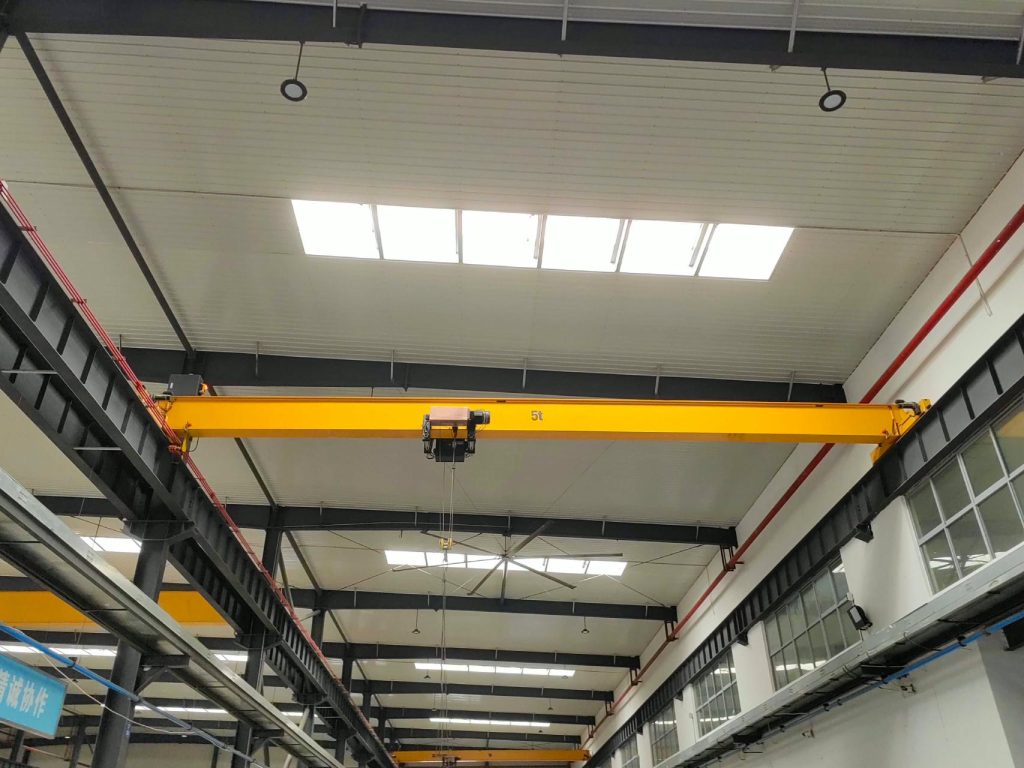
Bridge cranes represent the most versatile overhead lifting equipment, providing comprehensive material handling coverage for facilities requiring full bay access. These systems feature a horizontal bridge beam that travels along elevated runway beams, with a hoist trolley moving across the bridge to position loads anywhere within the rectangular work envelope.
Top-running bridge cranes mount on rails positioned atop the runway beams, offering maximum hook height and unrestricted floor space. These configurations excel in facilities with adequate structural support and ceiling clearance, typically requiring 18-24 inches of headroom above the bridge for proper operation. Manufacturing plants processing heavy steel components, automotive assembly operations, and aerospace fabrication facilities commonly deploy top-running systems for their superior lift height capabilities.
Under-running bridge cranes suspend from the bottom flange of runway beams, making them ideal for buildings with limited headroom or when maximizing vertical lift is essential. The reduced structural load requirements allow installation in facilities where ceiling-mounted support is more practical than building-integrated runway beams. Warehouses, maintenance shops, and smaller production areas frequently utilize under-running configurations to optimize available vertical space.
Gantry Crane Solutions for Flexible Positioning
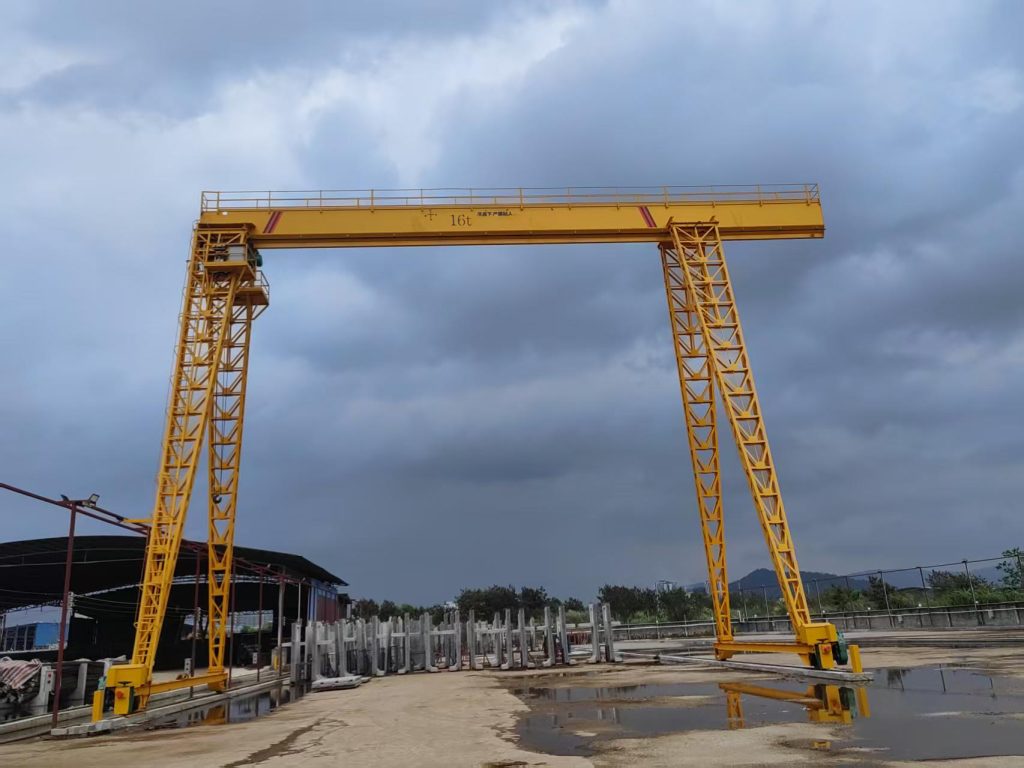
Gantry cranes deliver overhead lifting capabilities without permanent building integration. These systems feature legs that travel on floor-level rails or wheels, supporting a horizontal bridge beam similar to overhead cranes but with ground-based mobility.
Full gantry cranes incorporate legs on both sides of the bridge, creating a portal frame that straddles the work area. Outdoor storage yards, shipping docks, and facilities lacking adequate roof structure for traditional overhead cranes benefit from full gantry installations. The self-supporting design eliminates building modifications while providing repositioning flexibility as operational needs evolve.
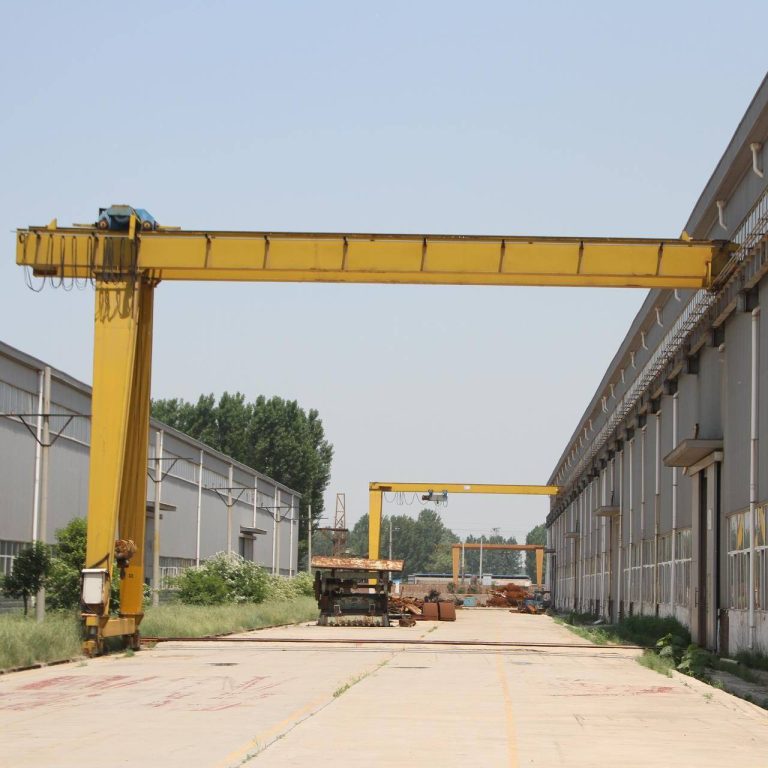
Semi-gantry configurations combine one runway-mounted side with one ground-supported leg, optimizing space utilization when one side of the work area has structural support available. This hybrid approach proves valuable in facilities transitioning from outdoor to indoor operations or where building expansion creates mixed support conditions.
Jib Crane Applications for Localized Material Handling
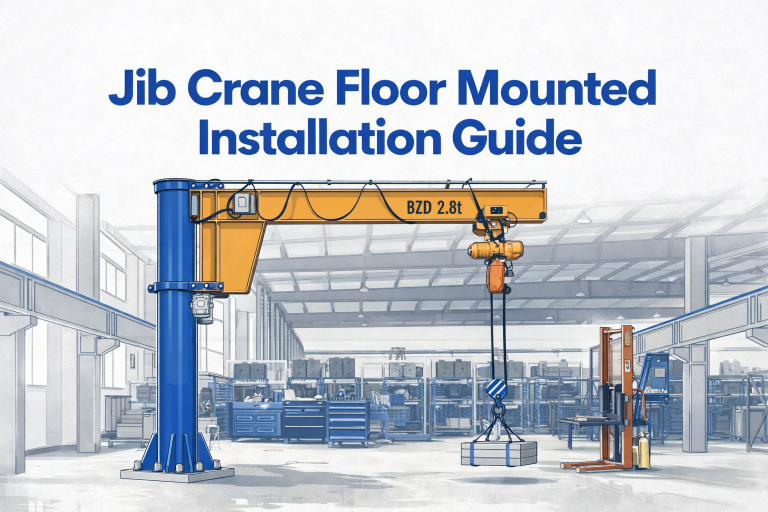
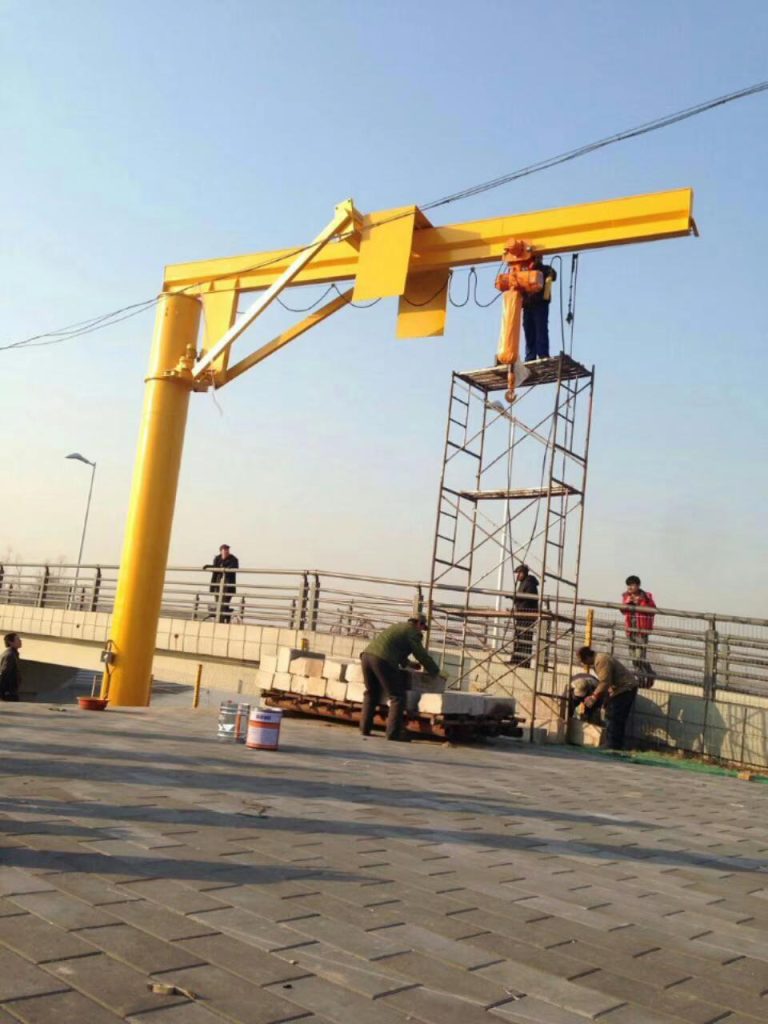
Jib cranes provide rotating coverage within a circular or partial-circular work envelope, excelling at repetitive lifting tasks in confined areas. The cantilevered boom rotates around a central mast, offering 180-degree to 360-degree coverage depending on mounting configuration.
Floor-mounted jib cranes anchor directly to concrete foundations, supporting capacities from 250 pounds to 15 tons with boom lengths extending up to 40 feet. Machining centers, welding stations, and assembly cells benefit from dedicated jib crane coverage that doesn’t interfere with overhead crane operations in the same facility.
Wall-mounted and column-mounted variants leverage existing building structures to provide supplementary lifting coverage without consuming floor space. These configurations typically handle lighter loads—500 pounds to 5 tons—making them suitable for tool rooms, maintenance areas, and production workstations requiring frequent part manipulation.
Critical Load Analysis for Overhead Lifting Equipment: Beyond Simple Weight Calculations
Accurate load assessment forms the foundation of proper overhead lifting equipment specification. Facilities that underestimate their true capacity requirements face accelerated wear, safety risks, and costly equipment upgrades within months of installation.
Determining Actual Capacity Requirements
The rated capacity must account for the complete lifted load, including the material weight, rigging equipment, lifting attachments, and below-the-hook devices. A facility lifting 8,000-pound components may require a 10-ton crane when accounting for 1,500-pound lifting beams, 300-pound slings, and 200-pound spreader bars commonly used in their operations.
Safety margins vary by application and regulatory requirements. ASME B30.17 standards govern overhead crane design, but intelligent specification includes operational buffers beyond minimum compliance. Manufacturing environments handling variable loads typically specify equipment with 25-30% capacity above maximum anticipated loads, while facilities with precisely defined load profiles may operate closer to rated capacities.
Peak load scenarios deserve particular attention during the specification process. Seasonal production demands, special project requirements, or future capacity expansion plans should inform initial equipment selection. A distribution center planning to add heavy machinery handling to their current pallet movement operations needs capacity planning that accommodates both current and anticipated load profiles.
Duty Cycle Classification Impact on Equipment Selection
Duty cycle ratings—defined by CMAA (Crane Manufacturers Association of America) classifications—directly correlate with component durability and operational costs. These classifications range from Class A (standby or infrequent service) through Class F (continuous severe service), with each level specifying structural design, component selection, and expected service life.
| CMAA Class | Typical Lifts/Hour | Average Capacity Utilization | Application Examples |
|---|---|---|---|
| Class A | 2-5 | 15-25% | Maintenance shops, installation |
| Class B | 5-10 | 25-40% | Light assembly, warehouse |
| Class C | 10-20 | 40-60% | Machine shops, fabrication |
| Class D | 20-40 | 60-75% | Heavy manufacturing, foundries |
| Class E | 40+ | 75-90% | Magnet operations, processing |
| Class F | Continuous | 85-100% | Specialized heavy-duty applications |
Facilities often misjudge their actual duty cycle requirements, leading to premature failures or unnecessary capital expenditure. A manufacturing plant running two eight-hour shifts with intermittent lifting may assume Class C operation, when detailed analysis reveals their 15 lifts per hour at 65% capacity actually demands Class D specification. This miscalculation can reduce expected equipment life from 20 years to 8-10 years, dramatically affecting total cost of ownership.
Span and Lift Height Considerations
Bridge span directly influences structural requirements and equipment costs. Standard manufacturing configurations range from 20 to 100 feet, with each additional foot of span increasing deflection considerations and structural loading on building supports. Facilities should specify the minimum effective span that covers required work areas—unnecessary span adds material costs and structural demands without operational benefit.
Lift height requirements balance vertical clearance needs against building constraints and cost implications. Standard lift heights range from 10 to 40 feet for indoor manufacturing applications, with specialized installations reaching 60+ feet in heavy industries. Each additional foot of lift height increases wire rope requirements, drum sizing, and motor specifications. Plants should calculate lift height as the distance from the floor to the highest hook position needed, accounting for rigging equipment that hangs below the hook.
Hook approach dimensions determine how close the hoist can position loads relative to runway beams and building columns. End approach (distance from centerline of runway to building column) and side approach (distance from edge of bridge to hook centerline) directly affect work envelope efficiency. Minimizing approach dimensions maximizes usable coverage area, particularly valuable in space-constrained facilities where every foot of positioning capability impacts productivity.
Power Systems and Control Technologies for Modern Operations
The electrical and control systems driving overhead lifting equipment have evolved significantly, offering precision, efficiency, and integration capabilities that directly impact operational performance and total cost of ownership.
Motor and Drive System Selection
Three-phase AC motors dominate modern overhead crane applications, providing reliable performance across capacity ranges from fractional horsepower to hundreds of horsepower. Standard motor configurations include single-speed, two-speed, and variable frequency drive (VFD) systems, each offering distinct performance characteristics and cost profiles.
Single-speed motors deliver consistent operation at fixed velocities, suitable for applications where precise load positioning isn’t critical. These systems offer the lowest initial cost and simplest maintenance requirements, making them appropriate for Class A and Class B service applications where operational demands remain straightforward.
Two-speed motors provide high-speed travel for positioning and reduced-speed operation for final placement, improving operator control during critical positioning tasks. Manufacturing environments handling moderate loads with periodic precision requirements—such as general fabrication shops and assembly operations—benefit from the enhanced control without the complexity and cost of full variable-speed systems.
Variable frequency drives enable infinitely adjustable speed control throughout the motor’s operating range, delivering superior load positioning precision and reducing mechanical stress through controlled acceleration and deceleration. Facilities requiring exact load placement, handling fragile materials, or operating in Class D and above service benefit from VFD technology despite higher initial costs. Energy consumption reductions of 25-40% compared to across-the-line motor starters often justify VFD investment within 18-36 months in high-utilization environments.
Control Interface Evolution
Pendant control stations remain the most common interface for overhead lifting equipment, offering direct operator control via pushbutton switches mounted on a cable-suspended control box. These systems provide reliable, cost-effective operation for applications where the operator moves with the load and maintains visual contact throughout the lifting operation.
Radio remote controls eliminate the physical tether between operator and crane, enhancing safety by allowing operators to position themselves in optimal vantage points away from the load path. Wireless controls prove particularly valuable in facilities where operators manage multiple cranes, work in confined spaces, or need unrestricted movement to coordinate complex lifts. Modern radio systems incorporate multiple safety layers, including frequency-hopping spread spectrum technology and automatic disconnect features that prevent unauthorized operation.
Automated and semi-automated systems integrate overhead cranes into broader facility automation architectures, enabling programmable load paths, collision avoidance, and coordinated multi-crane operations. Manufacturing facilities pursuing lights-out production capabilities or warehouses implementing automated storage and retrieval systems increasingly specify automation-ready overhead lifting equipment. These installations require additional investment in positioning sensors, programmable logic controllers, and integration engineering but deliver labor cost reductions and throughput improvements that justify the premium in high-volume operations.
Safety Features and Regulatory Compliance Requirements
Safety systems integrated into overhead lifting equipment protect personnel, prevent property damage, and ensure regulatory compliance. Understanding mandatory versus optional safety features guides appropriate specification decisions.
Mandatory Safety Components
Overload prevention systems represent non-negotiable safety requirements across industrial applications. Load moment indicators and rated capacity limiters prevent operation beyond design specifications, protecting structural components and reducing catastrophic failure risks. Modern systems incorporate multiple redundancy layers, including mechanical load cells, electronic monitoring, and programmable safety limits that adapt to operational configurations.
Emergency stop systems must provide immediately accessible shutoff capability from all control stations. Pendant controls, radio remotes, and fixed operator stations require clearly marked E-stop buttons that remove all power from motion systems while maintaining holding brake engagement. These systems must function through independent circuits that remain operational even during primary control system failures.
Limit switches prevent over-travel in all motion axes—hoist up/down, bridge travel, and trolley travel. Upper limit switches stop hoist motion before the block contacts the drum or sheave assembly, preventing two-blocking conditions that can cause wire rope failure. Lower limit switches protect against excessive cable payout that could cause rope disorder on the drum. Travel limit switches prevent bridge and trolley motion beyond intended boundaries, protecting equipment and building structures from collision damage.
Advanced Safety Technologies
Anti-collision systems utilize sensors and programmable logic to prevent contact between multiple cranes operating on shared runways or between crane components and building structures. Laser distance sensors, ultrasonic detectors, or RFID-based positioning systems create virtual boundaries that slow or stop crane motion as clearance limits approach. Facilities operating multiple overhead cranes in close proximity—such as steel service centers or large fabrication shops—benefit from collision avoidance systems that maintain productivity while eliminating contact incidents.
Sway control technology minimizes load oscillation during acceleration, deceleration, and travel, enhancing positioning precision and reducing cycle times. Active sway damping systems incorporate accelerometers and closed-loop control algorithms that apply counteracting forces to suppress pendular motion. This technology proves particularly valuable when handling long, flexible loads or operating at elevated speeds where conventional systems would require operators to allow extended settling time before final positioning.
Load monitoring and diagnostics systems provide real-time operational data that supports predictive maintenance strategies and prevents unplanned downtime. Sensors tracking motor current, brake wear, wire rope condition, and component temperatures feed data to centralized monitoring systems that identify developing issues before they cause failures. Facilities managing multiple cranes or operating in critical production environments justify the investment through reduced emergency repairs and improved equipment availability.
Building Integration and Structural Requirements
Integrating overhead lifting equipment into existing facilities requires thorough structural evaluation of existing building structures and careful planning of integration details that affect both performance and cost.
Runway Beam Design and Support
Runway beam sizing must accommodate the combined dead load of the crane structure, live load from maximum lifted capacity, and dynamic forces generated during operation. Dead loads include the bridge, trolley, hoist, and all permanent attachments. Live loads encompass the maximum rated capacity plus rigging equipment. Dynamic loads—including impact factors from sudden acceleration, braking, and load pickup—typically add 15-25% to static load calculations depending on crane speed and duty classification.
Building columns supporting runway beams require evaluation for both vertical and lateral loading. Vertical loads transfer through column structures to foundations, demanding verification of existing column capacity or structural reinforcement. Lateral loads generated by bridge acceleration and braking impose side thrust forces that many building designers don’t anticipate during initial construction. Facilities adding overhead cranes to existing buildings frequently discover that column bracing upgrades prove necessary to safely manage lateral loading.
Foundation requirements vary dramatically based on soil conditions, crane capacity, and duty cycle. Soil bearing capacity assessments should occur early in the planning process, as inadequate foundation support represents one of the most expensive correction scenarios. Clay soils typically provide 2,000-4,000 pounds per square foot bearing capacity, while sandy soils range from 3,000-5,000 PSF, and bedrock can exceed 10,000 PSF. Heavy-capacity cranes in Class D+ service may require deep foundations or pile-supported structures in softer soil conditions.
Clearance and Dimensional Planning
Overhead clearance requirements extend beyond the bridge structure itself to account for maintenance access, electrical service, and structural deflection. Standard planning guidelines allocate 24-36 inches above the bridge top for electrical conductor systems and maintenance walkways. Facilities with limited building height should carefully evaluate under-running crane configurations that maximize available hook height within constrained vertical envelopes.
Side clearance between bridge ends and building columns affects both operational coverage and structural loading. Minimum clearances typically range from 18-30 inches, balancing the need for maximum span coverage against the practical requirements for end truck access and structural connections. Tighter clearances demand more precise runway beam installation tolerances and may complicate future maintenance activities.
Aisle width below the crane system impacts facility workflow and material flow patterns. The bridge span minus end approach distances defines the maximum width of loads that can pass beneath the structure. Facilities should map their typical load profiles and material movement patterns to ensure specified equipment doesn’t create bottlenecks in production flow or limit future flexibility.
Total Cost of Ownership Analysis for Long-Term Value
Initial purchase price of overhead lifting equipment represents only 30-40% of total ownership costs over a typical 20-25 year crane service life. Sophisticated procurement decisions evaluate all cost components to identify solutions delivering optimal long-term value.
Capital Investment Components
Equipment costs vary significantly based on capacity, span, and feature complexity. A basic 5-ton capacity bridge crane with 40-foot span and Class C duty rating typically ranges from $45,000-$75,000 for the crane structure, hoist, and controls. Comparable 10-ton capacity increases investment to $65,000-$95,000, while 20-ton systems range from $95,000-$140,000. These figures reflect crane packages without installation, electrical service, or building modifications.
Installation expenses frequently equal or exceed equipment costs, particularly in existing facilities requiring structural modifications. Professional installation including runway beam fabrication, building integration, electrical service, and commissioning typically adds 50-100% to equipment costs. A $70,000 crane package may require $60,000-$90,000 in installation expenses, bringing total project costs to $130,000-$160,000.
Building modifications represent the most variable cost component, ranging from zero in new construction designed to accommodate overhead cranes to hundreds of thousands in existing facilities requiring structural reinforcement. Common upgrade requirements include column strengthening, foundation improvements, roof structure modifications to support runway beams, and electrical service expansion. Facilities should commission structural engineering assessments early in the planning process to accurately budget these expenses.
Operating and Maintenance Costs
Energy consumption varies by duty cycle, motor efficiency, and utilization patterns. A 10-ton crane operating 6 hours daily at 40% capacity utilization consumes approximately 15-25 kWh per day for motion systems. At industrial electricity rates averaging $0.12 per kWh, annual energy costs range from $475-$825. VFD-equipped systems reduce consumption by 25-40%, offsetting their $3,000-$8,000 premium within 3-5 years in high-utilization environments.
Scheduled maintenance includes quarterly inspections, annual OSHA-mandated examinations, and periodic component replacement. Basic maintenance programs cost $2,000-$4,000 annually for Class C cranes, increasing to $5,000-$10,000 for Class D and Class E equipment. Wire rope replacement occurs every 2-5 years depending on duty cycle and operating conditions, costing $800-$3,500 per replacement. Hoist brake systems require replacement every 3-7 years at $1,200-$4,000 depending on capacity and configuration.
Unplanned downtime costs often exceed direct repair expenses through lost production. Manufacturing facilities typically value crane availability at $500-$2,000 per hour of lost production, making reliability a critical selection factor. Equipment specified appropriately for actual duty cycle requirements and supported by proactive maintenance programs demonstrates 97-99% availability, while undersized or poorly maintained systems frequently operate below 90% availability with corresponding productivity losses.
Lifecycle and Replacement Considerations
Service life expectations range from 15-30 years based on duty classification, maintenance quality, and environmental conditions. Class A and Class B cranes operating in controlled indoor environments with excellent maintenance programs routinely exceed 25 years of service. Class D and Class E equipment in demanding applications typically requires major refurbishment or replacement after 15-20 years as structural fatigue and component wear accumulate.
Residual value varies by market conditions, equipment condition, and technological obsolescence. Well-maintained cranes retain 20-35% of original value after 15-20 years of service, while poorly maintained or technologically outdated equipment may have minimal resale value. Facilities planning for eventual replacement should specify standard configurations using widely available components to maximize future marketability.
Vendor Selection and Procurement Strategy
Choosing the right equipment supplier impacts not only initial installation success but ongoing support quality throughout the equipment’s service life.
Evaluating Manufacturer Capabilities
Manufacturer reputation and market presence indicate long-term parts availability and technical support sustainability. Established manufacturers with 20+ years in the North American market demonstrate stability and component standardization that simplifies future maintenance and upgrades. Emerging suppliers may offer attractive pricing but create risks around parts obsolescence and technical support availability as equipment ages.
Engineering support capabilities vary dramatically between suppliers. Top-tier manufacturers provide comprehensive engineering services including load analysis, building integration planning, and application-specific design optimization. These services prove particularly valuable for complex installations or specialized applications where standard catalog products require modification. Budget-focused suppliers typically offer limited engineering support, placing greater burden on facility engineering teams or requiring third-party engineering consultation.
Compliance certifications verify adherence to applicable standards and regulations. Reputable manufacturers document compliance with ASME B30.17, CMAA specifications, and applicable building codes. Request certification documentation during vendor evaluation to confirm equipment meets regulatory requirements and industry standards.
Installation and Commissioning Services
Factory-direct installation ensures proper assembly, alignment, and testing by personnel familiar with specific equipment configurations. Manufacturers typically charge 15-25% premiums over independent installation contractors but deliver shorter installation timelines and comprehensive warranty coverage. Complex installations, high-capacity systems, or specialized applications generally justify factory installation to minimize commissioning issues.
Independent installation contractors offer cost advantages for straightforward installations when facilities have strong project management capabilities. Experienced industrial contractors familiar with overhead crane installation can effectively manage standard configurations, particularly when facility personnel provide adequate oversight and coordination. Cost savings of 20-35% compared to factory installation make this approach attractive for budget-conscious projects with experienced management.
Commissioning requirements include load testing, operational verification, and operator training. OSHA and ASME standards mandate load testing at 125% of rated capacity before placing equipment in service. Comprehensive commissioning programs verify all safety systems, document performance parameters, and provide operator training that establishes proper operating procedures from the start. Facilities should specify detailed commissioning requirements in purchase agreements to ensure thorough verification before acceptance.
After-Sale Support Infrastructure
Parts availability impacts downtime duration during repairs and maintenance. Manufacturers maintaining North American parts distribution networks can typically supply common wear components within 1-3 business days, while international suppliers may require 2-4 weeks for the same components. Facilities operating in time-sensitive production environments should evaluate supplier parts logistics capabilities and consider stocking critical components for equipment in Class D+ service.
Technical support accessibility determines how quickly operational issues get resolved. Tier-one manufacturers provide phone support during extended business hours with field service capabilities in major industrial markets. Response time expectations should be clearly defined during procurement—24-hour emergency response versus next-business-day service creates significantly different operational risk profiles.
Training programs enhance operational safety and equipment longevity. Comprehensive operator training covers load handling techniques, safety procedures, pre-operational inspections, and basic troubleshooting. Maintenance training equips facility personnel to perform routine service, reducing dependence on external contractors and improving equipment availability. Facilities should request detailed training curriculum descriptions during vendor evaluation to assess program quality and comprehensiveness.
Future-Proofing Your Overhead Lifting Investment
Specifying equipment with expansion capabilities and technological adaptability protects against premature obsolescence as operational requirements evolve.
Capacity and Coverage Expansion Planning
Modular runway systems accommodate future expansion through standardized connection details and structural design that anticipates additional load capacity. Facilities expecting growth should specify runway beams sized for potential capacity increases, allowing hoist and bridge upgrades without complete runway replacement. The incremental cost of oversized runway beams—typically 10-20% at initial installation—proves far less expensive than complete runway reconstruction later.
Multi-crane compatibility on shared runways provides operational flexibility as material handling demands increase. Runway systems designed for eventual multiple-crane operation incorporate electrical isolation, adequate clearance for crane passing, and structural capacity for combined loading. Single-crane installations planning for future expansion should specify these provisions during initial construction to avoid costly retrofits.
Technology Integration Capabilities
Automation-ready platforms incorporate positioning systems, programmable controls, and communication interfaces that support future automation integration. Facilities pursuing Industry 4.0 manufacturing strategies should specify overhead cranes with these capabilities even if immediate automation isn’t planned. Retrofit automation costs typically exceed 200-300% of initial-installation expenses, making forward-looking specification economically prudent for facilities with long-term automation roadmaps.
Data connectivity and monitoring systems enable predictive maintenance programs and operational analytics. Modern overhead cranes can integrate with facility management systems through industrial Ethernet, providing real-time operational data, maintenance alerts, and utilization metrics. This connectivity supports data-driven maintenance strategies that reduce unplanned downtime and optimize maintenance spending.
Frequently Asked Questions
What’s the difference between CMAA duty classifications and how do they affect equipment cost?
CMAA duty classifications (Class A through Class F) define structural design, component specifications, and expected service life based on operational intensity. Class A equipment designed for occasional use in maintenance applications costs 40-60% less than Class D equipment built for heavy manufacturing with continuous operation. The classification affects structural member sizing, motor duty ratings, brake capacity, and component material specifications. Facilities should honestly assess their actual lifting frequency and capacity utilization—specifying Class C equipment for a true Class D application saves initial capital but typically results in premature failure within 5-8 years rather than the expected 15-20 year service life.
How much building modification cost should I budget beyond the crane equipment price?
Building modification expenses vary from zero in purpose-built facilities to 100-200% of equipment costs in existing structures requiring significant upgrades. Critical factors include existing column capacity for vertical loads, lateral bracing for horizontal thrust forces, foundation adequacy for soil conditions, and electrical service capacity. Request structural engineering assessment early in planning to accurately budget these expenses. Typical modification costs for adding a 10-ton crane to an existing manufacturing building range from $25,000-$75,000 depending on required reinforcement scope. New construction designed to accommodate overhead cranes eliminates most modification costs but requires early coordination between crane specifications and building structural design.
Should I choose a top-running or under-running bridge crane configuration?
The decision depends primarily on available building height and coverage requirements. Top-running cranes mount on rails atop runway beams, offering maximum hook height but requiring 18-24 inches of clearance above the bridge structure. Choose top-running when ceiling height exceeds lift requirements by sufficient margin and building structure can support runway beams at the required elevation. Under-running cranes suspend from the bottom flange of runway beams, maximizing hook height in buildings with limited headroom. They work well when existing roof structure can support suspended loads and when optimizing vertical lift height outweighs the slightly reduced capacity compared to equivalent top-running designs. Under-running configurations typically cost 5-15% more than top-running for the same capacity due to specialized end truck designs.
What ROI should I expect from upgrading to variable frequency drive controls?
VFD systems deliver multiple return streams beyond direct energy savings. Energy consumption reductions of 25-40% generate annual savings of $400-$800 for typical 10-ton cranes operating 6 hours daily at industrial electricity rates. The controlled acceleration and deceleration reduce mechanical stress on structural components, extending service life by 15-25% and reducing maintenance costs by $800-$1,500 annually. Improved load positioning precision can reduce cycle times by 10-20% in operations requiring exact placement, though this benefit varies significantly by application. Total ROI typically ranges from 18 months to 4 years depending on utilization intensity and energy costs. Class D and higher duty cycle applications almost always justify VFD investment, while Class A and Class B operations may find the premium harder to justify purely on financial returns.
How do I determine if my existing building can support an overhead crane?
Professional structural evaluation by a licensed engineer represents the only reliable assessment method. Key evaluation points include building column capacity for vertical loads, lateral bracing adequacy for horizontal thrust forces, foundation bearing capacity for soil conditions, and runway beam support requirements. Warning signs suggesting potential issues include visible column deflection, foundation settling, roof structure damage, or building age predating modern loading code requirements. Buildings constructed after 1980 with industrial occupancy classifications often incorporate adequate structural capacity, while older warehouse or light manufacturing structures frequently require reinforcement. Engineering assessment costs typically range from $3,000-$8,000 but prevent costly installation failures and safety hazards. Some crane manufacturers provide preliminary assessments as part of quotation processes, though these don’t substitute for formal engineering verification before proceeding with installation.
What maintenance tasks can facility personnel handle versus requiring specialized contractors?
Facility maintenance teams with basic mechanical aptitude can manage routine tasks including daily visual inspections, quarterly lubrication of moving components, and basic adjustments of limit switches and controls. These activities account for 60-70% of typical maintenance requirements and keep costs low while building internal expertise. Specialized contractors should handle wire rope replacement due to precise tensioning requirements, hoist brake adjustments requiring specific torque specifications, structural inspections demanding engineering judgment, and annual load testing mandated by OSHA regulations. Many facilities adopt hybrid approaches where internal teams handle routine maintenance while contractors provide quarterly inspections and specialized repairs. This strategy typically reduces annual maintenance costs by 30-40% compared to full contractor dependence while maintaining compliance and reliability.
How long should I expect my overhead crane to last before requiring replacement?
Service life depends heavily on duty classification, maintenance quality, and operating environment.
- Class A and Class B cranes in climate-controlled facilities with excellent maintenance programs routinely exceed 25-30 years of service.
- Class C equipment typically delivers 20-25 years in manufacturing environments with good maintenance practices.
- Class D and Class E cranes operating in demanding applications generally require major refurbishment or replacement after 15-20 years as structural fatigue accumulates and component wear accelerates.
Environmental factors significantly impact longevity—cranes operating in corrosive, high-temperature, or outdoor environments may experience 30-40% shorter service lives than equivalent equipment in controlled indoor settings. Budget for major component refurbishment at the 10-15 year mark for high-duty cycle equipment, including hoist replacement, electrical system upgrades, and structural inspection with potential reinforcement.
What safety features are legally required versus optional upgrades?
OSHA regulations mandate specific safety features including overload prevention systems, emergency stop controls accessible from all operator stations, upper and lower limit switches preventing over-travel, audible warning devices for crane motion, and load rating placards visible to operators. ASME B30.17 standards specify additional requirements for design, inspection, testing, and maintenance. Optional safety upgrades worth considering include anti-collision systems for facilities operating multiple cranes, load sway control for improved positioning precision and cycle time reduction, automated zone controls restricting crane operation in designated areas, and advanced monitoring systems providing predictive maintenance alerts. The value proposition for optional features depends on operational risk profile, productivity improvement potential, and total cost of ownership considerations rather than pure regulatory compliance.
Should I specify radio remote controls or stick with pendant controls?
Radio remote controls offer operational advantages in specific applications but aren’t universally superior to pendant systems. Choose radio controls when operators need unrestricted positioning to maintain optimal sight lines during complex lifts, when managing multiple cranes from a single operator station, or when working in confined areas where pendant cables create entanglement hazards. Pendant controls cost 60-75% less than comparable radio systems, require minimal maintenance, and eliminate battery management and radio frequency interference concerns. They work well for dedicated single-crane operations where the operator moves with the load and maintains consistent positioning throughout the lift cycle. Many facilities specify radio controls for primary operations while maintaining pendant backup for maintenance activities and radio system failures. Modern radio systems incorporate frequency-hopping spread spectrum technology and redundant safety features that address earlier concerns about interference and reliability.
How do I evaluate total cost of ownership when comparing equipment from different suppliers?
Comprehensive TCO analysis extends beyond initial purchase price to include installation costs, energy consumption, maintenance expenses, parts availability, expected service life, and operational productivity impacts. Request detailed specifications including motor efficiency ratings, duty cycle classifications, and component grade specifications to enable meaningful comparisons. Factor in vendor parts distribution networks—suppliers with North American warehousing can deliver common components in 1-3 days versus 2-4 weeks for international suppliers, significantly affecting downtime costs valued at $500-$2,000 per hour in many manufacturing operations. Service and support infrastructure matters as much as equipment quality for long-term value. A crane priced 15% below competitors but requiring 20% more maintenance annually and experiencing 50% longer parts lead times often costs substantially more over a 20-year service life. Build spreadsheet models incorporating all cost components over expected service life, using realistic assumptions about utilization, maintenance requirements, and energy costs specific to your facility’s operating conditions.
Key Takeaways for Your Overhead Lifting Equipment Decision
Selecting optimal overhead lifting equipment requires systematic evaluation of operational requirements, building constraints, and long-term value considerations. Start by accurately assessing your true capacity needs including all rigging equipment, then honestly evaluate your actual duty cycle classification rather than underspecifying to reduce initial costs. Verify building structural capacity early in the planning process to avoid costly surprises during installation. Evaluate total cost of ownership over expected service life rather than focusing solely on initial purchase price—equipment appropriately specified for your application and backed by responsive support infrastructure delivers superior long-term value even at premium initial cost.
The investment you make in overhead lifting equipment shapes your facility’s productivity, safety performance, and operational flexibility for decades. Take time to thoroughly evaluate your requirements, engage qualified engineering support for complex installations, and select vendors based on comprehensive capability rather than lowest price. The systematic approach outlined in this guide positions you to confidently specify equipment that meets your current operational needs while providing the flexibility to adapt as your business evolves.