Executive Summary
The global gantry crane market reached USD 1.6 billion in 2023 and demonstrates projected expansion to USD 3.25 billion by 2033, advancing at a compound annual growth rate of approximately 4-5%. This growth trajectory reflects increasing industrialization, port modernization initiatives, and infrastructure development worldwide. For procurement professionals and facility managers, understanding the fundamental distinctions between single-girder and double-girder gantry crane configurations represents a critical decision point affecting operational efficiency, capital expenditure, and long-term productivity.
This comprehensive technical guide examines both structural types through engineering specifications, cost-benefit analysis, real-world application scenarios, and procurement considerations tailored for international buyers.
Structural Foundation: Understanding Single-Girder Gantry Cranes
Design Architecture and Core Components
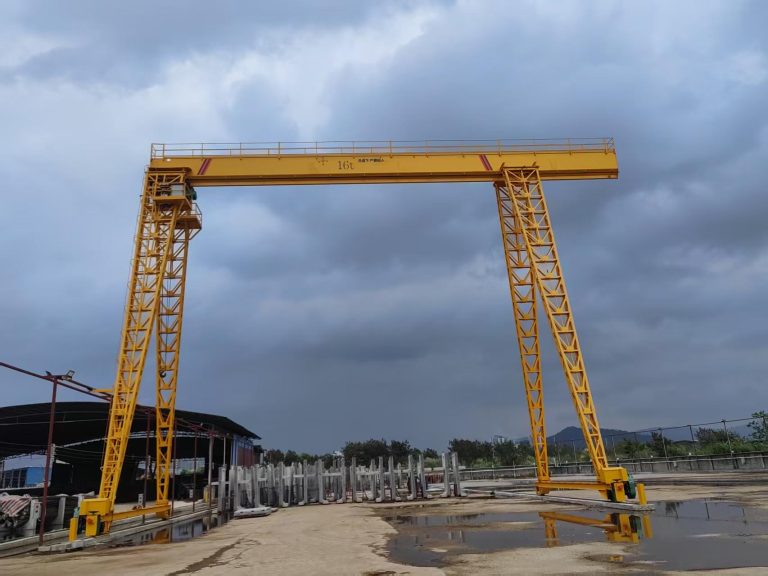
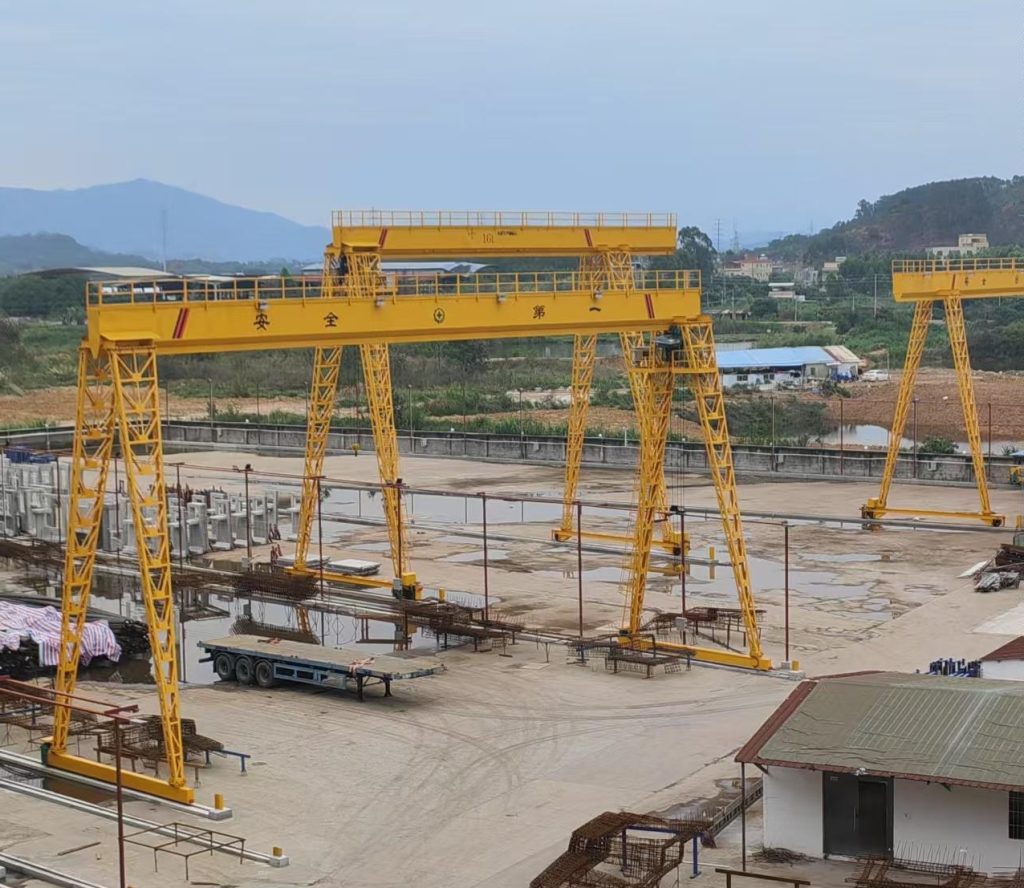
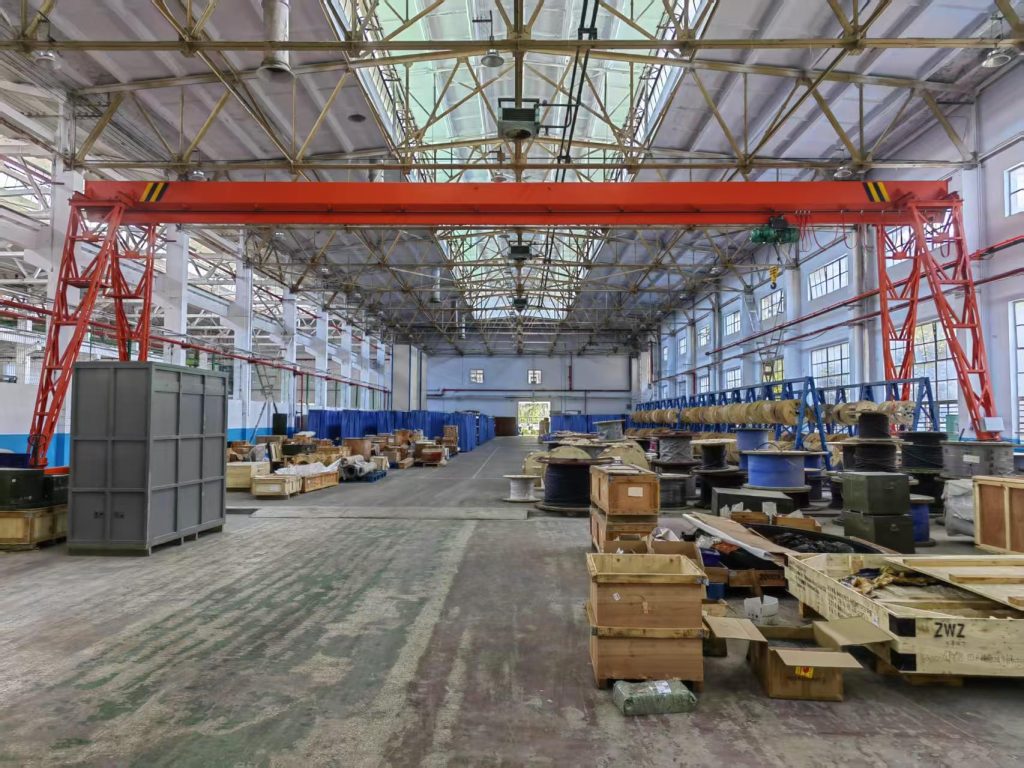
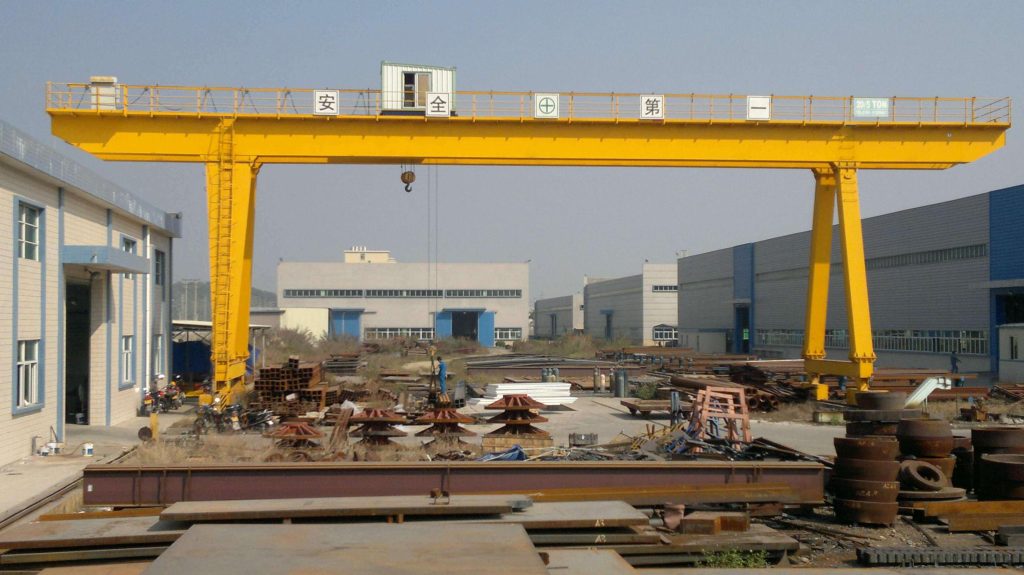
A single-girder gantry crane employs one primary load-bearing beam spanning between two supporting legs that traverse along ground-mounted rails. The hoisting mechanism—typically an electric wire rope hoist or chain hoist—operates on the lower flange of the main girder, creating what engineers term an “under-running” or “underhung” configuration.
Principal structural elements include:
- Main Girder Assembly: Fabricated from either rolled I-beam sections or welded box-girder construction, depending on span requirements and load specifications
- Support Leg Framework: Available in L-type (single-column) or C-type (portal frame) configurations, with C-type designs providing enhanced lateral clearance for material handling
- Ground Travel System: Consists of powered end trucks with wheel assemblies, gear reducers, electric motors, and electromagnetic braking systems
- Lifting Apparatus: Electric hoists rated from 1 to 32 tons, featuring dual-speed operation for precise load positioning
Technical Specification Parameters
Industry data reveals single-girder systems typically operate within these performance boundaries:
Lifting Capacity Range: 1 ton to 20 tons (standard configurations), with specialized designs reaching 32 tons
Span Capability: 5 meters to 35 meters
Lifting Height: 6 meters to 30 meters
Duty Classification: A3 to A4 grade per FEM/ISO standards (light to moderate intensity service)
Operating Speed: Dual-speed control systems standard, with variable frequency drive (VFD) options
A critical engineering constraint exists at approximately 60 feet (18.3 meters) span length, beyond which rolled steel sections require field welding to achieve necessary dimensions. This joint requirement increases both structural self-weight and manufacturing complexity.
Economic Advantages for Light-Duty Applications
Single-girder configurations utilize less material and feature more compact, lightweight designs compared to double-girder systems, yielding substantial cost savings in material procurement, freight logistics, and installation labor. Industry analysis indicates:
- Initial Capital Investment: Approximately 30-40% lower than equivalent-span double-girder systems
- Installation Timeline: Installation cycles can be shortened by 30%-50% due to simplified structural assembly
- Reduced Building Load: Lower deadweight permits lighter runway beam specifications and may eliminate reinforced foundation requirements
For facilities processing loads below 15-20 tons with moderate duty cycles, single-girder solutions deliver optimal return on investment while maintaining operational reliability.
Double-Girder Gantry Cranes: Heavy-Duty Industrial Solutions
Engineering Design Principles
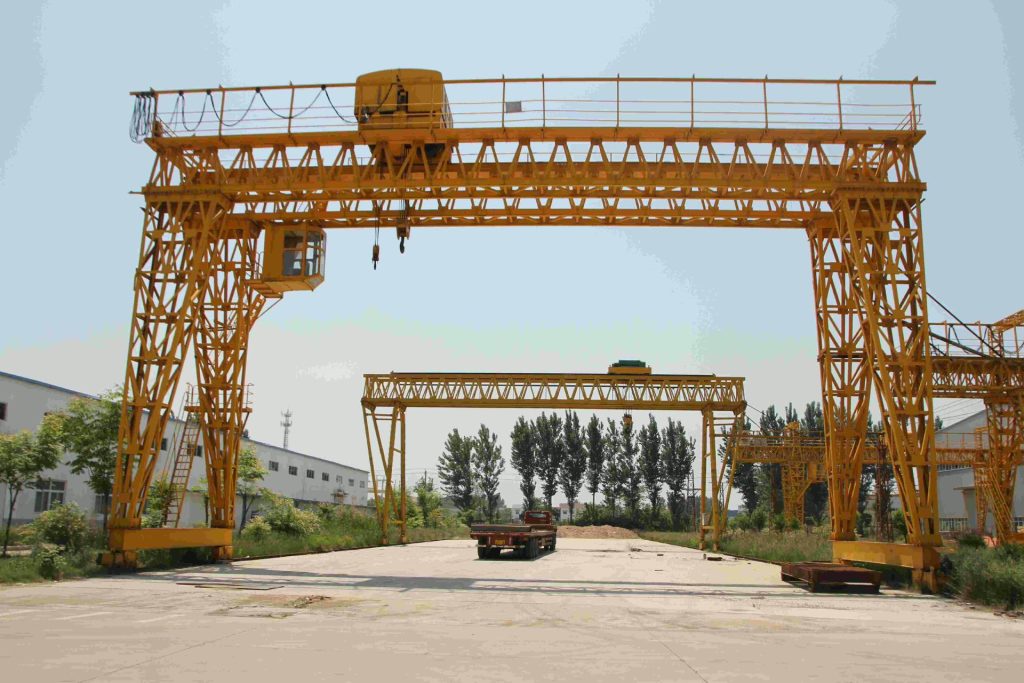
Double-girder gantry cranes incorporate two parallel main beams supporting a trolley assembly that operates atop the girder structure (“top-running” configuration). This architectural approach distributes structural loads across dual load paths, significantly enhancing rigidity, lifting capacity, and operational stability.
Key structural characteristics:
- Dual Beam System: Typically utilizes welded box-girder construction for maximum strength-to-weight ratio and torsional resistance
- Top-Mounted Trolley: Hoist carriage travels on rails affixed to girder top flanges, enabling maximum hook approach and lifting height
- Reinforced Support Structure: A-frame or U-frame leg designs engineered to withstand elevated vertical and lateral loading
- Multi-Wheel Configuration: Four to eight-wheel drive systems distribute ground pressure and enhance stability during loaded travel
Performance Specifications and Duty Ratings
Double-girder systems address demanding industrial applications requiring:
Lifting Capacity Spectrum: 5 tons to 500 tons (standard production range), with custom configurations exceeding 1,000 tons for specialized applications
Extended Span Capability: Up to 35 meters (standard), with engineered solutions reaching beyond 100 meters
Enhanced Lifting Height: 6 to 30+ meters, with specialized designs achieving greater vertical travel
Heavy-Duty Classification: A5 to A8 grade service ratings for continuous, high-cycle operations
Environmental Tolerance: Engineered for operation in temperature ranges from -20°C to +40°C
Industry case studies document double-girder installations performing over 20 lifting cycles per hour in steel mills and port facilities, with loads routinely approaching rated capacity—service profiles unattainable with single-girder designs.
Operational Advantages in Heavy Industry
Double-girder configurations provide higher load capacity exceeding 15 tons, greater lifting height with top-mounted hoists, longer span capability beyond 65 feet, enhanced durability for heavy-duty continuous applications, and customization options including walkways, service platforms, and operator cabins. These characteristics make them indispensable for:
- Large-scale manufacturing facilities requiring frequent heavy lifts
- Steel service centers handling coils, plates, and structural components
- Shipyards performing hull assembly and heavy component positioning
- Precast concrete plants maneuvering massive architectural elements
Comparative Analysis: Technical and Economic Factors
Load Capacity and Structural Efficiency
Single-girder designs distribute loads along one beam structure, increasing point loading on runway support systems, while double-girder configurations distribute loads across two beams, providing superior load stability and reduced deflection characteristics.
Decision threshold: For facilities with lifting requirements consistently below 15 tons, single-girder systems deliver adequate performance at reduced cost. Operations regularly handling 20+ ton loads require double-girder structural integrity.
Headroom Requirements and Hook Height
Single-girder systems typically require 15%-20% less clear height compared to double-girder models, making them particularly suitable for retrofitting older facilities with height constraints. However, this advantage comes with trade-offs:
- Single-Girder: Limited hook height due to under-running hoist placement
- Double-Girder: Maximized hook approach and lifting clearance through top-running trolley design
For brownfield installations with existing building structures, single-girder configurations often represent the only viable solution without costly structural modifications.
Investment Analysis and Total Cost of Ownership
Initial Capital Expenditure Comparison (representative pricing for informational purposes):
- Single-Girder System: 5-ton capacity, 40-foot span—approximately USD 40,000-50,000 (including installation)
- Double-Girder System: 10-ton capacity, equivalent span—approximately USD 65,000-85,000 (including installation)
However, total cost of ownership extends beyond initial purchase:
Maintenance Considerations:
Single-girder designs feature lower maintenance requirements due to fewer components, while double-girder systems contain additional elements but generally deliver superior long-term durability
Operational Lifespan:
Double-girder construction typically provides 25-30+ years of service life in heavy-duty applications, whereas single-girder systems may require more frequent structural assessments beyond 15-20 years under similar loading conditions.
Market Trends and Industry Applications
Global Market Dynamics
The gantry crane market exceeded USD 1.6 billion in 2023 and projects growth at over 4% compound annual growth rate from 2024 to 2032, driven by integration of automation technologies. Regional analysis reveals:
North America Market:
North America captured a revenue share exceeding 39% in 2023, with anticipated rapid growth from 2024 to 2032 driven by increasing infrastructure investments and manufacturing facility expansion
Asia-Pacific Dominance:
Asia-Pacific commanded a 53.73% share of the rail-mounted gantry crane market in 2024, reflecting the region’s concentration of container ports and heavy manufacturing capacity
Port and Terminal Applications
Container handling represents one of the largest application segments for gantry crane technology. Ports and terminals captured 41.88% revenue of the rail-mounted gantry crane market in 2024, underscoring container handling as the core application anchoring the market.
Case Study: Sri Lanka Ports Authority East Container Terminal
The Sri Lanka Ports Authority strengthened operations at the East Container Terminal of Colombo Port with the arrival of two additional ship-to-shore gantry cranes, enabling increased operational capacity by redeploying three existing cranes to the Jaya Container Terminal. This strategic equipment acquisition demonstrates how gantry crane investments directly impact port throughput and competitive positioning.
Shipbuilding and Heavy Manufacturing
Shipyard applications demand the most specialized gantry crane configurations. The world’s most powerful gantry crane—Taisun, located at Yantai Raffles Shipyard in China—demonstrates extreme engineering capabilities:
Taisun was installed in 2008 with a lifting capacity of 20,000 tonnes and achieved a Guinness World Record for heaviest lift by a crane on April 18, 2008, hoisting a ballasted barge weighing 20,133 metric tons.
Practical Application Example: Kuangshan Crane Shipyard Installation
Kuangshan Crane successfully developed and commissioned a 450-ton ultra-large-span shipbuilding gantry crane designed for large-segment lifting in shipbuilding and offshore engineering, supporting functions including lifting, transporting, mid-air flipping, and assembly of ship hull structures. This installation exemplifies how double-girder gantry cranes enable modular construction methodologies that dramatically reduce shipbuilding cycle times.
Procurement Decision Framework
Application-Specific Selection Criteria
Select Single-Girder Configuration When:
- Maximum lifting requirements remain below 20 tons
- Building headroom constraints limit vertical clearance
- Budget considerations prioritize initial capital conservation
- Duty cycles involve intermittent or light-to-moderate usage patterns
- Facility footprint favors compact equipment dimensions
Select Double-Girder Configuration When:
- Regular lifting operations exceed 20 tons
- Extended span lengths beyond 65 feet (20 meters) are required
- Maximum hook height and approach distance are critical
- Operations demand A5-A8 heavy-duty service classifications
- Future scalability and equipment longevity justify higher initial investment
Key Technical Specifications for RFQ Development
When preparing request-for-quotation (RFQ) documents, procurement professionals should specify:
- Load Parameters: Rated capacity, maximum static wheel load, load spectrum analysis
- Dimensional Requirements: Span, lifting height, rail gauge, hook approach distances
- Duty Classification: FEM/ISO service class based on load cycles and utilization factors
- Environmental Conditions: Temperature range, indoor/outdoor installation, corrosive atmospheres
- Control Systems: Manual pendant, radio remote, cabin-operated, automation-ready infrastructure
- Safety Features: Overload protection, anti-collision systems, travel limit switches, emergency stop functions
- Standards Compliance: Local regulatory requirements (OSHA, CE, AS/NZS, GB/T)
Supplier Evaluation Considerations
Beyond equipment specifications, evaluate potential suppliers based on:
Engineering Capability:
Ability to provide detailed load calculations, finite element analysis, and custom design modifications
Manufacturing Quality:
ISO 9001 certification, welding procedure qualifications, non-destructive testing protocols
Project Execution:
Installation supervision, commissioning support, operator training programs
After-Sales Support:
Spare parts availability, preventive maintenance contracts, remote diagnostics capabilities
Emerging Technologies and Future Considerations
Automation and Smart Crane Systems
Integration of automation technologies drives market expansion, with manufacturers implementing Internet of Things sensors, artificial intelligence algorithms for real-time performance monitoring, predictive maintenance scheduling, and operational optimization.
Advanced features increasingly available include:
- Anti-Sway Systems: Sensor-based load stabilization reducing positioning time and enhancing safety
- Automated Positioning: Laser or GPS-based container and load placement systems
- Fleet Management Software: Centralized monitoring and coordination of multiple crane assets
- Energy Regeneration: Capture and reuse of lowering energy through electrical systems
Sustainability and Environmental Compliance
Terminal operators accelerated electrification to meet decarbonization targets, with electric rail-mounted gantry systems reducing energy costs by up to 70% compared with diesel alternatives.
Regulatory Drivers:
Port facilities worldwide face increasing pressure to reduce emissions. The Port of Cleveland’s USD 94 million Clean Ports award in 2024 accelerates electrified crane procurement and underscores federal commitment to emissions reduction.
For procurement planning, consider:
- Fully electric drive systems eliminating diesel generator sets
- Hybrid configurations enabling grid-independent emergency operation
- Energy monitoring systems quantifying consumption and carbon footprint
- Future-proofing investments against evolving environmental regulations
Conclusion and Strategic Recommendations
The selection between single-girder and double-girder gantry crane configurations fundamentally impacts operational capability, financial performance, and competitive positioning. This decision matrix should guide procurement strategy:
For facilities prioritizing:
- Cost optimization and rapid deployment → Single-girder systems deliver maximum value
- Long-term reliability and heavy-duty performance → Double-girder configurations justify premium investment
- Flexibility and future scalability → Evaluate current requirements against 10-year operational projections
Market data confirms sustained demand growth across both configuration types, driven by global infrastructure development, manufacturing reshoring initiatives, and port capacity expansion. The global gantry crane market value reached USD 2.1 billion in 2022 and projects growth to USD 3.6 billion by 2030 with a compound annual growth rate of roughly 6%.
For procurement professionals navigating equipment selection, engaging qualified engineering consultants early in the specification process ensures alignment between operational requirements, structural capabilities, and budget parameters. The optimal crane solution balances immediate functional needs with total cost of ownership considerations and strategic business objectives.
Technical Resources and Next Steps
For Detailed Equipment Specifications:
- Consult FEM 1.001 (European Federation of Materials Handling) crane classification standards
- Review ISO 4301/4306 series for crane duty ratings and calculations
- Reference ASME B30.2 (Overhead and Gantry Cranes) safety standards
Procurement Action Items:
- Conduct facility load analysis documenting weight, frequency, and material handling patterns
- Develop preliminary crane specification based on application requirements
- Engage 3-5 qualified manufacturers for technical proposals and budget quotations
- Perform site surveys confirming structural capacity of existing buildings/foundations
- Establish project timeline accounting for engineering, manufacturing, delivery, and commissioning phases
By applying the technical principles and market intelligence presented in this guide, organizations can execute informed procurement decisions that optimize material handling efficiency, workplace safety, and return on capital investment.
About Market Data Sources:
All market statistics, growth projections, and industry trends referenced in this document derive from published research reports by Global Market Insights, The Brainy Insights, Mordor Intelligence, IMARC Group, and other recognized industry analysts. Specific technical specifications and application examples reflect standard industry practices and documented project implementations.