Suspension Crane vs Overhead Crane: Key Differences Explained
Understanding Critical Differences Between Suspension and Overhead Crane Systems
The choice between a suspension crane and an overhead crane represents a fundamental decision affecting facility operations, capital investment, and long-term productivity. While both crane types serve material handling needs, they differ significantly in structural design, load capacity, installation requirements, and operational characteristics. Understanding these distinctions proves essential for engineers, facility managers, and procurement professionals tasked with selecting optimal lifting solutions.
Many industrial facilities mistakenly assume that these two crane configurations operate interchangeably. In reality, each offers distinct advantages suited to specific operational environments, load profiles, and facility constraints. Industry data from the Crane Manufacturers Association of America indicates that facilities selecting appropriate crane types based on comprehensive analysis achieve 25-35% better return on investment compared to those making decisions based primarily on initial cost considerations.
The confusion surrounding terminology stems partly from inconsistent industry usage. Some professionals use “overhead crane” as a broad category encompassing all ceiling-mounted lifting equipment, while others reserve the term specifically for bridge cranes supported on elevated runways. Similarly, “suspension crane” sometimes refers narrowly to underhung monorail systems or broadly to any crane suspended from building structures. Therefore, this comprehensive analysis establishes clear definitions and examines practical differences affecting equipment selection.
This detailed comparison explores structural configurations, load capacity characteristics, installation requirements, operational capabilities, and cost considerations distinguishing these two systems. Furthermore, we’ll examine industry-specific applications where each type delivers optimal performance, enabling informed decisions aligned with your specific material handling requirements.
Defining Suspension Crane and Overhead Crane Configurations
What Is a Suspension Crane System?
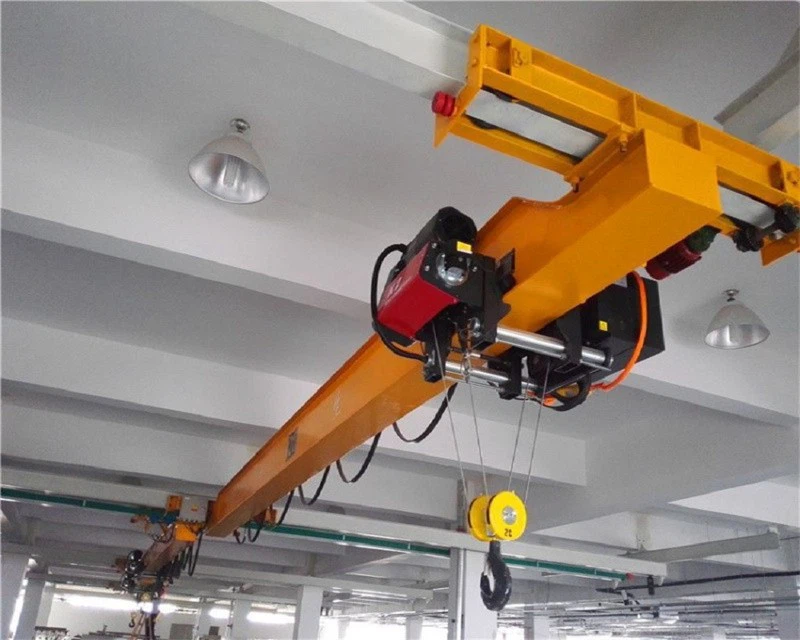
A suspension crane consists of hoisting equipment suspended directly from building structure or dedicated support beams, with the crane load traveling along a fixed path. The most common configuration utilizes an underhung monorail system where a hoist and trolley assembly hangs from a single I-beam runway. The runway beam itself attaches to building columns, roof trusses, or ceiling joists through hangers or support brackets.
In a typical installation, the hoist travels along the bottom flange of the runway beam, positioning loads anywhere along the beam’s length. The runway beam can follow straight paths, incorporate curves, or include switches enabling loads to transfer between multiple beam paths. This flexibility enables systems to deliver materials precisely where needed throughout complex facility layouts.
Capacity typically ranges from 250 pounds to 10 tons, though specialized heavy-duty systems can handle up to 15-20 tons. Load capacity depends on multiple factors including beam size, hanger spacing, building structure capacity, and hoist specifications. Importantly, the building structure must support not only the lifted load but also the crane equipment weight and dynamic forces during operation.
The defining characteristic involves the load path. In these systems, the lifted load hangs below the supporting structure, effectively “suspended” from the building or support beams. This configuration contrasts fundamentally with top-running systems where loads travel on top of runway beams rather than suspended beneath them.
What Is an Overhead Crane System?
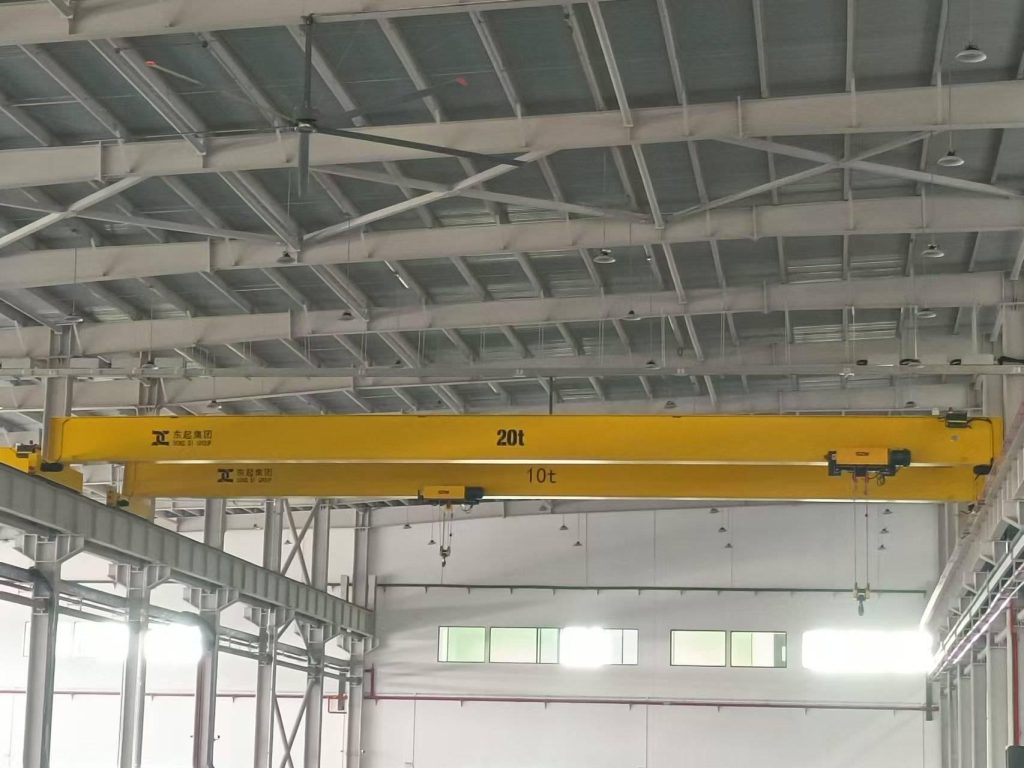
An overhead crane system, often called a bridge crane, consists of a bridge beam spanning between two parallel runways elevated above the work area. The bridge travels along the runways on wheeled trucks, while a hoist and trolley assembly moves perpendicular to bridge travel along the bridge beam. This configuration provides coverage across rectangular work areas with the hoist capable of positioning loads at any point within the crane’s coverage envelope.
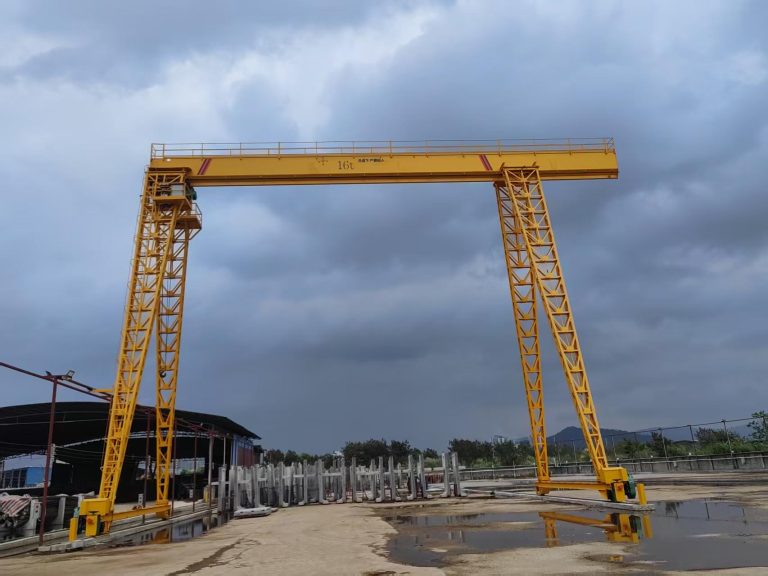
Overhead crane systems mount on dedicated runway beams supported by building columns or freestanding structures. The bridge and hoist equipment travel on top of these runway beams—hence the term “top-running” overhead crane. This top-running configuration fundamentally differs from suspension crane systems where equipment hangs beneath support beams.
Overhead crane capacity spans an enormous range from 1 ton for small shop cranes to 500+ tons for heavy industrial applications. Large overhead crane installations in steel mills, shipyards, and heavy manufacturing facilities routinely handle loads exceeding 100 tons. The overhead crane’s structural design enables much higher capacity compared to suspension crane systems because loads transfer directly through the bridge structure to runway beams rather than creating bending moments on support beams.
The overhead crane provides material handling coverage across large rectangular areas. For example, a 60-foot span overhead crane with 200 feet of runway travel covers approximately 12,000 square feet. In contrast, a suspension crane follows defined beam paths, serving specific work stations or material flow routes rather than providing area coverage. This distinction significantly influences which crane type suits particular applications.
Structural Design and Load Transfer Mechanisms
Suspension Crane Structural Characteristics
The structural design creates unique load transfer characteristics affecting capacity, building requirements, and installation complexity. Understanding these structural principles proves essential for proper selection and implementation.
In this configuration, the hoist load creates bending moments on the runway beam. When a 2-ton load hangs 10 feet from a support point, it creates a 20-foot-ton bending moment that the beam must resist. Consequently, runway beams require substantial section modulus—larger and heavier beams than might be intuitive based solely on load weight. This structural behavior limits practical capacity and influences installation costs.
Building structure must support loads transferred through hangers or support brackets. Each support point experiences vertical loads from crane and lifted load weights plus dynamic forces during acceleration, braking, and load swinging. Additionally, lateral forces perpendicular to the beam direction occur during hoist trolley movement. Building columns, roof trusses, or ceiling joists must possess adequate capacity to safely support these combined loads.
The underhung configuration offers important advantages in facilities with limited headroom. Because the hoist hangs below the runway beam, the system maximizes available hook height within existing building clear heights. This characteristic makes these installations particularly attractive for retrofitting material handling capability into existing facilities without modifying roof structures.
Furthermore, runways can follow complex paths incorporating curves, slopes, and switches. This flexibility enables systems to deliver materials along optimized flow paths, around obstacles, and to multiple work stations using single hoist and trolley assemblies. Standard bridge cranes, by contrast, require rectangular coverage areas and cannot easily accommodate curved travel paths.
Overhead Crane Structural Characteristics
Overhead crane structural design differs fundamentally from suspension crane systems, enabling much higher capacities while imposing different building structure requirements. The overhead crane’s bridge beam spans between runway beams, creating a stable platform for hoist and trolley travel.
Loads in an overhead crane transfer through the bridge structure to wheeled trucks riding on top of runway beams. This load path proves much more efficient structurally than suspension crane bending moments. Consequently, overhead crane systems can handle substantially higher capacities—often 5-10 times greater than suspension crane systems of similar span.
Runway beam design for overhead crane systems addresses primarily vertical loads and lateral forces from bridge acceleration and braking. Because the bridge travels on top of runway beams rather than hanging below, runway beams experience compression and lateral bending rather than the downward bending moments characteristic of suspension crane installations. This loading pattern typically allows smaller runway beam sections for equivalent loads compared to suspension crane runways.
Building structure supporting overhead crane runways requires substantial columns or freestanding structures. Runway beam elevations typically range from 15-40 feet above floor level depending on required hook height and bridge configuration. Column spacing often dictates runway beam spans—columns spaced at 40-foot intervals support runway beams spanning 40 feet between supports. This structural requirement can necessitate building modifications or dedicated crane structures in facilities lacking appropriate column configurations.
The overhead crane’s top-running configuration consumes headroom above the runway beams. Total facility height must accommodate runway beam depth, bridge girder height, hoist headroom, and lifted load height. Consequently, overhead crane installations may require taller buildings compared to suspension crane alternatives providing equivalent hook height. This headroom requirement influences new construction planning and limits overhead crane retrofit opportunities in height-constrained existing facilities.
Load Capacity and Performance Comparison
Suspension Crane Capacity Limitations
Capacity limitations stem from structural mechanics and practical installation considerations. While specialized heavy-duty systems can handle 15-20 tons, most installations serve lighter-duty applications ranging from 500 pounds to 5 tons.
The primary factor limiting capacity involves bending moments on runway beams. As load capacity increases, required beam sizes grow rapidly. An underhung system handling 2 tons might use a W10×30 beam, while a 5-ton capacity configuration requires W12×65 or larger beams. These heavier beams increase both material costs and installation complexity while imposing greater loads on building structures.
Building structure capacity frequently constrains implementations. Existing facilities designed without considering future crane loads may lack adequate roof structure capacity to support the system. Structural reinforcement or supplemental steel framing adds substantial costs, sometimes eliminating economic advantages over bridge crane alternatives.
Additionally, deflection considerations limit capacity and span. Excessive beam deflection under load creates operational issues including load swinging, reduced positioning precision, and perceived instability even when structures remain safe. Industry standards typically limit beam deflection to L/450 or L/600 under rated load. Meeting these deflection criteria for heavy loads or long spans requires very large beam sections that may prove impractical or uneconomical.
Despite capacity limitations, underhung monorail systems excel in applications requiring moderate lifting capacity along defined paths. Many manufacturing processes involve repetitive material movement between specific stations—situations where these systems deliver excellent performance and value without requiring the extensive infrastructure associated with bridge crane installations.
Overhead Crane Capacity Advantages
Bridge crane systems deliver substantially higher load capacity compared to underhung alternatives, making them essential for heavy industrial applications. The structural efficiency of this design enables capacities from 1 ton to 500+ tons within practical physical dimensions.
The load transfer mechanism proves much more structurally efficient than suspended configurations. Vertical loads transfer through bridge girders to runway wheels, then to runway beams primarily in compression rather than bending. This loading pattern enables these systems to handle heavy loads with reasonable structural member sizes.
Furthermore, bridge designs can be optimized for specific capacity requirements. Box girder bridges provide exceptional strength-to-weight ratios for heavy-duty applications. Double girder configurations support very high capacities while accommodating specialized hoisting equipment. These design options enable customization matching precise application requirements.
The elevated runway configuration isolates crane loads from building structure in many installations. Freestanding runway structures or dedicated building columns designed specifically for crane loads eliminate concerns about existing building capacity. This approach proves particularly valuable in heavy-duty applications where crane loads would otherwise require extensive building reinforcement.
Additionally, these systems accommodate auxiliary hoists and specialized lifting attachments more readily than underhung configurations. A main hoist handles primary loads while an auxiliary hoist serves lighter materials or provides backup capability. Specialized lifting beams, magnets, or vacuum systems attach to bridge structures without the geometric constraints affecting suspended equipment implementations.
Installation Requirements and Facility Impact
Suspension Crane Installation Considerations
Installation typically proves simpler and less invasive compared to bridge crane projects, particularly in existing facilities. The direct attachment to building structure or dedicated support beams minimizes new structural requirements when adequate building capacity exists.
Initial installation steps involve structural analysis verifying that existing building components can support the loads. Licensed structural engineers evaluate roof trusses, ceiling joists, or building columns at proposed support locations. Analysis considers static loads (equipment weight plus maximum lifted load) and dynamic factors including impact loads, load swinging, and operational forces. Building structures with adequate capacity proceed directly to installation, while inadequate structures require reinforcement or alternative mounting strategies.
Runway beam installation represents the primary construction activity. Beams attach to building structure through hangers, brackets, or direct connections to columns. Installation usually occurs from scissor lifts, aerial work platforms, or scaffolding positioned below mounting points. The relatively lightweight nature of components enables installation by small crews using standard construction equipment—typically 2-4 workers complete installations in 1-3 days for straightforward single-beam systems.
Electrical service for hoists typically involves relatively simple installations. Conductor systems running along runway beams provide power to traveling hoists, while pendant controls or radio remotes enable operator interface. Electrical contractors route power from facility panels to conductor system connection points—usually straightforward work in most industrial facilities.
The minimal floor space requirements prove advantageous in crowded facilities. Because support structures attach overhead, floor space remains available for equipment, storage, or workflow. This characteristic enables installation in facilities where floor-mounted equipment or bridge crane runway columns would create unacceptable obstructions.
Overhead Crane Installation Considerations
Bridge crane installation involves more extensive structural work compared to underhung monorail projects, particularly for high-capacity systems or installations in buildings lacking appropriate infrastructure. The complexity and cost of installation significantly influences equipment selection decisions.
Runway structure represents the most substantial requirement. Runway beams must be elevated 15-40 feet above floor level depending on required hook height. Support structures include building columns, freestanding crane columns, or supplemental steel framing. New building columns require substantial foundations—typically reinforced concrete piers extending 4-8 feet deep depending on soil conditions and capacity.
In existing facilities, installation may necessitate building modifications. Creating openings through roof structures for new crane columns, reinforcing existing columns to support loads, or installing supplemental steel framing adds complexity and cost. Facilities operating during installation face additional challenges coordinating construction activities with ongoing production—often requiring phased installation during planned shutdowns.
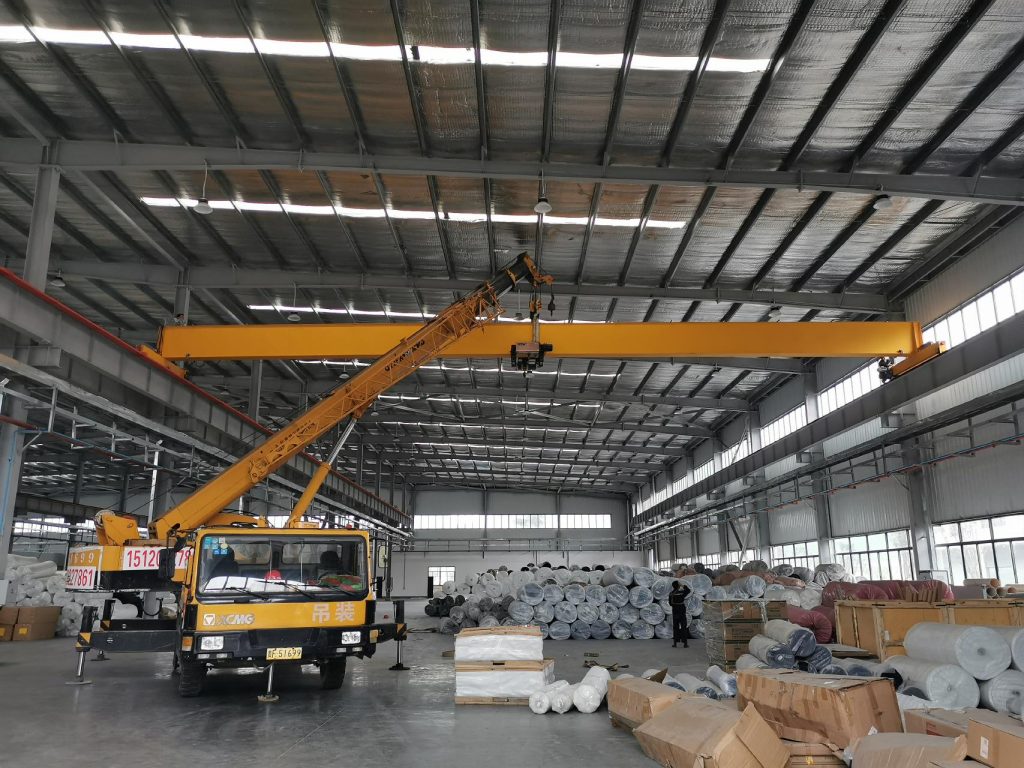
Bridge components—the bridge girders, end trucks, and trolley systems—typically arrive as prefabricated assemblies requiring crane or heavy rigging equipment for installation. Large bridges may weigh 5-20 tons or more, necessitating mobile cranes, gantries, or temporary hoisting systems for positioning. This installation phase requires experienced riggers and careful planning ensuring worker safety during lifting operations at elevation.
Electrical installations for these systems prove more complex than underhung alternatives. Conductor systems must run along both runway beams to power the traveling bridge, with additional conductors supplying the trolley and hoist. Control systems including pendant stations, radio remotes, or cab-mounted controls require proper wiring and integration. The elevated nature of electrical systems complicates installation and future maintenance compared to more accessible underhung components.
Despite installation complexity, bridge crane systems deliver substantial long-term value in appropriate applications. The extensive infrastructure supporting high-capacity material handling proves worthwhile for heavy industrial operations where utilization justifies investment.
Operational Capabilities and Flexibility
Suspension Crane Operational Characteristics
The operational characteristics of underhung systems make them particularly well-suited for point-to-point material movement along defined paths. Understanding these operational parameters helps identify applications where these configurations deliver optimal performance.
Travel paths represent a key advantage. Runway beams can follow complex routes incorporating straight sections, curves, and elevation changes. This flexibility enables material delivery along optimized flow paths matching production sequences. For example, a runway might curve around building columns, slope downward to a lower work area, then split via a switch to serve two separate production lines—all while maintaining hoist travel along continuous paths.
Coverage patterns follow linear or branching configurations rather than area coverage. A single straight beam provides linear coverage along its length. Multiple intersecting beams with switches enable access to various work zones, though loads must travel sequentially along beam paths rather than taking direct routes between arbitrary points. This characteristic suits applications with defined material flow patterns but proves limiting for random-access material handling across large areas.
Operating speeds for hoists and trolleys typically match or exceed bridge crane systems. Modern variable frequency drive (VFD) controlled hoists provide smooth acceleration, precise positioning, and adjustable speed ranges. Trolley travel speeds generally range from 50-150 feet per minute depending on capacity and application requirements. These speeds prove adequate for most industrial material handling without the jarring starts and stops characteristic of older technologies.
Load positioning precision depends on multiple factors including beam rigidity, hoist quality, and control systems. Well-designed installations deliver positioning precision within ±1-2 inches suitable for most manufacturing operations. However, very heavy loads or long beam spans may experience greater deflection affecting precision. Applications requiring exceptional positioning accuracy may favor bridge crane systems or specialized designs incorporating rigid beam supports and precision hoists.
Overhead Crane Operational Characteristics
Bridge crane systems provide area coverage and operational flexibility unmatched by underhung configurations. These capabilities make them essential for facilities requiring versatile material handling across large workspaces.
Coverage area represents the primary operational advantage. The bridge spanning between runways combined with trolley travel along the bridge provides access to any point within a rectangular envelope. For example, a 40-foot span bridge with 150 feet of runway travel covers 6,000 square feet. Operators can position loads directly from any pickup point to any destination within coverage area without following predetermined paths.
Two-axis motion (bridge travel and trolley travel) enables optimal travel paths between pickup and delivery locations. Rather than following fixed runway paths like underhung systems, operators select efficient routes minimizing travel distances and avoiding obstacles. This operational flexibility particularly benefits facilities with changing layouts, multiple work stations, or random material handling patterns.
Operating speeds vary widely based on capacity and application. Light-duty shop cranes might travel at 100-200 feet per minute, while heavy-duty industrial units often limit speeds to 50-100 feet per minute ensuring safe, controlled operation with heavy loads. Hoist speeds similarly range from 10-50 feet per minute depending on capacity—faster for light loads, slower for heavy loads preventing dangerous load swinging.
Advanced systems incorporate numerous operational enhancements including anti-sway systems reducing load swing during travel, automated positioning systems enabling one-button movement to preset locations, collision avoidance systems preventing bridge-to-bridge contact in facilities with multiple cranes, and load moment indicators warning operators of overload conditions. These sophisticated features enhance safety, productivity, and ease of operation in demanding industrial environments.
Cost Analysis and Budget Considerations
Suspension Crane Cost Factors
Underhung monorail systems generally require lower capital investment compared to bridge crane alternatives, particularly for moderate-capacity applications in facilities with adequate existing structure. Understanding cost components enables accurate budget planning and economic analysis.
Equipment costs for components typically range from $8,000-$40,000 depending on capacity, beam length, and feature content. A basic 1-ton capacity system with 30-foot runway beam, electric chain hoist, and manual trolley might cost $8,000-$12,000. A 3-ton system with 50-foot beam, variable speed hoist, and motorized trolley typically ranges from $20,000-$30,000. Heavy-duty 5-ton systems with long spans can exceed $40,000 for equipment alone.
Installation labor generally proves more economical than bridge crane projects. Straightforward installations in facilities with adequate existing structure might cost $3,000-$8,000 for installation labor including beam hanging, electrical work, and system commissioning. Complex installations requiring structural reinforcement, extensive electrical work, or challenging access can increase installation costs to $10,000-$20,000 or more.
Structural modifications represent variable costs depending on existing building capacity. Facilities with adequate roof structure avoid reinforcement costs. Buildings requiring strengthening may incur $5,000-$25,000+ in structural work depending on the extent of reinforcement needed. Severely inadequate structures sometimes necessitate dedicated support steel effectively creating freestanding runway structures—costs approaching bridge crane runway installations.
Electrical infrastructure costs typically range from $2,000-$6,000 including conductor systems, power distribution, and control wiring. Facilities with nearby electrical service minimize these costs, while installations requiring substantial new electrical work increase expenses.
Total installed costs for typical systems generally range from $15,000-$60,000 depending on capacity, complexity, and site conditions. This investment level proves attractive for many facilities requiring localized material handling without the extensive infrastructure associated with bridge crane systems.
Overhead Crane Cost Factors
Overhead crane systems involve substantially higher capital investment compared to suspension crane alternatives, though costs prove justified for heavy-duty applications or facilities requiring extensive material handling coverage.
Equipment costs for overhead crane systems scale dramatically with capacity. A light-duty 3-ton capacity bridge crane with 30-foot span might cost $25,000-$40,000 for equipment. A 10-ton system with 50-foot span typically ranges from $45,000-$75,000. Heavy-duty 25-ton cranes with 60-foot spans commonly cost $100,000-$200,000 or more. These equipment costs include bridge girders, end trucks, runway wheels, trolley, hoist, and controls.
Runway structure represents a major cost component for overhead crane installations. New freestanding runway columns, foundations, and runway beams for a 150-foot crane runway might cost $40,000-$100,000 depending on crane capacity and site conditions. Installations utilizing existing building columns avoid some structural costs but may still require $15,000-$40,000 for runway beams, connections, and reinforcement.
Installation labor for overhead crane systems typically exceeds suspension crane installation significantly. Runway structure installation, bridge crane positioning, alignment procedures, and electrical work commonly cost $15,000-$50,000+ depending on crane size and installation complexity. Large industrial cranes may require $75,000-$150,000+ for complete installation including all trades and commissioning.
Electrical infrastructure for overhead crane systems proves more extensive than suspension crane requirements. Dual conductor systems supplying bridge and trolley, control systems, and safety equipment typically cost $8,000-$25,000 depending on crane size and control sophistication.
Total installed costs for overhead crane systems commonly range from $75,000 for small shop cranes to $200,000-$500,000+ for substantial industrial installations. While representing major capital investments, overhead crane systems deliver decades of service in heavy-duty applications, often proving more economical on a total cost of ownership basis compared to alternative material handling approaches.
Industry-Specific Application Guidelines
When Suspension Crane Systems Excel
Underhung monorail configurations deliver optimal performance in specific operational contexts. Understanding these ideal application profiles helps identify situations where these investments deliver maximum value.
Manufacturing operations with defined material flow patterns represent prime applications. Parts moving sequentially through machining operations, assemblies progressing along production lines, or materials flowing from receiving to storage to production benefit from systems following optimized paths. The ability to position runway beams along actual workflow paths maximizes efficiency while minimizing floor space consumption.
Machine tool servicing and maintenance operations benefit from installations providing localized lifting capability. A runway positioned adjacent to CNC machining centers, lathes, or milling machines enables operators to load/unload heavy workpieces without assistance. The moderate capacity proves adequate for typical workpiece weights while the compact design avoids interference with normal machine operation.
Assembly operations requiring overhead material delivery find these systems advantageous. Components suspended from hoists can be positioned precisely over assembly locations, held in position during fastening operations, then moved to subsequent stations. The smooth operation and precise control enhance assembly efficiency while reducing worker physical strain.
Facilities with limited floor space particularly benefit from these installations. Because support structures attach overhead rather than consuming floor space, the configuration maximizes available area for equipment, inventory, and workflow. This advantage proves crucial in crowded facilities where floor-mounted equipment or bridge crane runway columns would create unacceptable obstructions.
Paint finishing and coating operations sometimes utilize underhung systems for part conveyance through processing stages. The ability to follow curved paths and incorporate vertical elevation changes enables parts to move through spray booths, ovens, and drying areas along continuous paths without requiring transfers between multiple handling systems.
When Overhead Crane Systems Excel
Overhead crane systems prove essential for applications requiring heavy lifting capacity, area coverage, or versatile material handling across large workspaces. These demanding operational requirements justify overhead crane investments despite higher costs.
Heavy manufacturing operations involving castings, steel fabrication, or large assemblies depend on overhead crane capability to handle substantial loads. Steel service centers lifting bundles of plate or structural steel, foundries moving casting flasks, and heavy equipment manufacturers assembling large machines all require the load capacity only overhead crane systems provide. Attempting to serve these applications with suspension crane equipment would prove impossible or unsafe.
Warehouse and storage facilities requiring random-access material handling throughout large areas benefit from overhead crane area coverage. Rather than following predetermined paths, overhead crane operators can retrieve materials from any storage location and deliver to any destination within coverage area. This operational flexibility proves essential for efficient warehouse operations serving diverse customer demands.
Maintenance facilities servicing large equipment—power plants, shipyards, heavy equipment repair operations—rely on overhead crane capability to handle major components. Turbine rotors, ship sections, or mining equipment components require substantial lifting capacity and versatile positioning that only overhead crane systems provide. The overhead crane’s ability to place heavy loads precisely within extensive coverage areas proves essential for efficient maintenance operations.
Steel production and heavy industrial manufacturing operations routinely specify overhead crane systems handling 50-300+ tons. Hot metal handling in steel mills, roll changing in rolling mills, and ladle transfers in foundries require the extreme capacity and robust construction characteristics of heavy-duty overhead crane systems. These demanding applications push overhead crane engineering to its limits while demonstrating the technology’s versatility across capacity ranges.
Multi-station manufacturing operations benefiting from coordinated material handling sometimes utilize tandem overhead crane systems. Two cranes operating in the same bay can coordinate to handle exceptionally long or heavy loads, provide redundancy for critical operations, or enable simultaneous handling of multiple loads improving throughput. This level of operational sophistication proves unattainable with suspension crane configurations.
Frequently Asked Questions
Can a suspension crane be converted to an overhead crane system?
Converting a suspension crane to an overhead crane system generally proves impractical due to fundamental structural and operational differences between these crane configurations. The two systems employ completely different load transfer mechanisms, support structures, and operational characteristics making conversion infeasible or cost-prohibitive.
A suspension crane utilizes a single runway beam from which the hoist hangs, whereas an overhead crane requires two parallel runway beams supporting a bridge structure. Converting from suspension crane to overhead crane configuration would necessitate installing a complete second runway, bridge structure, trolley system, and associated components—effectively building an entirely new overhead crane while abandoning most existing suspension crane infrastructure.
Furthermore, building structure supporting suspension crane loads differs fundamentally from overhead crane requirements. Suspension crane hangers transfer loads to roof structure in tension and bending, while overhead crane runway columns impose compression loads to foundations. The structural modifications required to accommodate overhead crane loads in buildings designed for suspension crane systems could prove as expensive as new construction.
However, facilities can sometimes add overhead crane systems alongside existing suspension crane installations if building structure permits. The two crane types serve different operational needs and can complement each other—suspension crane systems handling defined material flow paths while overhead crane systems provide area coverage and heavy lifting capability. This hybrid approach maximizes material handling flexibility without abandoning existing suspension crane investments.
If operational needs have outgrown suspension crane capacity or coverage, replacement with an appropriately designed overhead crane system typically proves more practical than attempted conversion. Evaluate total project costs including equipment, installation, and building modifications against operational benefits to determine whether overhead crane investment proves justified.
What is the maximum span for suspension crane and overhead crane systems?
Maximum practical spans differ substantially between suspension crane and overhead crane configurations due to structural mechanics and operational considerations.
Suspension crane runway beams typically span 15-40 feet between support points for systems handling 1-5 tons capacity. Longer spans require progressively larger beam sections to limit deflection within acceptable ranges. Spans exceeding 50 feet generally prove impractical for suspension crane applications due to excessive beam weight, costs, and deflection concerns. Very long suspension crane runways incorporate multiple spans with intermediate supports rather than single continuous spans.
Overhead crane bridge spans range much more widely depending on capacity and application. Light-duty shop cranes commonly span 15-40 feet. General industrial cranes frequently span 40-80 feet. Heavy-duty cranes in steel mills, shipyards, or heavy manufacturing may span 100-150 feet or more. The structural efficiency of bridge crane design enables these extended spans while maintaining reasonable structural member sizes and costs.
However, economic factors often limit practical overhead crane spans below absolute structural limits. Very wide spans require heavy bridge girders increasing equipment costs substantially. Building structures must accommodate increased runway beam spacing, potentially necessitating modified column layouts. Most facilities find optimal performance with overhead crane spans between 30-60 feet, though applications requiring greater coverage certainly utilize wider spans when justified.
For both suspension crane and overhead crane systems, consult with qualified engineers and crane manufacturers regarding appropriate spans for your specific application. Multiple factors including capacity, duty cycle, building structure, and budget constraints influence optimal span selection. Professional engineering analysis ensures safe, cost-effective crane system design.
How much weight can a suspension crane safely lift?
Suspension crane lifting capacity depends on multiple interrelated factors including hoist specifications, runway beam capacity, support structure adequacy, and building structure limitations. Understanding these factors helps determine safe lifting capacity for specific installations.
Hoist specifications establish the upper limit on suspension crane capacity. Electric chain hoists commonly used on suspension crane systems typically range from 250 pounds to 10 tons capacity. Specialized heavy-duty hoists can handle up to 15-20 tons. However, hoist capacity alone doesn’t determine safe lifting capacity—supporting structure must also accommodate these loads.
Runway beam capacity represents another critical factor. Suspension crane beams must resist bending moments created by suspended loads while limiting deflection within acceptable ranges. A given beam size safely supports different capacities depending on span length between supports. For example, a W10×30 beam spanning 20 feet might safely support a 2-ton hoist, while the same beam spanning 30 feet might be limited to 1 ton capacity.
Building structure supporting suspension crane installations must possess adequate capacity for combined loads including crane equipment weight, maximum lifted load, and dynamic factors. Existing buildings designed without considering future crane loads may lack sufficient capacity, limiting achievable suspension crane capacity regardless of hoist and beam specifications.
Practical suspension crane capacity for typical industrial installations ranges from 500 pounds to 5 tons. Most applications fall within 1-3 ton capacity range providing good balance of capability and reasonable costs. Applications requiring capacity above 5-7 tons often prove more economically served by overhead crane systems offering superior structural efficiency for heavy loads.
Always engage licensed structural engineers to evaluate proposed suspension crane installations. Professional engineering analysis ensures all components—hoist, beam, supports, and building structure—possess adequate capacity for safe operation under actual loading conditions including dynamic factors and safety margins required by applicable codes and standards.
What maintenance do suspension crane and overhead crane systems require?
Both suspension crane and overhead crane systems require regular maintenance ensuring safe, reliable operation throughout extended service lives. While specific requirements vary based on equipment specifications and operating conditions, understanding general maintenance needs helps plan resources and budgets.
Daily or pre-shift inspections by operators represent the first line of maintenance defense. Operators should visually inspect hoists, trolleys, runway beams, and controls for obvious damage, unusual noises, or operational irregularities. Control function tests verify all buttons and safety devices work properly. These brief inspections identify issues before they cause failures or safety incidents.
Monthly maintenance by qualified personnel should include lubrication of trolley wheels and hoist mechanisms, inspection of wire ropes or chains for wear or damage, brake adjustment and testing, limit switch verification, and electrical connection inspection. For suspension crane systems, examine beam hangers and support connections. For overhead crane systems, inspect runway wheels, bridge end trucks, and conductor systems. This monthly service typically requires 2-4 hours per crane depending on size and complexity.
Annual comprehensive inspections by qualified technicians or crane service companies prove essential for safety and regulatory compliance. Detailed examinations include structural inspections for cracks or corrosion, load testing verifying capacity, complete hoist and brake inspection and adjustment, electrical system testing, and runway alignment verification. OSHA regulations mandate annual crane inspections by qualified personnel with documentation maintained for regulatory compliance. Annual service typically costs $800-$2,500 depending on crane size and complexity.
Major component replacement occurs periodically throughout crane service life. Wire ropes or hoist chains require replacement every 3-8 years depending on usage intensity. Hoists may need rebuilding or replacement after 10-15 years of service. Trolley wheels wear and require replacement every 5-10 years in active service. Electrical components including contactors and controls may need replacement after 15-20 years. Budgeting for these periodic major maintenance activities prevents unexpected capital expenses.
Suspension crane maintenance generally proves slightly simpler and less expensive than overhead crane systems due to fewer components and more accessible equipment. However, both crane types require conscientious maintenance programs ensuring safe, reliable operation throughout service lives commonly exceeding 20-25 years in industrial service.
Conclusion: Selecting the Right Crane Configuration
The fundamental differences between suspension crane and overhead crane systems significantly impact which configuration best serves specific material handling requirements. Suspension crane systems excel at point-to-point material movement along defined paths, offering lower initial costs, simpler installation, and efficient operation for moderate-capacity applications. Overhead crane systems provide area coverage, superior load capacity, and operational versatility essential for heavy industrial applications despite higher capital investment requirements.
Effective crane selection requires systematic analysis of operational needs, facility constraints, capacity requirements, and budget considerations. Applications involving repetitive material movement between specific stations often favor suspension crane systems delivering excellent performance at reasonable costs. Conversely, operations requiring heavy lifting capacity, random-access material handling across large areas, or versatile load positioning capabilities necessitate overhead crane investments despite higher initial expenses.
Building structure capacity significantly influences crane type selection. Facilities with adequate roof structure for suspension crane loads can implement these systems cost-effectively. Buildings lacking appropriate structure may require extensive reinforcement that eliminates suspension crane economic advantages, making overhead crane systems with dedicated runway structures more practical alternatives.
Long-term operational considerations including maintenance requirements, flexibility for future layout changes, and potential capacity growth also affect optimal crane selection. Overhead crane systems generally provide greater adaptability to changing needs through their area coverage and load positioning capabilities, while suspension crane installations serve specific workflow patterns efficiently but with limited flexibility for future modifications.
Ultimately, the “best” crane configuration depends entirely on your specific application requirements, facility characteristics, and operational objectives. Engage experienced crane system designers and structural engineers early in planning processes to evaluate alternatives comprehensively and ensure selected systems deliver optimal performance throughout extended service lives.
Partner with Experienced Crane System Specialists
Selecting and implementing optimal crane systems requires both technical expertise and practical experience across diverse applications and facility types. CATET Equipment Co., Ltd., a distinguished member of Dongqi Group, brings decades of experience designing, manufacturing, and installing both suspension crane and overhead crane systems for customers across 90+ countries worldwide.
Our comprehensive product portfolio includes suspension crane systems from 250 pounds to 15 tons capacity, overhead bridge cranes from 1 ton to 500+ tons, and specialized crane configurations addressing unique customer requirements. We provide complete solutions including engineering analysis, equipment specification, structural design, installation services, operator training, and ongoing maintenance support.
Our experienced application engineering team helps customers navigate crane type selection through comprehensive analysis of operational requirements, facility conditions, capacity needs, and budget constraints. We provide objective recommendations ensuring selected crane systems deliver optimal performance and value for your specific applications.
Contact our crane system specialists today for expert consultation:
- WhatsApp/Skype: +86 159 9309 7180
- Email: [email protected]
- Hotline: +86 159 9309 7180
- Address: Room 808A, Building A, No. 4545 Songbai Road, Hewan Community, Matan Street, Guangming District, Shenzhen, China
Whether you’re evaluating suspension crane systems for defined material flow paths or overhead crane systems for heavy-duty area coverage, our team provides comprehensive support ensuring successful project outcomes. Contact us today to discuss your material handling challenges and discover how our crane solutions can enhance your operational efficiency and productivity.