Single Girder Overhead Crane: Types, Costs & Selection
A single girder overhead crane is a cost-effective lifting solution featuring one main horizontal beam supported by end trucks, ideal for facilities handling loads up to 20 tons with lifting heights under 30 feet. According to the Material Handling Industry of America (MHIA), approximately 68% of small to medium manufacturing facilities choose single beam configurations over double girder systems due to their lower initial investment and reduced operational costs.
What Makes Single Girder Overhead Crane Different
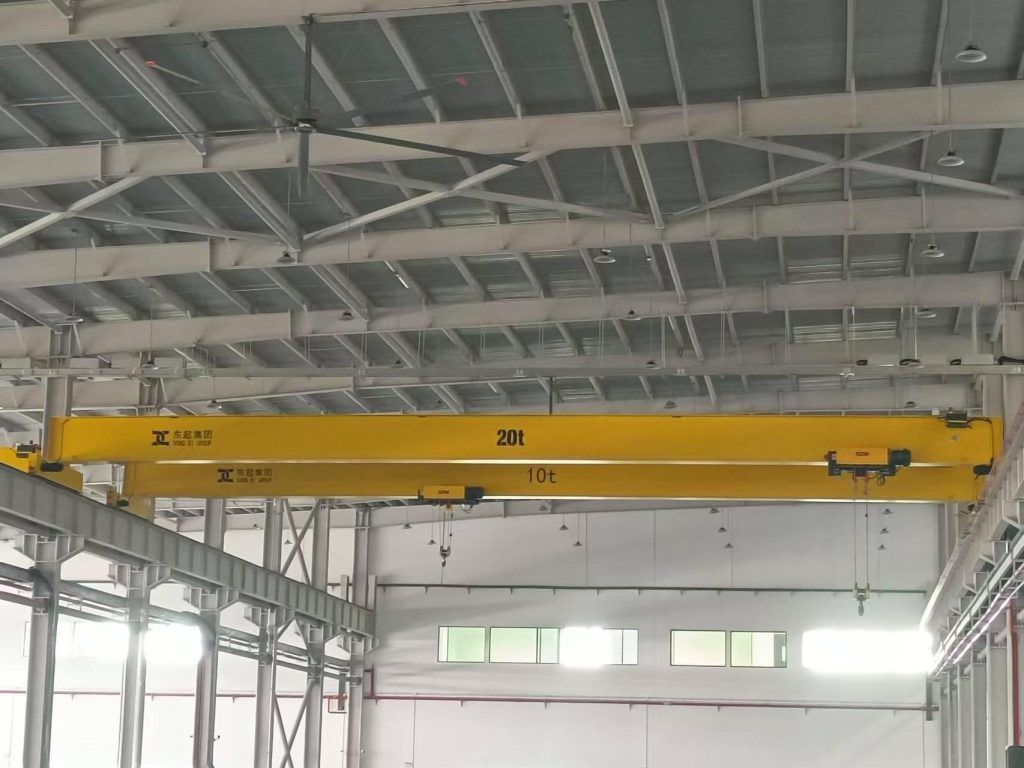
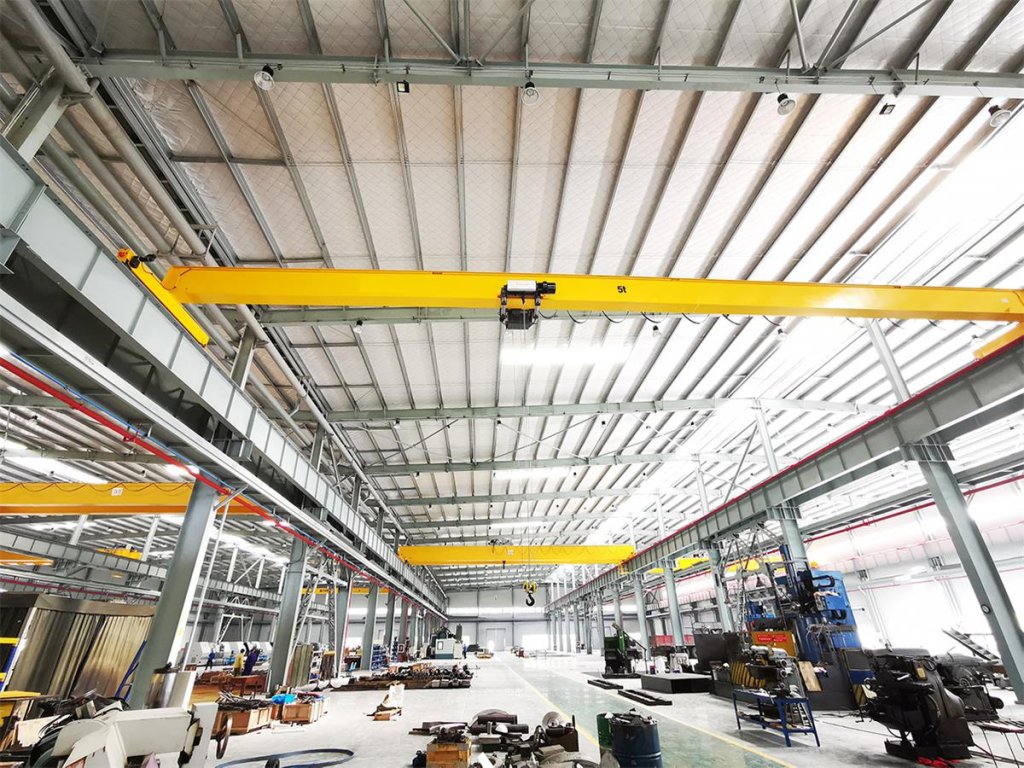
Single girder overhead cranes, also known as single beam bridge cranes, utilize a simplified structural design compared to their double girder counterparts. The fundamental difference lies in the configuration: single girder overhead cranes employ one primary load-bearing beam rather than two parallel girders. This monorail bridge crane design results in a lighter overall structure while maintaining adequate load capacity for numerous industrial applications.
The hoist mechanism travels along the bottom flange of the main beam, which distinguishes it from double girder setups where the hoist runs on top of the beams. This under-running configuration provides several practical advantages. First and foremost, it reduces the required building height by approximately 18-24 inches, making it suitable for facilities with space constraints. Additionally, the simplified structure translates to lower material costs and faster installation times.
Industry data from Crane Manufacturers Association of America (CMAA) indicates that single beam designs account for 72% of overhead crane installations in warehouses and light manufacturing environments. These systems typically serve operations requiring lifting capacities between 1 and 20 tons, though some specialized models extend to 25 tons. The span range usually falls between 10 and 80 feet, covering most standard facility dimensions.
Core Components and Operating Mechanisms
Understanding the essential components helps you make informed decisions when selecting lifting equipment. A single girder overhead crane consists of several interconnected systems working in harmony.
Main Bridge Girder
The primary structural element is the main girder, typically manufactured from I-beam or box beam steel profiles. This horizontal member spans the width of your facility and supports the entire lifting load. Engineers design these beams to withstand not only the rated capacity but also dynamic forces generated during lifting operations. According to ASTM A992 specifications, structural steel used in these applications must have a minimum yield strength of 50 ksi (345 MPa).
End Trucks and Wheel Assemblies
End trucks attach to both ends of the main girder and house the traveling wheels. These assemblies enable the crane to move along runway beams installed parallel to your facility walls. Modern end trucks incorporate precision bearings and hardened steel wheels rated for millions of operational cycles. Research published in the Journal of Materials Engineering shows that properly maintained wheel assemblies can achieve service lives exceeding 15 years under normal operating conditions.
Hoist and Trolley System
The electric hoist represents the lifting component, suspended from a trolley that traverses along the bottom flange of the main beam. Wire rope or chain hoists provide the vertical lifting motion, while the trolley allows horizontal movement across the span. Contemporary electric hoists feature variable frequency drives (VFD) that enable precise load positioning with speed control ranges typically from 5% to 100% of rated speed.
Control Systems
Operators control monorail overhead cranes through pendant stations, wireless radio controls, or cabin-mounted systems. Modern installations increasingly utilize wireless technology, which improves operator safety by allowing remote operation from safe vantage points. According to OSHA data, facilities using wireless controls report 43% fewer crane-related incidents compared to those relying solely on pendant controls.
Technical Specifications and Performance Parameters
When evaluating single girder overhead crane systems, several key specifications determine suitability for your application. Understanding these parameters helps match equipment capabilities to operational requirements.
| Specification | Typical Range | Standard Applications |
|---|---|---|
| Load Capacity | 1-20 tons | Light to medium manufacturing |
| Span Length | 10-80 feet | Standard warehouse bays |
| Lifting Height | 10-30 feet | Typical ceiling clearances |
| Lifting Speed | 5-20 ft/min | General material handling |
| Traveling Speed | 65-130 ft/min | Horizontal movement |
| Cross Speed | 65-200 ft/min | Trolley motion |
Duty Cycle Classifications
The Crane Manufacturers Association defines duty cycles from Class A (infrequent service) through Class F (continuous severe service). Single beam overhead cranes typically fall within Classes A through D, suitable for operations ranging from maintenance activities to moderate production environments. A Class C crane, for example, handles approximately 10-20 lifts per hour at 50% of rated capacity.
Power Requirements
Electrical specifications vary based on capacity and features, but most single girder systems operate on 208-480V three-phase power. A typical 5-ton capacity crane with standard features draws approximately 15-25 kW during lifting operations. Energy-efficient VFD-equipped models reduce power consumption by up to 35% compared to conventional resistance control systems, according to studies from the Electric Power Research Institute.
Advantages Over Alternative Lifting Solutions
Single girder overhead cranes deliver specific benefits that make them the preferred choice for many operations. Understanding these advantages helps justify the investment and select appropriate equipment.
Economic Benefits
Cost considerations often drive equipment selection decisions. Single beam bridge cranes,also known as single girder overhead cranes, typically cost 20-40% less than equivalent double girder configurations. This price advantage stems from reduced material requirements, simpler fabrication processes, and faster installation procedures. A real-world example from a Michigan automotive parts manufacturer showed total installed costs of $45,000 for a 10-ton single girder system versus $72,000 for a comparable double girder crane.
Furthermore, ongoing operational expenses remain lower due to reduced maintenance requirements. With fewer components requiring inspection and service, annual maintenance costs typically range from 2-3% of initial equipment cost compared to 4-5% for double girder systems. These savings accumulate significantly over the typical 20-25 year service life of overhead crane systems.
Space Optimization
The under-running design maximizes available lifting height within existing buildings. By eliminating the need for the hoist to travel on top of bridge beams, single girder cranes provide approximately 18-24 inches of additional hook height compared to double girder alternatives with the same overall crane height. This advantage proves particularly valuable in facilities with limited ceiling clearance.
Consider a manufacturing facility with 24-foot ceiling height. A single girder installation might provide 20 feet of usable hook height, whereas a double girder system in the same space might offer only 18 feet. This seemingly small difference can determine whether certain equipment or materials can be lifted and maneuvered effectively.
Installation Flexibility
Single beam overhead crane systems adapt readily to various building configurations. The lighter structural loads impose less stringent requirements on building columns and runway support structures. Structural engineers from the American Institute of Steel Construction note that runway beam requirements for single girder cranes typically involve 30-40% less steel than double girder installations of similar capacity.
This characteristic enables retrofitting existing facilities without major structural reinforcement. A textile manufacturer in North Carolina successfully installed a 7.5-ton single girder crane in a 1960s-era building without column modifications, saving an estimated $35,000 in structural upgrades that would have been necessary for a double girder system.
Practical Applications Across Industries
Single girder overhead cranes serve diverse sectors, each with unique operational requirements. Examining real-world applications illustrates how these systems solve specific material handling challenges.
Manufacturing Environments
Light to medium manufacturing operations rely heavily on single girder overhead cranes for component handling, assembly support, and finished product movement. In metalworking facilities, these cranes position raw materials at machining centers, transfer parts between production stages, and load finished components for shipping. A case study from a Wisconsin machine shop documented 40% productivity improvement after installing a 5-ton single girder system that eliminated manual material handling bottlenecks.
Warehouse and Distribution
Logistics facilities utilize monorail overhead cranes for loading and unloading operations, particularly when handling oversized or heavy items that exceed forklift capacities. Distribution centers handling building materials, machinery, or industrial equipment benefit from the precise positioning capabilities these cranes provide. According to Logistics Management Magazine, warehouses equipped with overhead cranes achieve 25% faster turnaround times for heavy freight compared to facilities relying solely on forklifts.
Maintenance and Service Operations
Service facilities performing equipment maintenance and repair use single girder cranes to remove and install heavy components. Automotive repair shops, for instance, employ these systems to extract engines and transmissions. Similarly, HVAC service centers use overhead cranes to handle commercial air conditioning units and boilers. The National Institute for Occupational Safety and Health (NIOSH) reports that facilities using overhead cranes for heavy component handling experience 62% fewer back injuries compared to those relying on manual lifting aids.
Assembly Operations
Assembly lines benefit from the precise positioning capabilities of electric hoist systems mounted on single girder bridges. Electronics manufacturers use these cranes to carefully place sensitive components during assembly, while furniture manufacturers employ them to position large cabinets and fixtures. The controlled movement and load stability prevent damage to products and reduce quality defects. Industry surveys show that assembly operations using overhead cranes report 18% fewer handling-related product damages.
Selection Criteria and Sizing Considerations
Choosing the appropriate single girder overhead crane A properly specified single girder overhead crane requires careful analysis of operational parameters and facility constraints. Several critical factors influence equipment selection.
Load Capacity Determination
Start by identifying the maximum weight you need to lift, including the weight of any lifting attachments such as spreader beams, hooks, or specialized fixtures. Safety regulations require adding a capacity margin above your heaviest anticipated load. Most engineers recommend selecting a crane rated for 125-150% of your maximum anticipated load to account for dynamic loading effects and provide operational flexibility.
For example, if your heaviest component weighs 8,000 pounds and you use a 500-pound lifting fixture, your total lifted weight reaches 8,500 pounds. Applying a 1.3 safety factor suggests a minimum 11,000-pound (5.5-ton) rated capacity. However, selecting a 7.5-ton crane provides additional margin for future needs and reduces stress on components, potentially extending service life.
Span and Coverage Requirements
Measure the distance between runway support points to determine required span length. Additionally, consider the area coverage needed for material handling operations. Single girder cranes work best for spans under 80 feet; longer spans may require double girder designs for adequate structural rigidity.
Think about material flow patterns within your facility. Will the crane need to access all areas of the work space, or will it primarily service specific locations? A crane manufacturer in Ohio helped a client realize they could reduce costs by installing two smaller single girder cranes in separate work cells rather than one larger system attempting to cover the entire facility.
Lifting Height Analysis
Calculate the vertical distance from the floor to the lowest building obstruction, then subtract the crane’s overall height (including hoist and hook) to determine available hook height. Ensure this measurement accommodates your tallest loads plus clearance for safe operation. Standard practice allows minimum 3-inch clearance above the highest load.
Remember to account for hoist rope reeving configuration. A four-part rope system (four lines supporting the load) reduces required hoist travel compared to a single-part system but increases the hoist’s overall height. Balancing these factors optimizes lifting height within available space.
Duty Cycle Requirements
Assess how frequently you’ll operate the crane and typical load percentages. Operations performing occasional lifts require different specifications than facilities using cranes continuously throughout production shifts. CMAA duty classifications provide standardized guidelines, but discussing specific usage patterns with crane suppliers ensures proper equipment selection.
A food processing plant lifting 2-ton containers 5-8 times per hour at varied capacities would typically require a Class C crane. Conversely, a maintenance facility performing occasional equipment moves might suffice with a Class A or B system, reducing initial investment.
Installation Requirements and Infrastructure Needs
Proper installation ensures safe operation and optimal performance. Understanding infrastructure requirements helps plan projects and budget accurately.
Runway System Design
Runway beams support the crane’s travel along the facility length. These beams must be sized to handle the crane’s weight plus lifted loads, accounting for dynamic forces during acceleration and braking. Structural engineers typically design runways for 125% of the maximum combined loading to provide adequate safety margins.
Runway beam selection depends on several factors including span between support columns, crane capacity, and building structure. A 10-ton single girder crane with 60-foot span might require W12x40 runway beams on 20-foot column spacing, whereas lighter 5-ton systems might use W10x30 beams. Professional structural analysis ensures code compliance and safe operation.
Column and Foundation Loads
Building columns supporting runway beams must withstand vertical loads from the crane and lifted materials plus horizontal side thrust forces generated during trolley motion and bridge acceleration. These combined loads sometimes exceed original building design parameters, necessitating column reinforcement before crane installation.
Foundation assessments verify that existing footings can support additional loads. In some cases, especially in older facilities or when installing heavier capacity systems, foundation strengthening becomes necessary. A Minnesota fabrication shop installing a 15-ton crane discovered their 1970s-era foundations required reinforcement, adding $18,000 to project costs but ensuring long-term structural integrity.
Electrical Infrastructure
Single girder overhead cranes require dedicated electrical circuits with appropriate voltage and amperage capacity. Most systems use three-phase power delivered through conductor bars, cable festoon systems, or cable reels running along the runway. Electrical contractors must ensure proper circuit protection, grounding, and compliance with National Electrical Code requirements.
Consider power delivery methods carefully. Conductor bar systems offer the most reliable power delivery for frequently used cranes, while festoon systems provide economical solutions for lighter-duty applications. A cable reel system works well when crane travel distances are limited. Each method has distinct cost and maintenance characteristics affecting long-term operational expenses.
Safety Systems Integration
Modern single beam bridge cranes incorporate multiple safety features including overload protection, emergency stop controls, limit switches preventing over-travel, and anti-collision systems for facilities with multiple cranes. Ensuring these systems integrate properly with facility emergency shutdown procedures enhances workplace safety.
According to OSHA requirements, all overhead cranes must include audible warning devices, proper lighting in operating areas, and clearly marked load capacity ratings. Additionally, many facilities install motion detection systems that automatically stop cranes when personnel enter designated danger zones, further reducing accident risk.
Maintenance Practices and Operational Safety
Establishing comprehensive maintenance programs maximizes equipment reliability and ensures operator safety. Regulatory compliance and manufacturer recommendations guide these practices.
Inspection Protocols
OSHA Standard 1910.179 mandates regular crane inspections at varying intervals. Daily visual inspections by operators check for obvious defects, unusual noises, or operational irregularities. Monthly inspections by qualified maintenance personnel examine load chains or wire ropes, hooks, brakes, and electrical components. Annual inspections by certified crane inspectors provide comprehensive evaluations of all structural and mechanical systems.
Documentation proves critical for compliance and identifying developing issues. Facilities should maintain detailed inspection records including dates, findings, corrective actions, and inspector credentials. Digital maintenance management systems increasingly replace paper logs, providing better tracking and analysis capabilities.
Lubrication Requirements
Proper lubrication extends component life and ensures smooth operation. Wire ropes require regular application of appropriate lubricants to prevent corrosion and reduce wear. Wheel bearings, gearboxes, and trolley components need periodic lubrication following manufacturer specifications. A Virginia steel service center implementing strict lubrication schedules extended their crane wire rope life from 18 months to 32 months, reducing annual maintenance costs by approximately $4,200.
Most manufacturers provide detailed lubrication charts specifying products, application points, and intervals. Following these recommendations prevents premature component failure and maintains warranty coverage. Modern synthetic lubricants often outperform conventional petroleum products, particularly in temperature extremes or contaminated environments.
Common Issues and Prevention
Understanding typical problems helps implement preventive measures. Wire rope wear represents one of the most common issues, typically caused by abrasion, corrosion, or overloading. Regular inspections and proper lubrication significantly extend rope life. When rope damage exceeds ASME B30.2 replacement criteria—typically 6 randomly distributed broken wires in one lay or 3 broken wires in one strand—immediate replacement becomes necessary.
Electrical contact issues in conductor bar systems cause operational interruptions. Carbon brush wear, collector contamination, and misalignment contribute to these problems. Scheduled brush replacement and periodic collector cleaning minimize downtime. Facilities operating in dusty environments benefit from enclosed conductor bar systems that protect electrical contacts from contamination.
Brake adjustment maintains load control and prevents unintended load drift. Hoist brakes require periodic adjustment to compensate for lining wear. Most modern electric hoists incorporate automatic brake adjustment features, but manual verification during maintenance inspections ensures proper operation. ASME standards require brakes capable of holding 125% of rated load.
Operator Training Requirements
Qualified operators are essential for safe crane operation. OSHA requires training programs covering equipment operation, load handling principles, safety procedures, and hazard recognition. Training should address both theoretical knowledge and practical skills, concluded with competency evaluation.
Comprehensive operator training typically includes understanding load capacity limits and center of gravity principles, proper rigging techniques and attachment methods, recognition of hazardous conditions, emergency procedures, and communication protocols. Many facilities implement refresher training annually to reinforce safe practices and introduce operators to equipment modifications or procedural updates.
The Occupational Safety and Health Administration reports that facilities with robust operator training programs experience 58% fewer crane-related incidents compared to those with minimal training. This safety improvement translates to reduced insurance costs, fewer production disruptions, and better regulatory compliance.
Cost Analysis and Return on Investment
Understanding total ownership costs helps justify investments and select appropriate equipment configurations. Initial purchase price represents only one component of lifecycle expenses.
Initial Investment Breakdown
Single girder overhead crane costs vary significantly based on capacity, span, features, and customization. As a general guideline, budget systems suitable for light-duty applications might start around $15,000-$25,000 for small capacities and short spans. Mid-range systems with standard features typically cost $30,000-$75,000, while heavy-duty or highly customized installations can exceed $100,000.
These figures include the crane bridge, hoist, controls, and basic accessories. However, total project costs encompass additional elements such as runway beams and support structures, electrical installation and power supply, engineering and permits, freight and delivery, installation labor, and operator training. A complete turnkey installation typically costs 1.5 to 2.0 times the base equipment price.
Operational Cost Considerations
Beyond initial investment, ongoing expenses affect total cost of ownership. Electrical power consumption represents a continuous expense, though modern VFD-controlled cranes significantly reduce energy usage compared to older designs. A 10-ton crane operating 4 hours daily might consume approximately 2,500 kWh monthly, costing $250-$400 depending on local utility rates.
Maintenance expenses typically range from 2-3% of initial equipment cost annually. This includes routine inspections, lubrication, periodic parts replacement, and occasional repairs. A $50,000 crane system would thus incur approximately $1,000-$1,500 yearly maintenance costs. Facilities with in-house maintenance capabilities reduce these expenses, while those relying on service contracts might experience higher costs but benefit from guaranteed response times and expert service.
Productivity Benefits Quantification
Calculating return on investment requires analyzing productivity improvements and safety benefits. Material handling efficiency gains often justify crane investments within 2-4 years. Consider a manufacturing operation currently using forklifts and manual rigging to move 3-ton components. These manual methods might require 20 minutes per transfer with three workers. An overhead crane could reduce this to 5 minutes with one operator.
At 50 transfers daily, this saves 12.5 worker-hours per day. Assuming $25 average hourly labor costs, daily savings reach $312.50, accumulating to approximately $78,000 annually (250 working days). Against a $60,000 total installation cost, the payback period spans less than 10 months. Additionally, quality improvements from gentler handling and reduced product damage provide further value that’s harder to quantify but equally important.
Comparative Analysis with Alternatives
When evaluating lifting solutions for your facility, single girder overhead cranes should be compared against forklifts, jib cranes, and gantry cranes to determine optimal equipment for specific applications.
| Lifting Solution | Capacity Range | Coverage Area | Initial Cost | Best Applications |
|---|---|---|---|---|
| Single Girder Crane | 1-20 tons | Full bay coverage | $30,000-$75,000 | Manufacturing, assembly |
| Forklift | 1-15 tons | Limited reach | $25,000-$60,000 | Warehouse, outdoor |
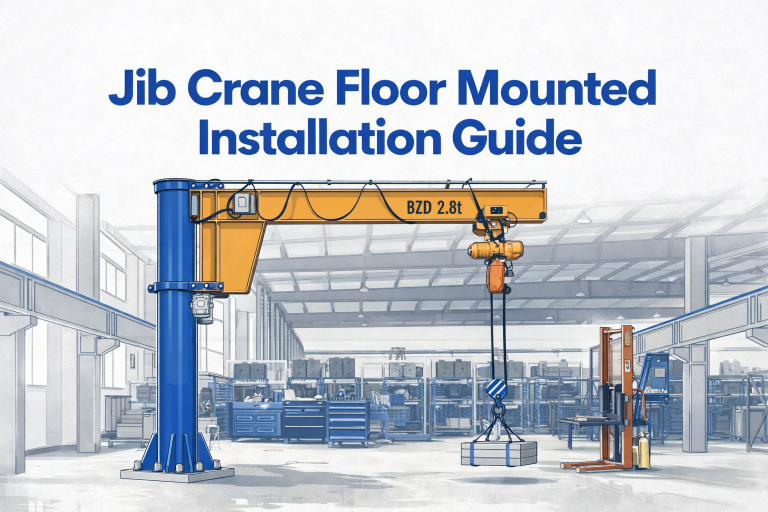
| Jib Crane | 0.5-5 tons | Radial coverage | $3,000-$15,000 | Workstation tasks |
| Gantry Crane | 1-50 tons | Open floor areas | $20,000-$100,000+ | Yards, flexible layouts |
Single girder systems excel when full bay coverage is required, loads exceed comfortable forklift capacities, or precision positioning matters. They provide better space utilization than forklifts since they don’t require floor space for maneuvering, and they offer wider coverage than jib cranes while costing less than gantry systems for permanent installations.
Frequently Asked Questions
What is the maximum capacity of a single girder overhead crane?
Single girder overhead cranes typically handle loads from 1 to 20 tons, though specialized models extend to 25 tons. Most facilities find single girder overhead cranes ideal for light to medium-duty applications. Beyond this capacity range, double girder configurations become more structurally appropriate and cost-effective. The specific maximum capacity depends on span length, lifting height, and duty cycle requirements. For most small to medium facilities, 10-15 ton single girder cranes represent the practical upper limit while maintaining cost advantages over double girder alternatives.
How long does a single girder crane last?
With proper maintenance and regular inspections, single beam overhead cranes typically provide 20-25 years of reliable service. Some components like wire ropes and brake linings require periodic replacement (typically every 2-5 years depending on usage intensity), but the structural elements and main mechanical systems endure for decades. Facilities in corrosive environments or those operating multiple shifts daily may experience shorter service lives, while light-duty applications in controlled environments can exceed 30 years. Documented maintenance history significantly impacts longevity and resale value.
Can single girder cranes be installed in existing buildings?
Yes, most existing industrial buildings can accommodate single girder overhead crane installations. However, structural evaluations are essential to verify that columns, foundations, and roof structures can support additional loads. Buildings constructed after 1980 typically incorporate sufficient structural capacity for moderate crane loads, while older facilities may require reinforcement. The under-running design of single girder systems makes them particularly suitable for retrofit applications since they maximize available lifting height within existing ceiling clearances. Professional structural engineering ensures safe installation without compromising building integrity.
What is the difference between single girder and double girder overhead cranes?
Single girder cranes use one main horizontal beam with the hoist traveling on the bottom flange, while double girder cranes employ two parallel beams with the hoist running on top. This fundamental design difference creates several practical distinctions. Single girder systems cost 20-40% less, require less building height, and suit lighter applications up to 20 tons. Double girder cranes handle heavier loads (up to 500+ tons), provide higher hook heights, and accommodate multiple hoists or specialized lifting attachments. For typical manufacturing and warehouse applications under 15 tons, single girder designs offer optimal value.
How much does it cost to install a single girder overhead crane?
Total installation costs range from $30,000 to $150,000+ depending on capacity, span, building modifications, and feature requirements. A typical 10-ton system with 50-foot span might cost $45,000-$65,000 for equipment plus $15,000-$30,000 for runway beams, electrical work, and installation labor. Budget approximately 1.5-2.0 times the base equipment price for complete turnkey installation. Existing buildings with adequate structural capacity require lower investment than facilities needing column reinforcement or foundation upgrades. Obtaining detailed quotes from multiple suppliers and clearly defining project scope ensures accurate cost estimation.
Do single girder cranes require special operator licenses?
OSHA does not mandate formal licensing for overhead crane operators, but requires employer-provided training and competency evaluation. Operators must demonstrate knowledge of equipment capabilities, safe operating procedures, load handling principles, and hazard recognition. Training programs typically span 8-16 hours combining classroom instruction and practical operation under supervision. Some industries require third-party certification through organizations like NCCCO (National Commission for the Certification of Crane Operators), though this is more common for mobile cranes than overhead systems. Employers remain responsible for ensuring operator competence through ongoing evaluation and refresher training.
What maintenance is required for single girder overhead cranes?
Maintenance requirements include daily visual inspections by operators, monthly detailed inspections of mechanical and electrical components, quarterly lubrication of bearings and wire ropes, annual comprehensive inspections by certified professionals, and periodic replacement of wear items (wire ropes, brake linings, electrical contacts). Typical annual maintenance costs range from $1,000-$3,000 depending on system complexity and usage intensity. Establishing preventive maintenance schedules according to manufacturer recommendations and OSHA standards prevents unexpected failures and extends equipment service life. Digital maintenance tracking systems help ensure compliance and identify developing issues before they cause operational disruptions.
Can single girder cranes operate outdoors?
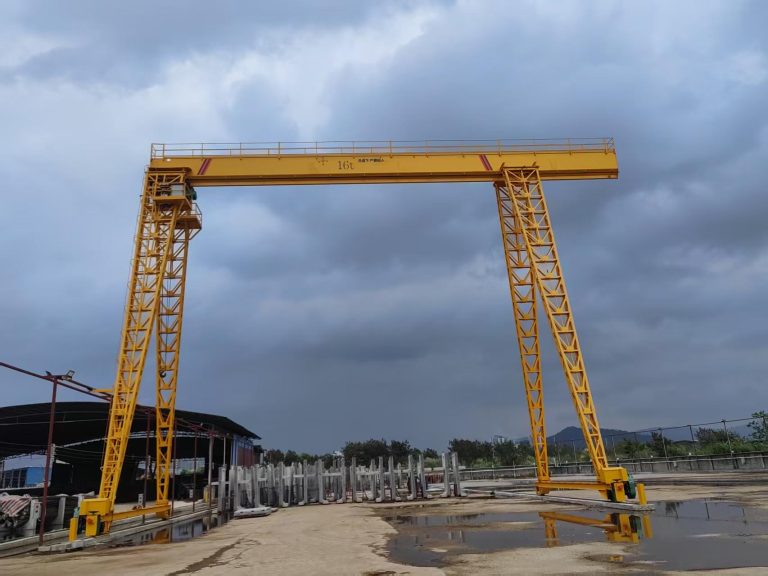
While single girder overhead crane are designed primarily for indoor applications, weatherized versions can operate in covered outdoor areas or semi-enclosed facilities. Outdoor installations require special considerations including corrosion-resistant coatings and finishes, sealed electrical components and enclosures, wind load calculations and tie-down provisions, temperature-rated components for environmental extremes, and enhanced drainage to prevent water accumulation. Fully exposed outdoor applications typically utilize gantry crane designs rather than building-mounted overhead systems. Consult with crane manufacturers about environmental conditions to ensure proper equipment specification for outdoor or semi-outdoor installations.
How fast do single girder overhead cranes move?
Standard single beam bridge cranes operate at typical speeds of 5-20 feet per minute for lifting (vertical motion), 65-130 feet per minute for bridge travel (long axis movement), and 65-200 feet per minute for trolley cross travel. Variable frequency drives enable infinite speed adjustment within these ranges, allowing precise positioning for delicate loads and faster movement for routine transfers. High-speed models can achieve travel speeds exceeding 300 feet per minute for applications requiring rapid material movement over long distances. Speed selection depends on application requirements, load types, and operator skill levels. Most manufacturers offer multiple speed configurations to match operational needs.
What safety features should single girder cranes include?
Essential safety features include overload prevention systems preventing lifts exceeding rated capacity, emergency stop buttons accessible to operators and ground personnel, upper and lower limit switches preventing over-travel, audible warning devices alerting personnel to crane movement, load rated identification clearly displaying capacity limits, anti-collision systems for multi-crane environments, motion detection preventing operation when personnel enter danger zones, and brake holding systems maintaining load position during power failures. Modern cranes increasingly incorporate advanced safety technology including load moment indicators, wireless emergency stops, and automatic positioning systems. Selecting cranes meeting ASME B30.2 and CMAA specifications ensures comprehensive safety feature integration. Regular inspection and maintenance of safety systems remains critical for continued reliable operation.